
Opinion
HIGH ENERGY COSTS AND NIGERIA ONE TRILLION DOLLAR ECONOMY: RHETORICS OR REALITY

By AVM RTD AKUGBE IYAMU MNSA fsi
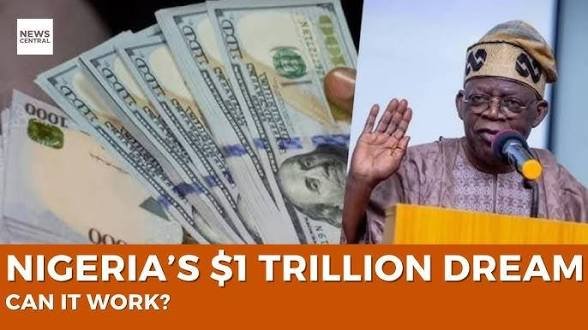
No one has ever lived in delusion that a one trillion dollar economy by 2030 was going to be an A la carte or a tea party.
However, the hallmark of building an economy of that magnitude is the ability to crowd source and headhunt talents devoid of ethnic, religious or regional considerations.
It is building a country where generations yet unborn will benefit from today’s structural foundation and speaking the language of unity and cohesion. For course direction and correction towards a one trillion dollar economy Nigeria must address her energy poverty and crisis.
The Nigerian energy supply crisis is in epileptic comatose largely visible in failure of the Nigerian power sector to provide adequate electricity supply to domestic households and industrial producers despite the huge deposit of gas (209tcf) in proven reserves available to power a growing economy.
The energy situation is further compounded by adequate investments since independence despite some of the world’s largest deposits of coal, oil, and gas and the country’s status as Africa’s largest producer of gas by lack of investments, transparency and accountability.
Additionally, the US/Israel and Iran war has shown how vulnerable and concerning
Nigeria’s ambition to reach a $1 trillion economy has been heavily challenged by fluctuating fuel prices, which have seen petrol exceed ₦1,000/litre. While higher oil prices are expected to boost 2026 revenue by ₦6.8 trillion, high fuel costs fuel inflation and inhibit growth needed urgently to actualising the one trillion dollar economy.
The current situation in the strait of Hormuz has further compounded the problem thus compelling experts to argue that a $1 trillion economy will require urgent reforms in power, manufacturing, and reduced oil dependence to create the necessary momentum.
Every country dream is to achieve scalable solutions to her energy reality and create a “moon shoot” that relates to transition to a desired outcome.
In this case, Nigeria’s ambitious goal to reach a $1 trillion dollar economy by 2030 presents a major dilemma.
While the transition is viewed as a necessary vision for national transformation, it is likely to face significant structural barriers leading some experts to call it a mirage without the necessary drastic changes in immediate action.
The government may have been reporting positive reform impacts, including 11.2% GDP growth in dollar terms in 2025 but reaching the target requires sustained, rapid, and inclusive growth that substantially alleviates poverty.
That is the only way the macro economic indices will fully influence the micro sector and impact the daily lives of impoverished Nigerian families.
Therefore, it is my view that transition to one trillion dollar economy by 2030 need to transcend optics and develop trajectories that actively pursue a bold agenda driven by comprehensive reforms.
The road may experience multiple challenges however some commitment can be gleaned since early 2026 with the government setting a target of 10% to 12% annual GDP growth over the next decade by focusing on building a more productive and diversified economy.
Let us agree that achieving a one trillion dollar economy goes beyond setting growth rates because achieving this target requires immediate and massive overhaul of the energy sector, which is currently seen as an insurmountable bottleneck to growth.
Despite the government assertion that the $1 trillion target is a “specific, measurable decision” and a “bridge between lessons learnt and ambitions pursued,” rather than mere rhetoric the evidence available are largely to the contrary due high poverty between 2023 and 2025( 56 to 63%) with 35 million hungry Nigerians and 30.5 million going into acute hunger in 2026.
Additionally, by 2023, there were about 43 million SMEs and as of May 2026 with Nigeria’s fuel prices showing volatility despite recent global crude oil price drops 27 million SMEs is believed to have gone under.
While the Dangote Refinery may have lowered its depot price to around ₦1,200–₦1,275 per litre, retail pump prices remain high, hovering between ₦1,290 and ₦1,440 per litre across different regions.
Thus high energy costs in Nigeria, driven by fuel price hikes, are significantly hindering economic growth by escalating production expenses, lowering corporate profits, and fueling cost-push inflation.
These costs depress consumer purchasing power, causing a shift toward essential spending and stalling overall economic growth, according to studies on energy consumption and economic growth in Nigeria.
The way forward for Nigeria’s power sector involves a rapid shift toward a decentralized mixed-energy approach to quickly combine 100,000 MW of capacity by 2030 through gas-to-power projects, solar, and hydro, enabled by the Electricity Act of 2023.
Key strategies include implementing the \([750 \text{ million } \text{DARES}\) project for renewable energy, boosting gas production by 50 percent, and enhancing transmission infrastructure to handle 15,000 MW.
This is because a one trillion dollar economy is not achieved in announcements but through the atmosphere of silence in careful calculations, planning and execution.
It is a caravan for innovation, creativity and organisation that heralds structural changes to build a future generations of innovative minds and creative solutions.
AVM RTD AKUGBE IYAMU MNSA fsi
CONSULTANT ON CLIMATE CHANGE AND ANALYST ON ENVIRONMENTAL POLICIES
PRESIDENT ASSOCIATION OF ENVIRONMENTAL PROTECTION AND CLIMATE CHANGE PRACTITIONERS
WARNING!!!!!!!
This publication is the exclusive rights of the author and no part of it can be reproduced, published in any for without express permission from the author.