
Climate Change
Iraq’s Ancient Marshlands Show Signs of Recovery After Years of Drought

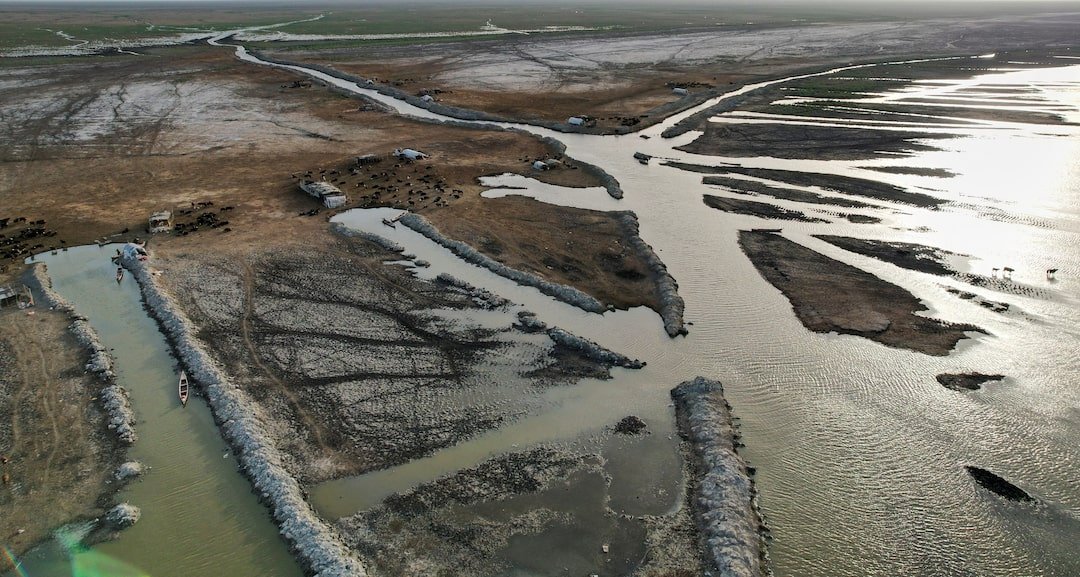
Iraq’s historic marshlands, once devastated by years of severe drought and water shortages, are showing signs of revival as rising water levels breathe new life into one of the Middle East’s most important ecosystems.


The marshes, located in southern Iraq between the Tigris and Euphrates rivers, had suffered dramatic shrinkage in recent years due to climate change, reduced river flows and prolonged drought conditions that displaced thousands of families dependent on fishing and buffalo farming.
Local residents and environmental officials say recent rainfall and improved water releases from upstream sources have helped restore large sections of the wetlands, allowing fish populations, birds and livestock to gradually return.
The Mesopotamian Marshes, recognized as a UNESCO World Heritage Site in 2016, are considered one of the world’s oldest wetland civilizations and are often associated with the ancient Sumerian culture.
At the peak of the drought crisis in 2023 and 2024, some areas of the marshes dried almost completely, forcing many Marsh Arab communities to abandon their homes as water buffalo died and fishing activities collapsed.
Environmental experts caution that the recovery remains fragile, warning that Iraq continues to face long-term threats from climate change, upstream dam projects in neighboring countries and poor water management.
Officials from Iraq’s Water Resources Ministry said efforts are underway to improve irrigation management and preserve the marshes, which are not only environmentally important but also central to Iraq’s cultural heritage and biodiversity.
Residents expressed cautious optimism as boats once again moved through waterways that had turned into cracked earth during the worst of the drought, with many hoping the return of water signals a more stable future for the region.