General News
Journalists Tasked to Investigate Nigeria’s N34 Trillion Revenue Deduction Controversy


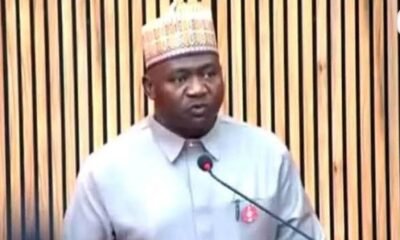
A former Federal Commissioner of the Code of Conduct Bureau, Mr. Ehiozuwa Agbonayinma, has charged Nigerian journalists with the responsibility of conducting rigorous fact-finding investigations into the controversy surrounding the alleged missing N34 trillion from the federation revenue.

Agbonayinma gave the charge on Saturday in Abuja following his investiture as the Patron of the Association of Edo Journalists in Abuja. He stated that Nigerians deserve to know the truth regarding the financial controversy, emphasising that journalism must serve as a catalyst for national redemption.
“You pull the true stories to citizens; investigative journalism is therefore key, because it is a service to humanity,” Agbonayinma said.

His call to action comes amid an ongoing public dispute over a World Bank report which indicated that while Nigeria’s total federation revenue reached N84 trillion between 2023 and 2025, approximately 41 per cent, amounting to N34.53 trillion, was deducted before reaching the Federation Account. The report has sparked widespread debate, with opposition figures describing the deductions as institutionalised corruption.
Reacting to these figures, the former CCB commissioner warned against superficial reporting. He urged journalists to move beyond simply reporting what people, especially government officials, want the public to hear. Instead, he advocated for deep investigative work and fact-checking to uncover the precise details of the revenue leakages.
“Journalists are the children of government,” he stated, arguing that members of the press are closer to the people than policymakers and are therefore in a unique position to hold the government accountable.
Agbonayinma’s remarks highlight a growing tension between the federal government and transparency advocates regarding the interpretation of the World Bank data. While the government has consistently denied allegations of missing funds, arguing that the deductions constitute legitimate “first-line charges,” statutory transfers, and security expenditures, critics maintain that the sheer volume of the revenue take-off points to systemic corruption.
The former federal commissioner’s challenge to the press sets the stage for increased scrutiny of the nation’s fiscal processes as journalists are expected to dig deeper into the specifics of the revenue deductions.