
International
Mifepristone Access Remains Available as Supreme Court Reviews Case

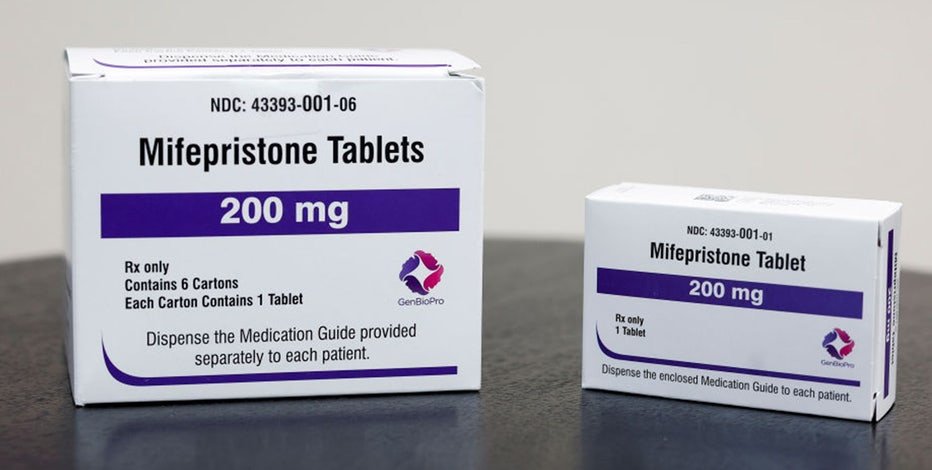
The United States Supreme Court has temporarily extended nationwide access to the widely used abortion pill mifepristone while justices consider whether tighter restrictions on the drug should be allowed to take effect.
Justice Samuel Alito issued the temporary order on Monday, ensuring that women can continue obtaining mifepristone through pharmacies, telehealth services and mail delivery without needing an in-person doctor’s visit; at least until later this week.
The decision temporarily blocks a ruling by the conservative-leaning 5th U.S. Circuit Court of Appeals, which had sought to suspend mail-order access to the medication while a broader legal battle continues.
The case stems from a lawsuit filed by the state of Louisiana challenging Food and Drug Administration rules introduced in 2023 that expanded access to mifepristone through telemedicine and mail prescriptions. Louisiana argues that the policy undermines the state’s abortion restrictions and raises safety concerns about the medication.
Mifepristone, which is commonly used alongside another drug called misoprostol, accounts for nearly two-thirds of abortions in the United States, according to recent health data. The FDA has repeatedly maintained that the medication is safe and effective since its approval in 2000.
The dispute marks the latest major abortion-related case to reach the Supreme Court since the court’s conservative majority overturned Roe v. Wade in 2022, a ruling that ended the constitutional right to abortion nationwide and allowed states to impose their own restrictions.
Drug manufacturers Danco Laboratories and GenBioPro had urged the Supreme Court to intervene, warning that the lower court’s ruling could create nationwide confusion for patients, pharmacies and healthcare providers. Medical organizations and reproductive rights advocates have also argued that limiting access to mifepristone could disrupt healthcare systems and reduce reproductive care options for women across the country.
The Supreme Court is expected to decide in the coming days whether the temporary extension will remain in place while the broader legal case proceeds through the courts.