
International
US Moves to Release 53.3 Million Barrels of Emergency Oil Reserve Amid Middle East Supply Crisis

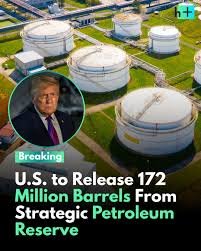
The administration of Donald Trump has approved the loan of 53.3 million barrels of crude oil from the United States Strategic Petroleum Reserve (SPR) in a major effort to stabilize global energy markets shaken by the escalating U.S.-Israeli conflict with Iran.
According to a Reuters report, the emergency measure forms part of a wider international agreement involving more than 30 countries under the International Energy Agency aimed at easing pressure on global oil supplies and surging fuel prices.
The U.S. Department of Energy disclosed that nine energy companies, including Exxon Mobil BP, and Phillips 66, participated in the programme, borrowing about 58 per cent of the 92.5 million barrels initially offered by the government.
The latest release adds to nearly 80 million barrels already loaned out earlier this year as Washington works toward a planned total release of 172 million barrels from the emergency reserve.
The coordinated action followed disruptions linked to Iran’s closure of the Strait of Hormuz, one of the world’s most strategic oil transit routes through which roughly 20 per cent of daily global oil supply normally passes.
Executive Director of the IEA, Fatih Birol, described the conflict-triggered disruption as the “biggest-ever energy crisis,” warning that additional strategic reserve releases could follow if the war continues to threaten global supply chains.
The Department of Energy said the crude is being loaned not sold outright and companies will repay the oil with premiums of up to 24 per cent, a structure officials say protects U.S. taxpayers while helping calm volatile markets.
The U.S. Strategic Petroleum Reserve, stored in underground salt caverns across Texas and Louisiana, currently contains about 384 million barrels of oil less than four days of global oil consumption.
The move comes as rising gasoline prices continue to pressure American consumers and heighten political concerns ahead of the U.S. midterm elections. Data from AAA showed that average gasoline prices in the United States climbed to $4.52 per gallon on Monday, the highest level recorded since 2022.
Analysts say the coordinated reserve release underscores growing fears that prolonged instability in the Middle East could trigger a broader global energy shock with ripple effects across inflation, transportation, and international trade.