Economy
Naira Slips Against Dollar as Gap Between Official and Street Rates Widens to N44

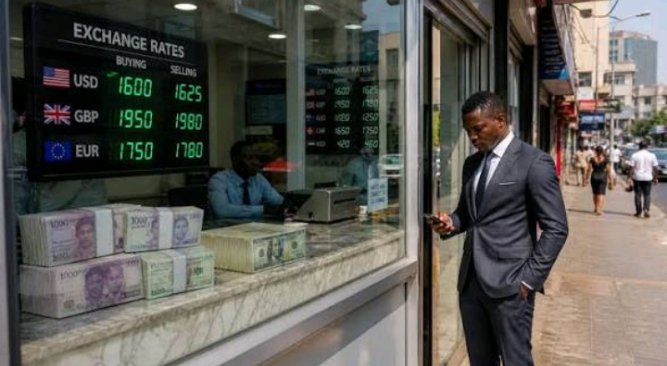
The Nigerian naira weakened against the United States dollar on Friday, September 18, 2026, across both the official and parallel markets, with the currency losing ground as demand for foreign exchange persisted.
At the Nigerian Foreign Exchange Market (NFEM), the naira traded at approximately N1,331 per dollar, according to Central Bank of Nigeria data.

This represents a depreciation of about N1.44 from the N1,329.56 recorded on Wednesday, September 16.
In the parallel market, the dollar was quoted at about N1,375 for buying and N1,390 for selling, up from N1,370 earlier in the week.
The latest movement widened the spread between the official and parallel-market rates to roughly N44 per dollar, compared with N40.44 on Wednesday.
Market participants attributed the naira’s slide to sustained foreign exchange demand from importers and businesses, alongside liquidity conditions in the formal market.
Reuters reported on Thursday that the naira was expected to remain broadly stable, supported by central bank dollar sales and relatively subdued import demand.
For Nigerians buying dollars through the parallel market, the prevailing selling rate means $100 would cost about N139,000, while $1,000 would require approximately N1.39 million.
Those selling dollars to dealers at the buying rate of N1,375 would receive about N137,500 for $100.
The naira also showed mixed movement against other major currencies. The British pound weakened against the naira in the parallel market, falling to N1,835 from N1,840, representing a 0.27% appreciation for the local currency against sterling.
The euro strengthened, rising to N1,576 from N1,573, a 0.19% depreciation for the naira against the European currency.
At the official NFEM window, the naira strengthened against the pound by N9.16 to close at N1,771.16 and gained N3.15 against the euro to settle at N1,526.36.
Parallel-market rates are not uniform and can vary depending on location, dealer, transaction size and prevailing supply and demand conditions.
The reported figures represent quotations for Friday rather than a single fixed price applicable across all transactions.
The official exchange rate remains important for individuals and businesses requiring dollars for imports, travel, tuition and other foreign currency obligations.
Market watchers continue to monitor dollar liquidity, foreign exchange demand and CBN interventions as key factors influencing the naira’s near-term performance.