World News
Nigerian Doctors Cleared as US Restarts Visa Processing for Foreign Physicians

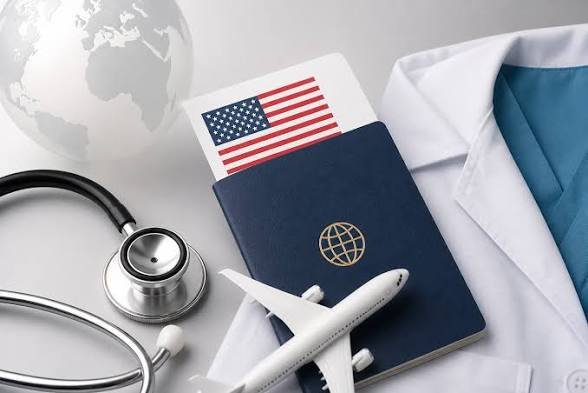
Nigerian doctors are among the international medical graduates set to benefit after the United States resumed visa processing for physicians following a months-long hold that disrupted training and residency placements.
The reversal comes after the US Citizenship and Immigration Services updated its website last week to show that physicians are no longer subject to the processing pause. “Applications associated with medical physicians will continue processing,” the Department of Homeland Security said in a statement.
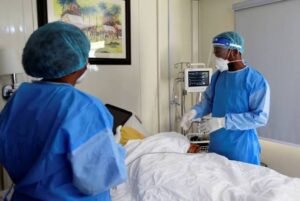
Earlier this year, a presidential proclamation imposed a visa ban affecting multiple countries, including Nigeria, citing national security concerns. The ban halted visa renewals and new issuances for many foreign nationals, including doctors. Some Nigerian physicians already in the US fell out of legal status because their visa renewals were not being processed.


The US Department of State announced on June 18 that it lifted the pause it placed on new visa appointments. The Educational Commission for Foreign Medical Graduates, which certifies international medical graduates before they can enter US graduate medical education, indicated the department directed US embassies and consulates to prioritize J-1 physicians for visa interview scheduling. This means that embassies can now resume booking visa appointments and have been asked to give priority to physicians applying for the J-1 visa for educational exchange.
The change follows warnings from medical groups. On April 8, several doctor associations, including the American Academies of Family Physicians, Neurology and Pediatrics, signed a letter to the secretaries of state and homeland security expressing “urgent concern” about barriers preventing “qualified, vetted physicians” from entering and remaining in the United States. They called for a national-interest exemption from the policy as well as expedited processing of their cases.
According to the Association of American Medical Colleges, 25.6 percent of active physicians in the US are international medical graduates. A 2024 global health workforce database listed Nigerians as the sixth largest group of foreign doctors in the US on the J-1 visa.
Dr. Susan Edionwe, president of the Nigerian Physicians Advocacy Group, said the earlier pause in new student visa interview scheduling and rising J-1 visa denials kept highly qualified international medical graduates from training and practicing in the US. “These are not just talented individuals, they’re future global health leaders. Training them in the US creates lasting partnerships with Nigerian institutions and strengthens America’s health and diplomatic leadership,” she said.
Edionwe said Nigerian doctors arrive fully trained, reducing costs for the US system. “With US medical school costs ranging between $120,000 to $600,000, international graduates represent a smart investment in workforce development. An estimated 60 percent of Black doctors in America are of Nigerian heritage, a figure that speaks to their impact on both diversity and capacity in the US healthcare system,” she added.
The Nigerian Physicians Advocacy Group is pressing Congress to pass the Conrad State 30 and Physician Access Reauthorization Act, H.R. 1201. The bill would allow more J-1 visa holders to remain in the US after residency if they serve in federally designated Health Professional Shortage Areas. “Fixing the J-1 visa process and passing H.R. 1201 is essential. Communities across America depend on doctors who are ready, willing, and able to serve—Nigerian doctors are already doing the work. Let’s not close the door on them,” Edionwe said.
She noted that more than 30 Nigerian medical graduates are currently seeking training and research opportunities in the US. “Let us be clear. This isn’t about handouts. Nigerian doctors are here to help America solve a real problem—access to quality care. All we’re asking for is the opportunity to do that,” she said.
For now, experts say the resumption mainly applies to physicians already in the United States. There is still a lack of clarity on doctors from travel-ban countries who are outside the US, as the external travel ban remains in place. “This is apparently only for doctors who are already in the US,” experts interpreted.
The American College of Radiology said international medical graduates are essential in filling workforce shortages in areas and specialties that struggle to recruit and retain physicians. The group welcomed that the J-1 visa pathway will remain available to these physicians to come to the US for residency training.