
General News
Nigeria’s Problem is Foundation, Not Leaders, Says D4N Project Director

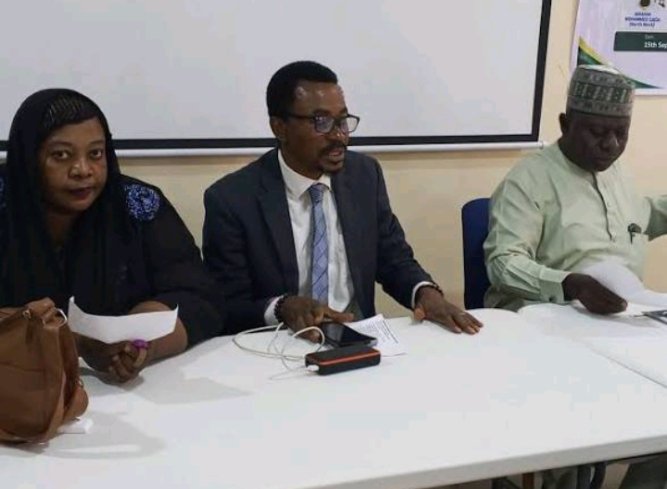
The Project Director of Discovery for Nigeria (D4N), Eastmond Ojen, has said Nigeria’s fundamental problem is not its leaders but the constitutional foundation upon which the country is built.
Ojen stated this at the inauguration of the National and Zonal Coordinators of D4N, a project powered by the New Generation Leadership Initiative (NGLI).
He said the initiative was established to promote constitutional education, civic consciousness and citizen participation in discussions about Nigeria’s political and constitutional future.

According to him, the project will take constitutional education and dialogue across the country to enable Nigerians to examine the principles upon which the nation was founded and determine whether the existing constitutional arrangement adequately reflects the country’s aspirations.
“Leadership is not the problem, quote me right. Our problem is the foundation,” Ojen said.
He explained that the Nigerian Constitution should be examined as the foundation of the nation, arguing that the principles embedded in a country’s foundational document determine how its institutions and governance structures function.
“Nothing works without understanding principles. For anything to work, you must understand the principles behind it,” he said.
Ojen said D4N would, therefore, ask fundamental questions about Nigeria’s constitutional development, including whether the 1999 Constitution truly reflects the country and whether the federal system currently being practised amounts to true federalism.
“Is this constitution, the 1999 constitution, a true reflection of Nigeria? Does it reflect the nation as it were? Or is it that the true federalism we’re talking about is what we are practicing?” he queried.
He also questioned the concentration of powers at the centre, asking whether the structure of the Nigerian federation places excessive responsibilities on the President.
“Are the zones supposed to control the resources? Are the zones? Is the President overwhelmed by the structure of Nigeria?” he asked.
Ojen said the initiative would examine Nigeria’s constitutional structure, including the distribution of legislative powers and the relationship between the Federal Government and the constituent parts of the federation.
He noted that the country’s governance structure had become excessively centralised, pointing to the number of ministries, departments and agencies under the Federal Government.
“The last time I checked, there are over 900 MDAs. And all of them are answerable to the President. Is he supposed to control it like that?” he asked.
Ojen said the ultimate objective of D4N was to amplify citizens’ voices and promote a national conversation around the principles associated with the 1963 Constitution, alongside the restructuring of Nigeria.
He described restructuring as a necessary issue that Nigerians should be able to discuss openly.
“Our vision is to bring up the voices of citizens. To amplify the voices of citizens. To demand for the principles that were in the constitution of the 1963 constitution to be enforced, to be in place. And also ask for restructuring of Nigeria. It’s not a big deal,” he said.
Meanwhile, the project’s stated philosophy is captured in the motto, “Discover. Recover. Restore”.
The initiative says Nigerians need to discover and understand the country’s constitutional history, recover important principles and lessons from its constitutional journey, and create space to discuss the restoration of sound federal principles.
Ojen said the country’s constitutional history deserved greater public attention, particularly among citizens who may have limited knowledge of the constitutional.