General News
ECOWAS Trains Journalists, Wikipedia Editors To Tackle Electoral Disinformation Ahead Of Polls

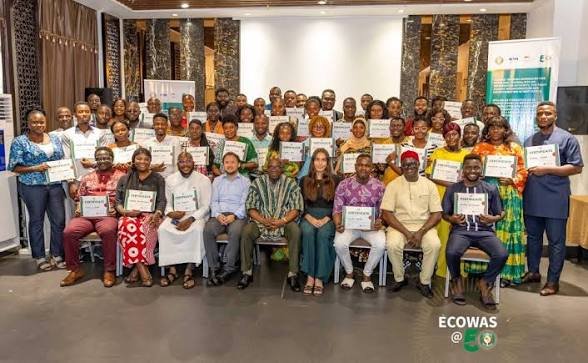
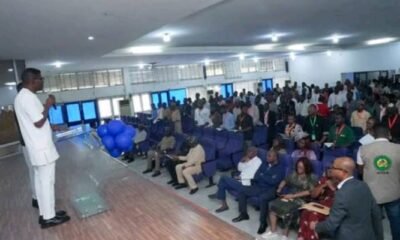
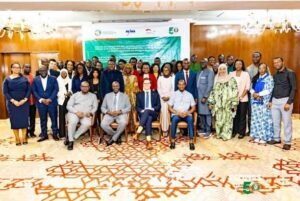
The Economic Community of West African States (ECOWAS), the European Union (EU) and FIAP have launched a two-day training programme for journalists and Wikipedia editors in Lagos to strengthen efforts against electoral disinformation and misinformation across West Africa.
The workshop, which began on Tuesday, November 10, is aimed at improving information verification, fact-checking and responsible reporting, particularly as countries in the region prepare for future electoral contests.
Speaking at the opening ceremony at Shoregate Hotel, Ikeja, the Director of Communication, ECOWAS Commission, Joel Ahofodji, warned that the growing spread of fake news, hate speech and manipulated digital content posed serious threats to democratic institutions, public confidence and regional stability.
He said the protection of information integrity was central to ECOWAS’ responsibility to promote democracy, good governance, peace and security across West Africa.
The workshop, themed, “Strengthening Electoral Information Integrity through Responsible Journalism, Fact-Checking and Open Knowledge,” is being organised with support from the EU through its Support to ECOWAS in Peace, Security and Governance (EPSG) Project.
Ahofodji, who spoke on behalf of the Directorate of Communication, said the emergence of generative artificial intelligence had made the information environment more complex, allowing fabricated images, videos, audio recordings and narratives to appear increasingly convincing.
He warned that such content could manipulate public opinion, weaken confidence in electoral institutions and potentially trigger violence.
Highlighting ECOWAS’ interventions, he disclosed that the Commission had trained more than 500 journalists across 12 member states within the past year on countering misinformation and disinformation.
The training covered fact-checking, open-source intelligence, digital verification, online safety, conflict-sensitive reporting, peace journalism and media literacy.
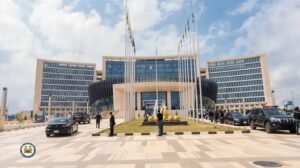
He also identified the ECOWAS Disinformation Working Group as a key platform for regional cooperation, noting that its second meeting, held in Accra, Ghana, on October 15 and 16, examined institutional coordination, capacity development and the Information Integrity Roadmap 2026–2030.
On national interventions, Ahofodji cited ECOWAS’ support for The Gambia in establishing its National Misinformation and Disinformation Response Centre, inaugurated in April 2026, to facilitate real-time fact-checking, early warning and media literacy.
He further identified the ECOWAS Inter-Institutional Communication Strategy 2026–2030 and the Information and Communication Policy finalised in February 2026 as frameworks for improving institutional communication and public engagement.
The ECOWAS communications director, however, cautioned that efforts to combat false information must not undermine fundamental rights, freedom of expression, media independence or access to information.
He warned against using the fight against disinformation as justification for censorship or the suppression of legitimate public debate.
“Our objective is to empower citizens with credible information to make informed decisions,” he said.
Addressing participating journalists, Ahofodji urged media organisations to move beyond reporting official activities by providing context, challenging false narratives and improving public understanding of developments across the region.
He stressed that verification must remain a non-negotiable principle of journalism, particularly in coverage of elections, political transitions and security matters.
“Credibility remains the greatest asset of journalism. Speed without verification and sensationalism without context can undermine public confidence and have serious consequences,” he said.
He also underscored the importance of collaboration between professional journalists and Wikipedia and Wikimedia editors in making credible, properly sourced information about ECOWAS and democratic developments in West Africa more accessible.
Ahofodji called for collective action involving governments, electoral institutions, media organisations, civil society groups, technology platforms, researchers and citizens to protect the regional information space.
He reaffirmed ECOWAS’ commitment to strengthening partnerships with the European Union, the German Government, GIZ, FIAP and regional media organisations to promote information sharing, fact-checking and responsible communication.
The two-day programme is expected to strengthen participants’ professional skills, improve newsroom verification practices and establish stronger collaboration between mainstream media practitioners and the open-knowledge community in tackling electoral disinformation across West Africa.