
Energy
PRESIDENT TINUBU APPOINTS ABBA ALIYU AS MANAGING DIRECTOR OF RURAL ELECTRIFICATION AGENCY


President Bola Ahmed Tinubu has appointed Abba Abubakar Aliyu as the substantive Managing Director of the Rural Electrification Agency (REA). The appointment, which takes effect from January 23, 2025, is for an initial term of four years.

Special Adviser to the President, Bayo Onanuga, in a statement, noted that Aliyu has been acting as the agency’s managing director since March 2024. Onanuga stated that Aliyu brings over 20 years of experience in energy and organizational development in the private and public sectors to his new role. Aliyu has played key leadership roles in the on-grid and off-grid power sectors, as well as the water resources and transportation sectors of Nigeria’s economy.

Previously, Aliyu served as head of the Project Management Unit at the Nigeria Electrification Project; General Manager of Corporate Services, Projects, and Research, and Deputy General Manager at Nigeria Bulk Electricity Trading PLC (NBET). Onanuga added that President Tinubu anticipates that Aliyu will leverage his extensive expertise to further the REA’s mission of providing rural communities with reliable electric power and contributing to the administration’s Renewed Hope Agenda on sustainable energy and power. Onanuga concluded by stating that the appointment is a significant step towards achieving the administration’s goals in the energy sector.




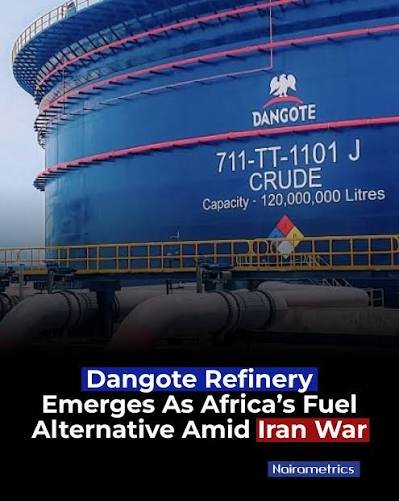
Dangote Petroleum Refinery has announced a fresh increase in the price of Premium Motor Spirit (PMS), raising it from ₦1,175 to ₦1,245 per litre, amid rising crude oil prices caused by the ongoing Middle East conflict.
In a notice to marketers on Friday, the Refinery also adjusted its coastal price from ₦1,512,648 to ₦1,606,518 per metric tonne, citing global market realities such as fluctuations in crude prices and higher shipping costs beyond its control. The new pricing takes effect from midnight on Saturday, March 21, 2026.
Marketers with existing supply arrangements supported by valid bank guarantees may still lift products at previous rates, provided their guarantees cover the price difference. The corresponding cost differential is to be debited to marketers’ trading accounts, with proof of payment required by March 23.
In a statement to newsmen, the Refinery highlighted that despite the increase, Nigeria continues to maintain one of the lowest petrol prices globally. According to GlobalPetrolPrices.com, petrol in Nigeria averages $0.88 (₦1,191.39) per litre, well below the global average of $1.32 (₦1,787.08), based on an exchange rate of ₦1,353.85 to the dollar.
For comparison, petrol prices in key markets are higher: the United States at $1.075 (₦1,455.39), India at $1.095 (₦1,482.47), South Africa at $1.189 (₦1,609.73), the United Kingdom at $1.874 (₦2,537.11), France at $2.152 (₦2,913.49), Germany at $2.343 (₦3,172.07), and Hong Kong at $3.967 (₦5,370.72) per litre.
Within West Africa, petrol remains cheaper in Nigeria compared to Togo ($1.192 / ₦1,613.79), Benin ($1.218 / ₦1,648.99), Ghana ($1.240 / ₦1,678.77), and Cameroon ($1.478 / ₦2,000.99) per litre. Analysts attribute Nigeria’s relative stability to Dangote Refinery’s growing capacity, which has absorbed much of the global cost pressures while ensuring consistent fuel availability.
The Refinery also emphasized that very few countries globally sell petrol below $1 (₦1,353.85) per litre without government intervention, highlighting the strategic role of Dangote Refinery in moderating domestic price volatility, even after Nigeria transitioned to a deregulated market post-subsidy removal in 2023.
Despite domestic petrol prices rising 35 to 40 percent since the start of the Middle East crisis, these increases remain below those seen in other countries, including Cambodia (67%) and Vietnam (49%).
This marks the fourth fuel price hike by Dangote Refinery in March 2026. Earlier adjustments in the month increased PMS prices from around ₦774 to ₦875, then ₦995, followed by ₦1,175, and now ₦1,245 per litre.

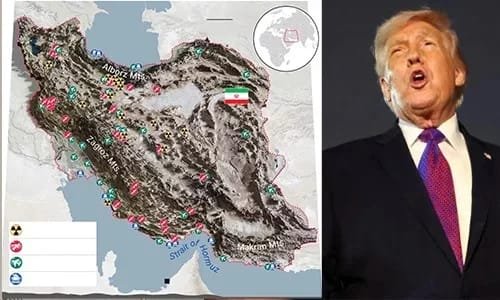
Tensions in the Middle East have escalated sharply as Saudi Arabia signalled it could take military action against Iran, while global oil prices surged amid fears of a prolonged supply disruption.
Saudi Arabia’s Foreign Minister recently warned that the kingdom “reserves the right” to respond militarily following missile and drone attacks allegedly linked to Iran targeting its territory and energy infrastructure.
The growing standoff comes as the United States, under former President Donald Trump, weighs further action against Iran’s strategic assets, including the possibility of targeting or seizing Kharg Island; Tehran’s most critical oil export hub. The island handles a significant portion of Iran’s crude exports and has already been the site of recent U.S. airstrikes on military facilities.
The crisis has been compounded by Iran’s moves to disrupt shipping through the Strait of Hormuz, a vital global energy route responsible for nearly a fifth of the world’s oil supply. Analysts warn that any prolonged blockade could severely impact global markets and trigger wider economic consequences.
Recent attacks on oil and gas facilities across the Gulf; including in Saudi Arabia, Qatar, and the UAE, have further heightened instability, with several production sites damaged or forced to halt operations.
As a result, global oil prices have surged past the $100 mark, with some reports indicating prices approaching or exceeding $109 per barrel amid supply fears. Experts caution that prices could climb even higher if the conflict intensifies or the Hormuz route remains restricted.
The situation remains fluid, with diplomatic efforts ongoing, but the combination of military threats, disrupted energy infrastructure, and strategic checkpoints has raised concerns about a broader regional conflict and its impact on the global economy.
Nigeria has recorded the steepest increase in petrol prices worldwide, as tensions in the Middle East trigger major disruptions in global oil supply, an analysis by Global Petrol Prices reveals.
According to a detailed breakdown reported by TheCable, Nigeria experienced a 39.5 percent hike in pump prices between February 23 and March 16. In comparison, South Africa and Mexico recorded the lowest increases of 1.0 percent and 0.5 percent, respectively.
Trailing Nigeria, Laos saw a 32.9 percent increase, while Australia and Vietnam each recorded a 31.8 percent rise. The United States reported a 23.6 percent increase, followed by Spain (18.7 percent), Canada (17.2 percent), Germany (14.9 percent), Egypt (14.3 percent), and France (12.3 percent).
China experienced a 10 percent increase, Ethiopia 7.9 percent, the United Kingdom 6.5 percent, and the UAE 6.4 percent. Liberia and Hong Kong saw smaller rises of 4.9 percent and 4.7 percent, respectively, while Croatia and Qatar recorded 2.7 percent each.
The ongoing war in the Middle East has triggered the largest supply disruption in the history of the global oil market, sending crude oil prices to a four-year high and driving petrol prices sharply upward in Nigeria.
Despite expectations that local refining and domestic petrol production might stabilize prices, the increases have persisted, with petrol now selling for as much as N1,330 per litre in some areas.
Dangote Refinery acknowledged on March 9 that it was not insulated from global trends, sourcing crude based on international benchmarks. Consequently, on March 13, the refinery increased its ex-gantry petrol price to N1,175 per litre.
As of today, petroleum prices across Nigeria range between N1,130 and N1,350 per litre, varying by location and marketer. NNPCL-affiliated outlets in Lagos sell petrol for around N1,130, while some Abuja locations report prices as high as N1,261 per litre.
Prices from major marketers in Abuja and surrounding areas range from N1,267 to N1,330, with independent marketers charging up to N1,350 per litre in certain regions.