
Legislature
SENATE PASSES ELECTORAL ACT AMENDMENT BILL, DENIES REJECTION OF ELECTRONIC TRANSMISSION OF RESULTS


The Senate on Wednesday passed the Electoral Act (Amendment) Bill, 2026, following a marathon session that lasted several hours, while firmly dismissing claims that it rejected the electronic transmission of election results.
Senate President, Senator Godswill Akpabio, made the clarification shortly after the passage of the bill, saying reports circulating on social media suggesting that lawmakers voted against electronic transmission of results were false and misleading.
Deliberations on the contentious amendment to Clause 60, Subsection 3, of the bill commenced around 2:00 pm and stretched until 6:26 pm, sparking widespread speculation online that the Senate had opposed mandatory real-time electronic transmission of results.
Reports had claimed that the upper chamber rejected a proposal seeking to compel presiding officers of the Independent National Electoral Commission (INEC) to transmit election results electronically from polling units to the INEC Result Viewing (IREV) portal in real time after signing and stamping the prescribed result forms.
Instead, the Senate was said to have retained the existing provision of the Electoral Act, which states that “the presiding officer shall transfer the results, including the total number of accredited voters and the results of the ballot, in a manner as prescribed by the Commission.
”However, Akpabio insisted that the interpretation was inaccurate, stressing that the Senate did not remove electronic transmission from the law.
Addressing journalists, Senate spokesperson, Senator Yemi Adaramodu, also dismissed the reports, stating that the Senate did not reject the committee’s recommendation on electronic transmission of results to the IREV portal in real time, but merely avoided creating legal technicalities.
Adaramodu further explained that the amendment removed the power to declare a runner-up as winner in situations where a candidate earlier declared by INEC was later found not to be qualified to contest the election.
Clarifying the position of the Senate, Akpabio said:“Distinguished colleagues, the social media is already awash with reports that the Senate has rejected electronic transmission of results.
That is not true. What we did was to retain the electronic transmission provision already in the Act, which was used in 2022.“This Senate, under my watch, has not rejected electronic transmission of results.
It is in my interest as a participant in the next election for such to be done. We have retained the previous provision, which allows for electronic transmission, and we cannot afford to go backwards.
”The issue of electronic transmission of election results has remained a sensitive and widely debated aspect of Nigeria’s electoral reforms since the 2023 general elections, with civil society organisations and opposition parties calling for clearer legal provisions to enhance transparency and public confidence in the electoral process.
Akpabio said his intervention was aimed at addressing public concerns and correcting what he described as deliberate or careless misrepresentation of the Senate’s action on the bill as the National Assembly continues work on electoral reforms ahead of future elections.
Following the passage of the bill, the Senate announced the composition of a conference committee to harmonise its version with that of the House of Representatives.
Members of the committee are Senators Adeniyi Adegbonmire (Ondo Central) as chairman, Tahir Monguno (Borno North), Simon Lalong (Plateau South), Adamu Aliero (Kebbi Central), Orji Uzor Kalu (Abia North), Abba Moro (Benue South), Asuquo Ekpeyong (Cross River South), Aminu Abbas (Adamawa Central) and Tokunbo Abiru (Lagos East).
Meanwhile, the Senate has adjourned plenary until February 24, 2026, to enable lawmakers concentrate on the 2026 budget defence by ministries, departments and agencies (MDAs).




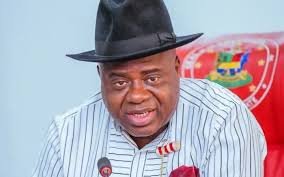








Deputy Speaker of the House of Representatives, Benjamin Kalu, has lauded President Bola Ahmed Tinubu for signing the Kampala Convention Domestication Act into law, describing the move as a landmark step toward protecting internally displaced persons (IDPs) across Nigeria.
Kalu gave the commendation in Abuja while receiving a delegation from the International Committee of the Red Cross, led by Doris El Doueihy, who visited to appreciate Nigeria’s domestication of the convention.
He noted that the new law provides a comprehensive legal framework aimed at safeguarding the rights, dignity, and welfare of displaced persons, while also positioning Nigeria as a leader in humanitarian protection across Africa.
According to the Deputy Speaker, attention must now shift to implementation, particularly at the state level, to ensure the law delivers meaningful impact for affected populations.
Kalu, who co-sponsored the bill, also commended the Attorney General of the Federation, Lateef Fagbemi, for his role in facilitating the successful passage and signing of the legislation.
He stressed that full domestication and enforcement by state governments would be critical to addressing the challenges faced by IDPs and strengthening Nigeria’s humanitarian response framework.


The Court of Appeal in Abuja has overturned a Federal High Court judgment that removed a member of the House of Representatives, Abubakar Gummi, from office after he defected from the Peoples Democratic Party (PDP) to the All Progressives Congress (APC).
In a unanimous decision delivered on Friday, a three-member panel of the appellate court ruled that the lower court erred when it declared Gummi’s seat vacant on the basis of his defection from the PDP to the APC.
Gummi, who represents the Gummi/Bukkuyum Federal Constituency of Zamfara State, had left the PDP citing internal leadership crises within the party at the national level.
The Federal High Court in Abuja had earlier, on October 30, 2025, ordered his removal from the House of Representatives following a suit filed by the PDP and the party’s Zamfara State chairman, Jamilu Jibomagayaki, challenging the defection.
However, while delivering the appellate court’s judgment, Justice Oyebiola Oyewumi held that the trial court was wrong to sack the lawmaker, noting that the appellant had the right to leave his party in view of the prevailing circumstances within the PDP.
The court also affirmed that a political office holder may seek another platform if the stability of the party under which he was elected becomes threatened.
The appellate court consequently allowed the appeal and set aside the earlier ruling that removed the lawmaker from office. It also awarded ₦1 million in costs against the PDP and its Zamfara chairman in favour of Gummi.
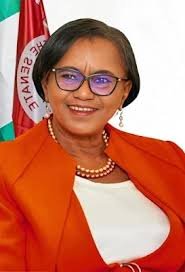
The Peoples Democratic Party (PDP) on Tuesday suffered another setback in the Senate following the defection of Senator Ipalibo Banigo, representing Rivers West, to the ruling All Progressives Congress (APC).
Banigo’s defection, which was announced during plenary by Senate President Godswill Akpabio, has further reduced the number of PDP senators from 18 to 17 in the upper legislative chamber.
The party had 36 senators at the inauguration of the 10th Senate in June 2023 but has since experienced a steady decline due to defections.
Akpabio also disclosed that more defection letters from senators had already been submitted to him and would be announced at a later date. According to him, the announcements were temporarily delayed out of respect for the late Senator Barinada Mpigi, who represented Rivers South East and whose death led the Senate to suspend plenary until Wednesday.
In her defection letter, Banigo said her decision was driven by the need to align with what she described as a more stable and progressive political platform.
“I am convinced that the APC offers a more stable and progressive platform to advance the legislative and developmental agenda of my constituency and the nation at large,” she stated.
She explained that the internal divisions and prolonged leadership crisis within the PDP influenced her decision to leave the party.
Banigo also noted that her move was partly to align with her political mentor, the Minister of the Federal Capital Territory, Nyesom Wike, and the Governor of Rivers State, Siminalayi Fubara, in supporting President Bola Ahmed Tinubu and his administration’s economic reforms.
Speaking with journalists after plenary, the senator cited ongoing infrastructure projects in Rivers State, including the long-awaited Bonny Road project, as part of the reasons for her decision.
She said the completion of the road had significantly improved trade, transportation and communication for residents of the area.
With the latest defection, the composition of the Senate has shifted significantly from the figures recorded at the inauguration of the 10th National Assembly in 2023.
The APC now has 81 senators, up from 59 at the start of the Assembly, while the PDP has dropped to 17 from 36. The Labour Party, which initially had eight senators, currently has none, while the New Nigeria Peoples Party (NNPP) has one senator.
Similarly, the Social Democratic Party (SDP), which once had two senators, currently has none, while the All Progressives Grand Alliance (APGA) retains one seat.
The African Democratic Congress (ADC), which had no senator at the start of the 10th Senate, now has five members, while the newly registered Nigeria Democratic Congress (NDC) has one senator in the person of Seriake Dickson, representing Bayelsa West.
The total number of serving senators currently stands at 106, compared to the constitutionally required 109 seats.
The three vacant seats are from Nasarawa North, Enugu North and Rivers South East, which became vacant following the deaths of Senators Godiya Akwashiki, Okechukwu Ezea and Barinada Mpigi respectively.