
International
Taliban Releases U.S. Citizen Dennis Coyle After Year-Long Detention

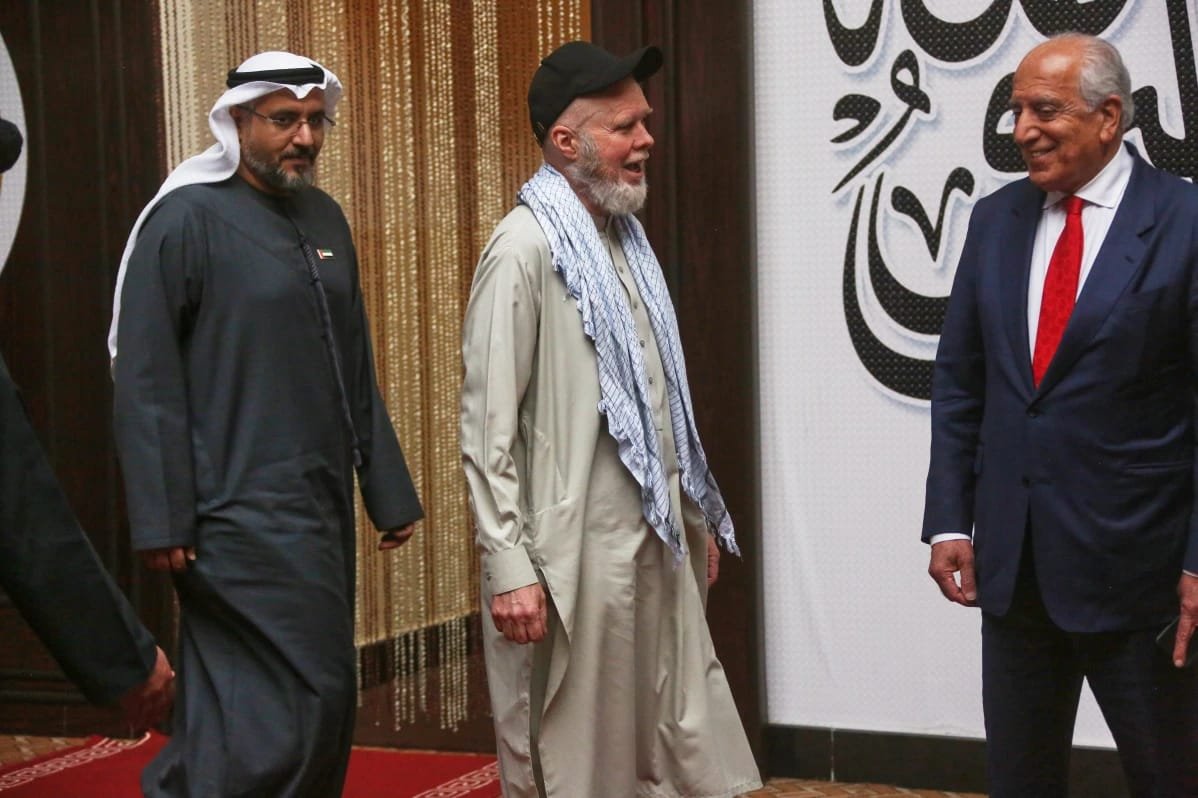
Afghanistan’s Taliban-led government has released an American national, Dennis Coyle, who had been held in detention for more than a year.
Coyle, an academic researcher, was arrested in January 2025 in Kabul and remained in custody without publicly disclosed charges. Afghan authorities claimed he violated local laws, although the specifics were never clarified.

His release was announced on Tuesday and coincided with the Islamic holiday of Eid al-Fitr. According to Afghanistan’s Foreign Ministry, the country’s Supreme Court reviewed his case and deemed the period he had already spent in detention as sufficient.
The decision followed appeals from Coyle’s family, including a direct plea from his mother, and was facilitated through diplomatic efforts involving countries such as the United Arab Emirates and Qatar.
U.S. Secretary of State Marco Rubio welcomed the development, describing it as a positive step while stressing that more work remains to secure the release of other Americans believed to be held in Afghanistan.
Coyle’s detention had earlier been classified by the United States as “wrongful,” with Washington accusing the Taliban government of engaging in what it termed “hostage diplomacy.” Afghanistan has denied these allegations, insisting that foreign nationals are detained only for legal violations.
Attention has now shifted to other unresolved cases, including that of Afghan-American businessman Mahmood Habibi, who disappeared in 2022 and is believed by the U.S. officials to be in Taliban custody; an assertion the Afghan authorities deny.
Coyle is expected to return home following his release, marking the end of a detention that had drawn international concern and diplomatic pressure.
General News
Global Oil Prices Rise on Strait Disruptions, as Iran Rejects U.S. Dialogue, Supply Risks Persist

Global oil prices climbed sharply on Tuesday as ongoing supply disruptions in the Middle East and renewed geopolitical tensions between Iran and the United States rattled energy markets.
Benchmark crude prices rose above the $100 per barrel mark, with Brent crude gaining nearly $2 and U.S. West Texas Intermediate also posting significant increases. The surge comes amid persistent concerns over disrupted supply routes, particularly through the strategic Strait of Hormuz; a critical chokepoint that handles roughly 20% of global oil shipments.
Tensions escalated further after Iran denied claims by the U.S. officials that negotiations were underway to ease the conflict. The denial contradicted earlier remarks, suggesting progress in diplomatic engagement, adding to uncertainty in global markets.
The ongoing conflict has already disrupted energy infrastructure across the region, with reports indicating that dozens of oil and gas facilities have been damaged. Analysts warn that these disruptions could keep prices elevated for an extended period, even if hostilities ease in the near term.
Adding to market volatility are continued military exchanges and attacks on energy assets, which have heightened fears of a prolonged supply crunch. Oil prices have already surged significantly since late February as traders factor in the risk of further escalation.
Energy experts caution that if the disruption to shipping routes persists, prices could spike even higher, potentially exceeding previous record levels. The uncertainty surrounding diplomatic efforts and the ongoing damage to infrastructure continue to weigh heavily on global energy markets.
The developments underscore the fragile state of global oil supply chains, with markets reacting swiftly to both geopolitical tensions and conflicting signals on potential negotiations.
International
Advocacy Group Accuses M23 Rebels of Detaining Journalists in Inhumane Conditions in Eastern Congo

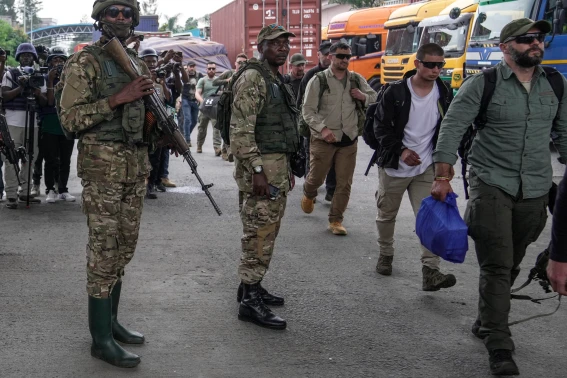
An international media rights organisation, Reporters Without Borders (RSF), has accused the March 23 Movement of detaining civilians, including journalists, in harsh and degrading conditions in eastern Democratic Republic of the Congo.
In a report released on Tuesday, RSF alleged that the Rwanda-backed rebel group held detainees in metal shipping containers in the city of Goma, describing the conditions as “inhumane” and “degrading.”
According to the organisation, at least two journalists were among those detained in the containers, which were reportedly used as makeshift prison cells within the compound of the provincial legislative assembly.
RSF said its findings were based on witness testimonies, satellite imagery, and photographic evidence collected in 2025. For security reasons, the identities of witnesses were not disclosed.
Witnesses reported that up to 80 detainees were crammed into a single container without access to light or ventilation, and were only allowed outside once a day. They also described minimal food provision, routine beatings, and extreme temperatures—ranging from intense daytime heat to cold nights.
Some detainees were reportedly held for several weeks before being transferred to other locations, with deaths also recorded under the harsh conditions.
The M23 rebels have yet to respond to the allegations.
The report highlights worsening conditions for journalists in eastern Congo following the group’s takeover of Goma last year. RSF noted that the rebels have tightened control over media operations, including imposing restrictions on how their presence is reported.
Eastern DR Congo has long been plagued by conflict involving more than 100 armed groups competing for control of the region’s vast mineral resources. The M23 rebels, widely reported to be backed by neighbouring Rwanda, have emerged as one of the most powerful factions.
Despite a ceasefire brokered by the United States and Qatar, fighting has persisted, deepening a humanitarian crisis that has displaced at least seven million people.
The latest allegations add to growing concerns over human rights abuses and press freedom violations in the region.
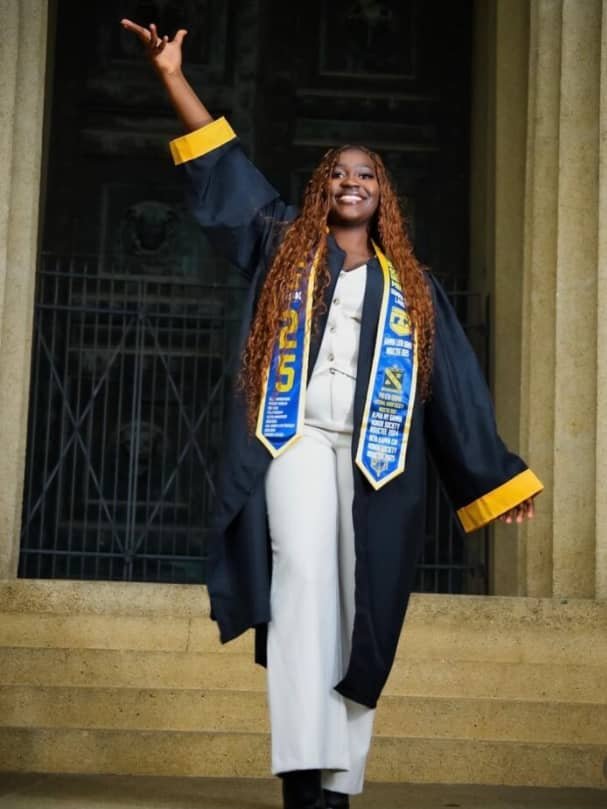
A 23-year-old Nigerian graduate, Oluwalayomi “Layo” Fadero, has tragically lost her life in a fatal road accident in Nashville, after a fleeing suspect driving against traffic crashed into her vehicle.
The incident occurred on Murfreesboro Pike when a 52-year-old man, identified as Ray Eugene Padgett, allegedly sped off in a stolen Ford F-250 truck while attempting to evade police. Authorities said the suspect drove in the wrong direction before colliding head-on with Fadero’s car.
Fadero, a recent graduate of Fisk University, was reportedly approaching her neighbourhood when the crash happened. She was pronounced dead at the scene.
Law enforcement officials confirmed that Padgett has been taken into custody and is facing multiple charges, including criminally negligent homicide, vehicular homicide by recklessness, and reckless endangerment. He was said to be on parole at the time of the incident, with a history of prior convictions.
The tragic death has sent shockwaves through the Nigerian community in the United States, with tributes pouring in for the young graduate described as promising and full of life.
Meanwhile, a fundraising initiative set up to support her burial has raised over $13,000, reflecting the widespread grief and solidarity among friends, family, and well-wishers.
The incident has also reignited concerns over the dangers associated with high-speed police pursuits and reckless driving on major highways in the United States.