
Featured
The Era That Restructured Power: Chimaroke Nnamani and the Politics of Architecture

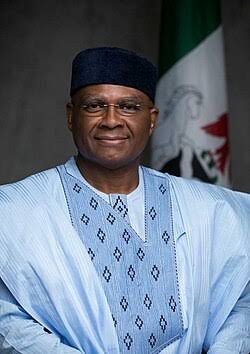
When Nigeria returned to democratic rule in 1999, optimism filled the air. So did uncertainty. After decades of military dominance, institutions were fragile, political parties were still defining themselves, and states across the federation faced a pressing question: how would governance be rebuilt?
In Enugu State, that question found an answer in Chimaroke Nnamani a medical doctor-turned-politician whose approach to power was less about spectacle and more about structure.
He did not simply govern. He engineered.
Democracy’s Early Uncertainty
The dawn of Nigeria’s Fourth Republic demanded leaders who could stabilize institutions while navigating a delicate political transition. Many governors of that era focused on political survival in an unpredictable environment. Nnamani, however, appeared preoccupied with something more enduring: building a structure that could outlive his tenure.
Elected governor in 1999 under the platform of the Peoples Democratic Party (PDP), he represented a generational shift a younger political class stepping into leadership at a defining national moment. But beyond symbolism, his administration was marked by method.
His two terms, from 1999 to 2007, coincided with the foundational years of Nigeria’s democratic experiment. Institutions were fluid. Party loyalties were evolving. Governance structures were being tested. By the time he secured re-election in 2003, his influence in Enugu was no longer merely electoral; it had become structural.
And structure, unlike applause, endures.
From Medicine to Mobilization
Born on May 30, 1960, Nnamani trained as a medical doctor, studying in Nigeria before further professional engagements abroad. His early leadership orientation was visible during his tenure as National President of the Nigerian Medical Students’ Association (NIMSA), a role that demanded coalition-building, negotiation, and disciplined organization.
Those formative experiences shaped his political instincts. He approached governance like surgery methodical, systemic, and attentive to institutional frameworks. Politics, for him, was less about personality and more about architecture.
EBEANO: Philosophy Meets Power
Perhaps the most defining feature of Nnamani’s era was the emergence of the EBEANO political family. Framed around the Igbo concept of Aladimma the common good and collective advancement EBEANO evolved from a philosophical ideal into a durable political ecosystem.
It was more than a slogan. It was organization.
For over two decades, Enugu’s political trajectory has been difficult to discuss without referencing the EBEANO structure. Whether viewed as mentorship or criticized as dominance, its longevity reflects strategic design. Temporary office was converted into long-term influence.
During his first term, Nnamani laid the foundations of that architecture through:
Institutional Expansion: Strengthening educational and health institutions, including advancing the permanent campus of Enugu State University of Science and Technology and expanding medical training infrastructure.
Political Organization: Building a grassroots-based loyalty network that extended beyond elite political circles.
Succession Planning: Demonstrating early awareness that political continuity requires preparation long before transition.
Unlike leaders who relied solely on charisma, his strategy centered on layered organization and policy-backed legitimacy.
Governance as Visibility
Influence without performance is fragile. Nnamani understood this.
Under his administration, Enugu witnessed visible infrastructural and institutional development. The permanent campus of ESUT was completed and equipped. The Enugu State University Teaching Hospital and College of Medicine at Parklane took shape. The Enugu Campus of the Nigerian Law School was constructed and handed over to the Federal Government.
Urban renewal projects including expanded road networks and the landmark Ebeano Tunnel altered the physical landscape of the capital city.
These were not merely development projects. They were instruments of legitimacy. In politics, visibility stabilizes authority.
His medical background was reflected in the establishment of district and cottage hospitals and expanded rural health services. Education and healthcare became governance anchors tangible, measurable, and enduring.
The Psychology of Dominance
Between 1999 and 2007, Enugu’s political rhythm largely moved within an ecosystem influenced by Nnamani. Alliances, candidacies, and transitions seldom occurred outside his network’s orbit.
This was not dominance rooted purely in popularity. It was organization and organization is the highest form of political intelligence.
By the end of his second term, his imprint on the state’s political structure was unmistakable. Power had been consolidated, but more importantly, it had been systematized.
Beyond Government House
Leaving office in 2007 did not signal the end of his relevance. Nnamani transitioned to the Senate, representing Enugu East Senatorial District, and returned again in 2019. His continued presence in national politics reinforced a reality long established: his influence was not tied to a single electoral cycle.
As a senator, he contributed to key committees, including those focused on NEPAD and African cooperation, reflecting broader continental interests. He cultivated the image of an intellectual politician one comfortable engaging policy, governance theory, and democratic consolidation.
Even his controversial positions during the 2023 general elections followed a familiar pattern: strategic calculation over emotional populism. Agree or disagree, his political choices have consistently reflected structured reasoning rather than impulsive alignment.
Legacy: The Architecture of Power
To judge Chimaroke Nnamani solely by projects or tenure is to miss the larger story.
His enduring legacy lies in the architecture he built a networked political structure that has shaped Enugu’s leadership dynamics for more than two decades. He understood that influence is not sustained by rhetoric alone, but by systems, loyalty, and deliberate continuity.
He did not merely occupy office. He defined an era.
Yet his story also offers a broader reflection: power, no matter how carefully engineered, remains in conversation with time. What survives when applause fades? What remains when tenure ends?
In Nnamani’s case, the answer is clear. The structures endure.
And in the annals of Enugu’s political evolution, that may be the most consequential legacy of all.

A Homeland Honouring Its Son
By Mualeem Ibrahim
There are cities that exist on maps, and there are cities that live in the bloodstream of their people. Machina—ancient, resilient, and proud—belongs to the latter. Nestled in the northwestern sands of Yobe State, this Emirate has carried its traditions with a devotion that has outlived empires. Its formal leadership, historians remind us, stretches back to 980 AD, when Mai Hariyu Bolo Kandira ascended the throne and began a lineage of guardianship that still stands, unbroken, like a desert baobab defying time.
Machina is not merely a place; it is a pulse. A memory that breathes. A heritage that refuses to dim. Chinua Achebe once wrote that “a people are as strong as the stories they tell about themselves.” Machina’s story is one of endurance, dignity, and a cultural splendour that glows like embers in the Sahel night.
SEVEN DAYS WHEN TIME STANDS STILL
Each year, Machina calls its sons and daughters home—no matter how far their journeys have taken them. For seven radiant days, the city becomes a living tapestry of colour, rhythm, and ancestral pride. The Machina Annual Cultural Festival (MACUF) is not merely an event; it is a homecoming of the spirit. It draws dignitaries, scholars, traditional rulers, journalists, activists, and admirers from across Nigeria and beyond.
Like the festivals in Soyinka’s Death and the King’s Horseman, MACUF reminds us that culture is not a relic to be archived—it is a living force, a heartbeat that binds generations.
But the 2026 edition was touched by something deeper. Something historic.
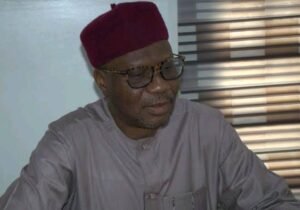
Dr Kole Ahmed
A FESTIVAL CROWNED BY HONOUR
This year, the desert winds carried whispers of anticipation. Machina was preparing to honour one of its most illustrious sons—Dr. Kole Ahmed Shettima. The city swelled with visitors: activists, civil society leaders, academics, politicians, and cultural custodians converged to witness a moment destined for the Emirate’s chronicles.
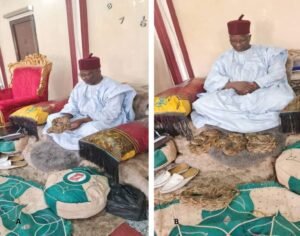
On January 31, beneath the watchful eyes of ancestors and the jubilant gaze of his people, the Emir of Machina, His Royal Majesty Mai Bashir Abishir Bukar, OON, L’ONN, turbaned Dr. Kole as Zanna Yuroma. It was the crowning jewel of MACUF 2026.
The Emir spoke with warmth and conviction. This honour, he said, was not merely a recognition of Dr. Kole’s service to Machina, but a tribute to a man whose compassion radiates far beyond the borders of his birthplace. His love for humanity, the Emir declared, is as expansive as the Sahel sky.
And on Sunday, February 1, the festival’s grand finale, Machina seemed to overflow its own boundaries. It felt as though the entire cabinet of Yobe State had migrated to the Emirate. The Executive Governor, His Excellency Hon. (Dr.) Mai Mala Buni, the SSG, former governors, and over 40 Emirs from across northern Nigeria graced the occasion. Security agencies worked tirelessly to guide the sea of humanity—each person eager to witness history.
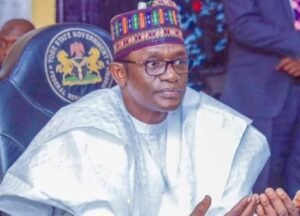
Buni
One lesson stood out like a desert sunrise: though Machina is an Islamic city, it does not silence its women. Draped in radiant traditional attire, they danced with grace, perfumed the air with sweet fragrances, and infused the celebration with a joy reminiscent of Senghor’s immortal tribute— “Naked woman, black woman… your beauty strikes me to the heart.”
A LIFE OF SERVICE, A LEGACY OF IMPACT
For more than three decades, Dr. Kole Ahmed Shettima has walked the intertwined paths of scholarship, philanthropy, and public service with the quiet dignity of a man who understands that true leadership is measured not in titles, but in lives touched. His journey has been neither loud nor ostentatious; instead, it has been steady—like the desert wind that shapes dunes over centuries, transforming landscapes with patience and purpose.
From the lecture halls of academia to the frontlines of development work, Dr. Kole has carried with him a philosophy rooted in empathy. He believes, deeply, that knowledge must serve humanity, and that privilege must bend toward justice. His work reflects this conviction.
Through the Kole Shettima Trust Fund and the Machina Emirate Development Association, he has built a legacy that stretches across generations:
• Scholarships for hundreds of undergraduates, ensuring that the dreams of young people do not wither for lack of opportunity.
• Feeding the poor, not as charity, but as an affirmation of dignity.
• Clothing orphans, wrapping them not only in fabric but in hope.
• Building places of worship, where communities gather to pray, reflect, and find solace.
• Constructing water points, bringing life to communities where water is a daily struggle.
• Paying medical bills, so that illness does not become a death sentence for the vulnerable.
• Mentoring youth, guiding them with the wisdom of experience and the tenderness of a father.
• Settling fines for the imprisoned poor, freeing men and women whose only crime was poverty.
• Improving learning conditions for secondary school students, because he knows that education is the first step toward liberation.
These are not mere acts of generosity; they are acts of remembrance. They are the gestures of a man who never severed the umbilical cord that ties him to his homeland. “What is probably important,” he often reflects, “is being rooted in my community since my primary school education.” That rootedness is his compass. It is what keeps him grounded even as his influence spans continents.
His leadership has shaped institutions, strengthened governance, and inspired a generation of thinkers, activists, and public servants. His contributions to humanity are not abstract—they are stories. Stories of children who stayed in school because he believed in them. Stories of families who found relief in moments of despair. Stories of communities whose futures were rewritten because one man chose to act.
Ngũgĩ wa Thiong’o reminds us that “writers and scholars are the memory of a nation.” In many ways, Dr. Kole has become part of Machina’s living memory—preserving its values, expanding its possibilities, and embodying its highest ideals.
His life is a testament to a simple truth: service is the most enduring form of greatness.
MACHINA REJOICES
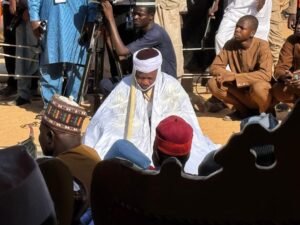
When the turban was tied and the title bestowed, Machina did not simply applaud—it exhaled. A collective breath, held for generations, was released into the desert air. The joy that followed was not the fleeting excitement of a festival; it was the deep, resonant pride of a people witnessing one of their finest sons return home in honour.
The city transformed into a living organism—its streets pulsing with movement, its courtyards humming with anticipation, its skies echoing with the sounds of celebration. Men, women, elders, youth, and children poured into the open spaces as though answering an ancestral call. It felt as if the very soil of Machina had awakened to join the festivities.
The celebration unfolded with the splendour of an epic:
• Drums thundered, their rhythms rolling across the Emirate like distant storms announcing abundance.
• The Kakaki trumpet pierced the air, its regal notes slicing through the crowd with the authority of centuries-old tradition.
• Dancers swirled in vibrant attires, their garments catching the sunlight and scattering it like shards of colour across the sand.
• Wrestlers stepped forward, their bodies glistening with pride, embodying the strength and honour of the land.
• Snake charmers mesmerized the crowd, their movements fluid, ancient, and hypnotic—echoes of a time when magic and culture were inseparable.
• Praise singers chanted genealogies, weaving Dr. Kole’s name into the long tapestry of Machina’s history.
• Music flowed like a river, winding through alleyways, courtyards, and open fields, binding strangers and kin in a shared rhythm.
It was not merely a festival; it was a rebirth.
The Emirate glowed with a unity rarely seen in modern times. Farmers stood shoulder to shoulder with scholars. Traders danced beside civil servants. Children clapped in delight as elders nodded in approval, their eyes shimmering with memories of festivals past. The air was thick with incense, dust, perfume, and the unmistakable scent of celebration—a fragrance that only a city deeply in love with its heritage can produce.
Even the desert seemed to pause. The wind softened, as though listening. The sun lingered a little longer on the horizon, reluctant to set on such a moment. And when night finally draped itself over Machina, lanterns and fires lit up the darkness, turning the Emirate into a constellation on earth.
It was a scene reminiscent of the grand communal gatherings in Achebe’s Arrow of God—a people united not by necessity, but by pride, memory, and shared destiny.
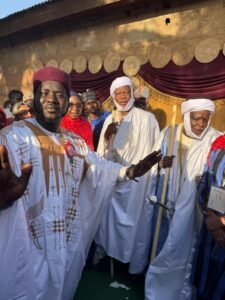
Machina did not merely celebrate a title; it celebrated a legacy, a lineage, a reaffirmation of who it is and what it stands for. In honouring Dr. Kole, Machina honoured itself.
A Tribute to a Worthy Son
In honouring Dr. Kole Ahmed Shettima, Machina honoured the values it cherishes most—service, humility, scholarship, and humanity. The title of Zanna Yuroma is not just a recognition; it is a covenant between a son and his homeland.
And so, with pride and admiration, we join millions across Nigeria in celebrating High Chief Dr. Kole Ahmed Shettima. May his reign as Zanna Yuroma bring wisdom, compassion, and progress to Machina and beyond.
Long may he serve.
Long may Machina flourish.
Mualeem Ibrahim is Human Rights commentator and advocate. He writes from Abuja
By Comrade James Okoronkwo
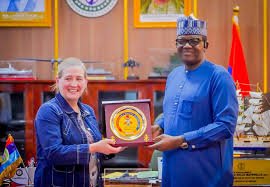
When the history of Nigeria’s battle against insurgency is written, a special chapter will be reserved for those who did not just issue orders from the comfort of Abuja, but who dared to walk the path of the soldier. As the Honourable Minister of State for Defence, Dr. Bello Muhammad Matawalle, marks his 57th birthday this Thursday, February 12, 2026, we celebrate a leader who has redefined the meaning of patriotic duty.
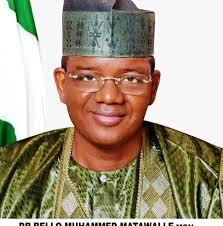
HEEDING THE COMMANDER-IN-CHIEF
True leadership is tested in the crucible of obedience and action. When President Bola Ahmed Tinubu issued the strategic directive for the defense leadership to relocate to the front lines of the North-West, Dr. Matawalle did not hesitate. He understood that to secure the people, one must be amongst the people.
By heeding this call, Matawalle moved the “Ship House” to the trenches of Sokoto, Katsina, and Zamfara. His presence on the front lines was not a mere photo opportunity; it was a “Kinetic Statement” that the era of armchair defense was over. This move boosted the morale of our troops and sent a clear, terrifying message to the enemies of the state: the “Civilian General” is at the gate.
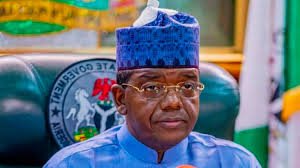
THE POWER OF SYNERGY
One of Matawalle’s greatest achievements at 57 is the seamless synergy he has fostered within the military hierarchy. His working relationship with the Chief of Defence Staff, *General Christopher Musa*, is a masterclass in civil-military cooperation. Together, they have formed a “Unified Command” that has dismantled the infrastructure of terror, proving that when political will meets military professional excellence, the result is an unbreakable shield for the nation.
A FATHER TO THE NATION AND A FATHER AT HOME
Perhaps the most touching testament to the Minister’s character occurred just last Friday. In an era where family values are often sidelined by the weight of office, Dr. Matawalle celebrated the historic wedding of ten of his children at the National Mosque.
Standing as a father to ten newlyweds—with the President himself as the Wali—Matawalle showed the nation that he is a man of balance. He who secures the nation’s borders also honors the sanctity of the home. This milestone is a divine blessing, signaling a man who has “Internal Peace” even as he manages “External Power.”
THE VISION FOR 2027 AND BEYOND
At 57, Bello Matawalle is no longer just a politician from Maradun; he is a national asset. He is the bridge between the grassroots of the North and the strategic vision of the *Renewed Hope Agenda. As he celebrates this milestone, the **Coalition of Civil Society Groups (CCSG)* and millions of Nigerians salute his courage, his loyalty to the President, and his unrelenting pursuit of a peaceful Nigeria.
Happy 57th Birthday to the Architect of the Shield—the Civilian General!
By Casmir Igbokwe,
As we were about to land in Joseph Tarka Airport in Makurdi, the Benue State capital, all I saw was a landscape that appeared bleak and desolate. The airport itself looked like a ghost town. Only a handful of airport workers were on ground to welcome some top members of the Nigerian Guild of Editors on a fact-finding mission to this food basket of the nation.
This first impression almost coloured my overall view of Benue State. As we entered the capital city from the airport, I felt we could be attacked by herdsmen who have become notorious for killing farmers and some other citizens in the state. I thought the state was finished and should be made a territory to be administered by the Federal Government. Many people who have not visited Benue State think likewise.
But that is a great misconception. A tour of some project sites last week changed my entire view of the state. The state governor, Rev. Fr. Dr. Hyacinth Alia, is what one may call a silent achiever. In a little over two years in office, the man has made giant strides in the state. It is not surprising that his people adopted ‘Yes Fada (Father)’ as the campaign slogan for the Rev. Father.
Particularly commendable is his efforts in human capital development. For many governors in this dispensation, development starts and ends with building roads, bridges and flyovers – an avenue through which some of them siphon their state funds. Alia is building roads and bridges as well. But his concentration is in human empowerment, which is the best form of development. He does this by building new factories and resuscitating moribund ones. Through the efforts of the Benue Investment and Property Company (BIPC), Alia has built factories that created employment opportunities for thousands of his citizens.
They include BIPC Bakery, committed to providing quality bread at affordable prices; BIPC Water Factory, which produces packaged water; BIPC Polythene and Nylon Printing Factory; and BIPC Nails Ltd, established to manufacture nails. Some others are BIPC Motorcycle Hire-purchase Scheme, designed to empower youths with affordable motorcycle ownership through a flexible hire-purchase agreement; and Emperor Fertilizer, aimed at boosting crop yields, empowering farmers and enhancing food security.
Realizing that Benue people are great consumers of alcoholic beverages, especially after a hard day at work, Alia decided to resuscitate the Benue Breweries, now called Food Basket Brewery Limited. Its product is called Zeva Premium Lager Beer. When I tasted this beer at the factory, I felt like dumping my brand of beer for it. For the number of days we stayed in Benue, the beer became my favourite drink.
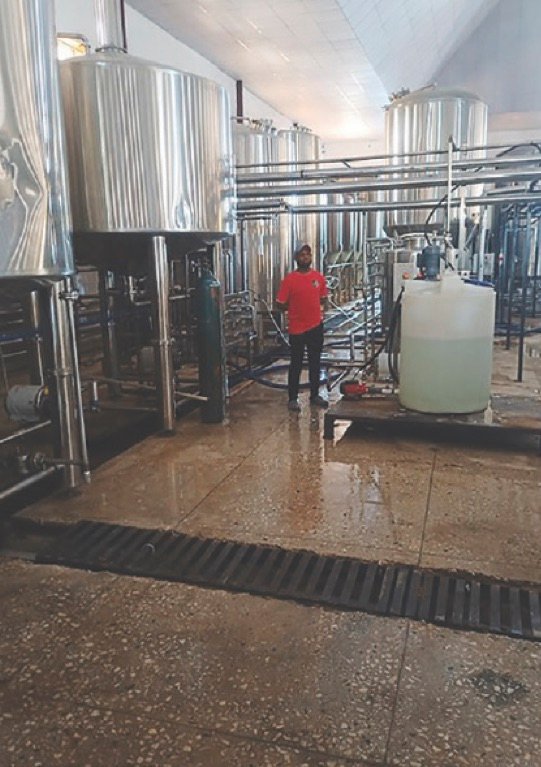
Zeva Beer factory in Makurdi
There is also a fruit juice factory in Makurdi. The idea is to utilize fruits like mango and oranges produced in the state for this factory. Benue is not a food basket for nothing. The fear of some of my colleagues, especially those in Abuja, is that the emergence of this factory may affect the prices of some of the fruits in the market. If the factory mops up fruits for its use, definitely there will be scarcity and consequently, the prices may go up. It is expected that high demand will engender more production of the products and more employment.
As an agrarian state, Benue produces fruits and other crops in abundance. The governor joked that whoever visits the state must eat their pounded yam. Else, the person will not be allowed to leave the state. The only snag to the production of these food items is insecurity. A number of times, farmers and herders’ clashes have resulted in tragic deaths in some parts of the state. Farmers have had to abandon their farms for fear of attacks by herdsmen.
This has created a very bad image for the state. The assumption is that the entire state is insecure. But Alia told the visiting editors that before he came in, many local governments were under siege. Due largely to his and the Federal Government’s efforts, the number of flashpoints has reduced drastically. Even then, efforts are being made to contain the problem in the few remaining areas.
Some of his approaches to tackle insecurity in the state include inauguration of a security outfit called Benue Civil Protection Guards, engaging with security stakeholders, and leveraging the support of federal security agencies. He has also donated over 100 Hilux trucks and 600 motorcycles to security operatives.
Alia’s desire for youth empowerment showed at the Benue Fashion Hub. There, young people are trained on how to cut and sew clothes. We saw the ones they made, including suits and native wear. Some of us purchased some of these items. The trainees also learn embroidery, machine repairs, and some other skills. After undergoing this training, they launch out to establish themselves. This has helped in no small measure to reduce unemployment in the state.
The Benue State University Teaching Hospital (BSUTH) is another beneficiary of Alia’s transformation. We were told that before the governor came on board, the hospital was a huge mortuary for patients. Medical equipment and facilities were moribund. The hospital even allegedly dispensed expired drugs that facilitated the death of many patients.
A visit to the hospital showed a remarkable difference from this negative story. The governor awarded a contract worth N13 billion to fully equip the hospital. According to the Chief Medical Director of BSUTH, Dr. Stephen Hwande, the hospital can now boast of advanced medical technologies and equipment such as a 64-slice Computer Tomography (CT scan), in-vitro fertilization (IVF) equipment, and molecular laboratory machines. These pieces of equipment were not refurbished or fairly used. They are brand new. The workforce of the hospital has also been beefed up so that patients can quickly be attended to when they visit the hospital.
Also available in the hospital are new notable projects like ultra-modern cancer centre; VIP Smart Clinic equipped with cutting-edge technology to enhance diagnosis and patient care; as well as Special Needs and Therapeutic Centre. This centre addresses challenges such as Down syndrome, autism, and speech disorders among children with such conditions. The space here is not enough to contain other numerous achievements of the Alia’s administration in the health sector.
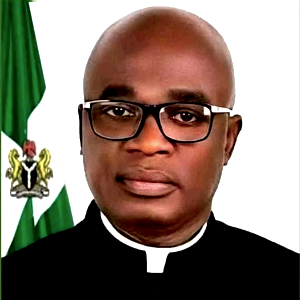
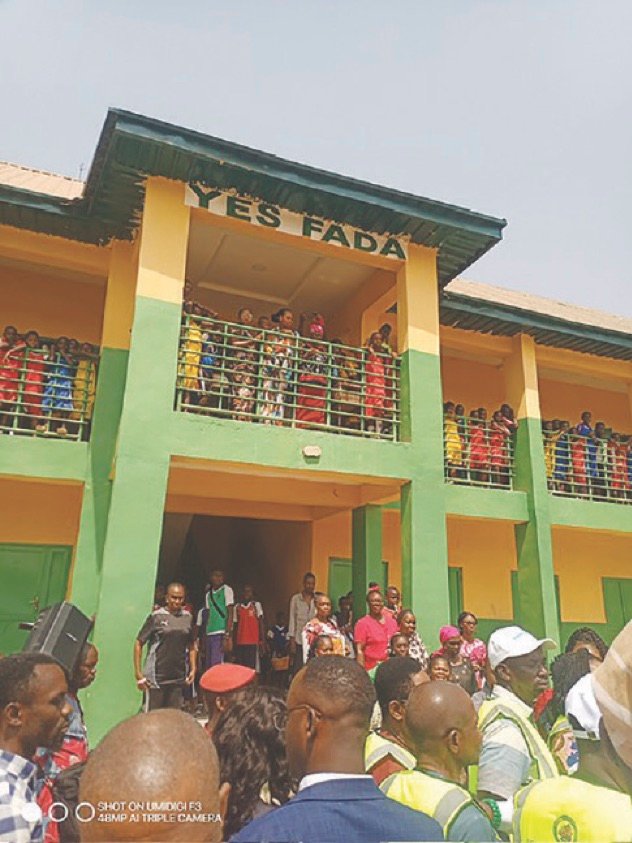
The priest-turned politician has also invested significantly in education. He has constructed modern classrooms, digital and non-digital libraries, and renovated existing schools. In one of the model schools we visited, ‘Yes Fada’ was boldly inscribed on the front of the main building. Teachers and pupils were excited seeing us. The smiles on their faces show the positive impact the transformation of their school in terms of infrastructure and other facilities has brought upon them.
The governor prioritized the well-being and professional growth of educators. He not only extended retirement dates and approved promotions for teaching staff; he also ensured prompt payment of salaries and pensions for teachers and retirees. He also approved the recruitment of over 9,000 teachers. There are many other achievements in this sector.
The voice of the Benue State newspaper, The Voice, may appear muffled, but the printing press is not. The present state government has brought life back to that press. It is working and doing the job for which it was established.
In a town hall meeting held on Friday, January 23, 2026, citizens of Benue State, especially the masses, heaped praises on the governor for what he has done and continues to do for them. Youth leaders, women groups, and even Okada riders spoke highly of the governor.
The organized labour in the state is appreciative of the governor’s prompt payment of salaries and pensions. According to the leaders of the labour unions who spoke at the meeting, salaries are paid on or before the 25th of every month. Though Benue is not too buoyant like some other states, the minimum wage to workers in the state is N75,000 a month. This is above the national minimum wage of N70,000 a month. We were made to understand that the governor does not only pay salaries promptly, he also pays arrears owed workers by previous administrations. Each month, he pays the current salary plus one month of arrears owed workers by the previous administrations.
These deliberate efforts to empower people have not stopped Alia from building roads and other infrastructure. A number of these road/drainage projects are ongoing. They include over 26 networks of roads within Makurdi, major underpasses, Tomatar Road in Gboko LGA, Akaazua-Muemue-Anhyura, Mbadede Road in Vandeikya LGA and many others.
Alia is a Catholic priest. He has no wife or child to acquire wealth for. This probably explains why he is deploying the resources of the state for the greater good of his people. Unfortunately, he is greatly misunderstood and his achievements buried because he has not bothered to showcase them. He deserves the accolades from his people. My only advice is that he should maintain the tempo and put machinery in place to ensure the sustainability of his legacies when he is no more in the saddle as governor.