
General News
“They Went to Prepare for Sallah, But Never Returned”: Father Loses Four Sons in Maiduguri Bomb Blasts

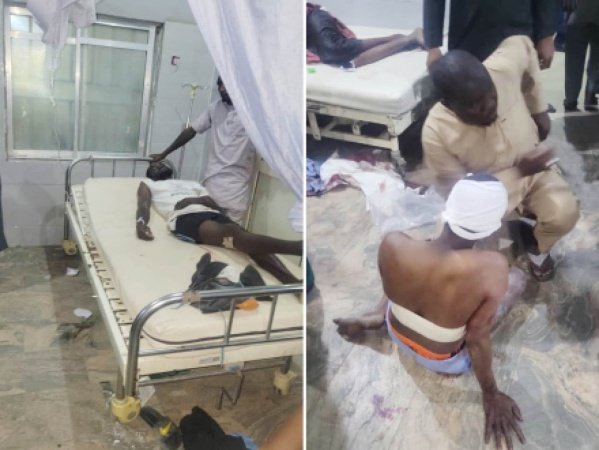
A father’s joy ahead of Sallah has turned into unimaginable grief in Maiduguri after four of his sons were killed in a series of bomb explosions that rocked the city.
The attacks, which occurred near the University of Maiduguri Teaching Hospital gate, Monday Market roundabout and the Post Office area, left at least 27 people dead and many others injured.
For Ba Musa, a resident of Gwange Sabon Layi, the tragedy is deeply personal. His four sons had stepped out shortly after breaking their fast to buy eyeglasses for the Sallah celebration.
They had earlier received new clothes and shoes from their father a simple preparation for the festive season that ended in disaster.
“They went to buy eyeglasses for Sallah… and that was the last time anyone saw them alive,” a neighbour, Usman Lawan, said as he recounted the heartbreaking loss. The children were later buried, leaving their family and community in mourning.
Lawan himself survived the explosion but lost his means of livelihood. “We had just finished Iftar when the blast happened. I found myself in the hospital. Everything I had is gone,” he said.
At the scene near the hospital, a security guard who sustained injuries narrated how the attackers struck. According to him, three men on a motorbike attempted to gain entry into the facility. When he refused, they returned and threw explosive devices at him.
“I noticed something suspicious and stopped them. They came back and threw a container at me. It exploded… as I tried to run, another one hit my leg,” he said.
Another victim, a grieving mother, lost her daughter in the blast. She described the painful moment her child died beside her. “We had just arrived at the hospital when the bomb went off. I fell, and my daughter fell lifeless… they told me she was gone,” she said.
Many petty traders were also caught in the explosions, losing both their goods and source of income. Some of the injured are receiving treatment at the University of Maiduguri Teaching Hospital and other medical facilities across the city.
Victims have appealed for urgent government assistance, saying recovery will be difficult without financial support. “In a few minutes, everything we worked for was destroyed,” one of the traders said from his hospital bed.
Reacting to the incident, the Arewa Consultative Forum called for a complete overhaul of Nigeria’s security strategy, warning that the country risks deeper instability if decisive action is not taken.
Vice President Kashim Shettima, who visited victims at the hospital, condemned the attack, describing it as barbaric and unjustifiable.
He assured affected families of government support and reiterated the administration’s resolve to end terrorism.






A traditional ruler in Nigeria has taken major steps to strengthen security within his domain by acquiring a surveillance drone and recruiting 118 security personnel amid rising concerns over safety.
The monarch announced the initiative as part of a broader strategy to tackle criminal activities, including kidnapping, armed robbery, and other threats affecting residents. According to sources within the community, the newly recruited personnel will work alongside existing local vigilante groups and security agencies to enhance intelligence gathering and rapid response.
The deployment of a drone is expected to significantly improve surveillance capabilities, particularly in hard-to-reach areas such as forests and rural boundaries, often used by criminal elements as hideouts.
Community leaders have welcomed the move, describing it as a proactive and technology-driven approach to addressing insecurity. They noted that the combination of manpower and modern equipment could help deter crime and restore confidence among residents.
Security experts say the initiative reflects a growing trend where traditional institutions and local authorities are stepping in to complement government efforts in combating insecurity across various parts of the country.
While the development has been widely praised, some observers have also called for proper coordination with official security agencies to ensure accountability and prevent overlaps in operations.
The monarch reaffirmed his commitment to protecting lives and property, stating that the safety of his people remains his top priority.

Uber has announced plans to invest up to $1.25 billion in electric vehicle maker Rivian as part of a major push into the fast-growing robotaxi market.
The deal will see Uber and its partners initially acquire about 10,000 fully autonomous vehicles based on Rivian’s upcoming R2 model, with an option to expand the fleet to as many as 50,000 units in the coming years.
The partnership is expected to roll out its first robotaxi services in cities such as San Francisco and Miami starting in 2028, with a broader expansion planned across up to 25 cities in the United States, Canada, and Europe by 2031.
Uber’s investment will be made over several years and is tied to Rivian achieving key milestones in autonomous driving technology. The company has committed an initial $300 million, with additional funding dependent on progress toward full self-driving capabilities.
The move marks a significant step in Uber’s strategy to position itself as a central platform for autonomous ride-hailing services, despite not developing its own self-driving technology. Instead, the company is partnering with multiple firms to build a large-scale robotaxi network.
For Rivian, the agreement represents a major boost as it expands beyond electric trucks and SUVs into autonomous mobility. The collaboration is also expected to accelerate the development of advanced driverless systems and strengthen its presence in the competitive electric vehicle market.
Industry analysts say the partnership highlights intensifying competition in the global robotaxi race, as companies invest heavily in autonomous technology to shape the future of transportation.
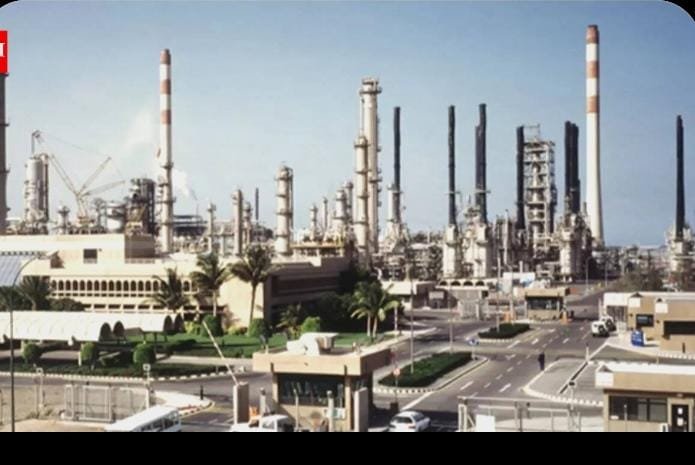
A drone has struck a major oil refinery in Yanbu, Saudi Arabia, as Iran intensifies retaliatory attacks across the Gulf following recent Israeli strikes on its energy infrastructure.
Saudi Arabia’s Ministry of Defence confirmed that the drone hit the SAMREF refinery, a key facility on the Red Sea coast capable of processing about 400,000 barrels of oil per day. Authorities said the impact caused limited damage and no casualties, though the full extent of the disruption is still being assessed.
The attack comes as part of a broader wave of Iranian missile and drone strikes targeting critical oil and gas infrastructure across the region, including facilities in Qatar, Kuwait, and the United Arab Emirates.
The escalation follows an earlier Israeli strike on Iran’s South Pars gas field; one of the world’s largest, prompting Tehran to retaliate against energy assets it considers linked to its adversaries.
Saudi air defences reportedly intercepted additional incoming threats aimed at the Yanbu port, highlighting the scale of the coordinated assault.
Despite the attack, oil loading operations at Yanbu have resumed after a temporary suspension, suggesting that the damage may not significantly affect Saudi export capacity in the short term.
However, the strike has heightened fears of wider disruption to global energy supplies. Brent crude prices have surged above $115 per barrel, reflecting growing concerns about instability in one of the world’s most critical oil-producing regions.
Analysts warn that continued attacks on energy infrastructure could trigger prolonged supply shocks, further driving up fuel prices and increasing the risk of a broader regional conflict