Foreign
Trump Says Iran Wants a Deal but Rejects Terms Acceptable to Washington


U.S. President Donald Trump said Friday that Iran is interested in reaching an agreement to end hostilities but remains unwilling to accept the terms Washington considers acceptable, as concerns grow about a potential return to full-scale war.
“Iran wants to make a deal, but they don’t want to make a deal that’s acceptable to me,” Trump told reporters at a White House press conference.
“We want to make a real deal, not a fake deal,” he added, claiming the Iranian government has been misleading people for 51 years.
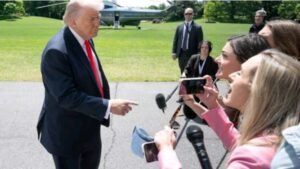
Trump also renewed his vow that “Iran will never have a nuclear weapon, ever”. He suggested he would not decide on his next steps regarding Iran until the new year, according to Axios.
The remarks came as Trump’s special envoys Steve Witkoff and Jared Kushner met with senior Qatari officials in Berlin on Thursday to discuss mediation efforts.
A Middle Eastern diplomat said Gulf Arab states are concerned about the potential for a resumption in full-scale hostilities and are working through existing channels to seek a sustainable, if only partial, solution.

Such a solution could remove all constraints on shipping in the Strait of Hormuz in exchange for limited sanctions relief for Iran and pave the way for broader negotiations that would include Tehran’s nuclear program, the diplomat said.
Iranian Foreign Minister Abbas Araqchi said Tehran still hopes diplomacy could end the war with the United States, but is seeking guarantees that Washington is serious about negotiations before taking further steps.
Iran’s “red lines” include keeping enriched uranium inside the country, though Araqchi said he believes a “fair solution” is possible.
Israeli Prime Minister Benjamin Netanyahu has pushed for the U.S. to restart the war or allow Israel to launch airstrikes on Iran’s nuclear facilities and missile capabilities, according to the Associated Press.
Iran has widened its attacks on Gulf neighbors in the past week, targeting a U.S. air base in Kuwait and launching several attacks on Bahrain.
Analysts described the tit-for-tat attacks as signaling that despite external pressure, there is little appetite from either side to return to the height of the war.
“The level of kinetic activity, the open threats both sides are leveling against the other, underscores that this is an incredibly volatile moment,” said Mona Yacoubian, director of the Middle East program at the Center for Strategic and International Studies.
“And yet, neither side, I don’t think, seems to be willing to just jump headlong back into renewed, all-out conflict”.