
Opinion
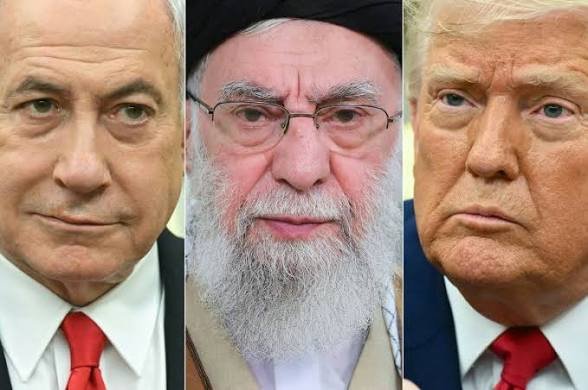
US/ISRAEL/IRAN WAR SHOWS THAT LEADERS ARE THOSE WHO LIFT THE SPIRIT OF THEIR NATION DURING GLOBAL CHALLENGES

By AVM RTD AKUGBE IYAMU
Strategic processes decisions must continue to justify itself daily as Nigeria history with economic failures make skepticism understandable. It is therefore easy to conflate recent developments in the global oil sector with past failures and conclude that lack of economic consciousness, planning and thinking are behind the current manifestations. The world does not judge leaders by tweet, propaganda and sentiments but by lifting the spirit of the country and its citizens during economic challenges and nibbing it at the bud before it metastatises.
The war shows that the world have arrived at an economic juncture where oil has been redefined as a geopolitical volatile commodity that make countries more miserable, poorer and incrementally more alienated.
The US/Israel/Iran war has unravelled Nigeria fragile economy and has revealed that building a strong economy is no longer optional, add-on but a fundamental non negotiable policy that will withstand shocks and unpredictability in future oil instability. Stable economy matters during economic shock as seen in the current situation, without it policies and laws would be symbolic at best and dangerous at worst.
As of March 2026, the intensifying conflict involving Iran, Israel, and the United States has had a significant impact on the Nigerian economy, resulting in a complex scenario of high oil revenues alongside severe inflationary pressures. The crisis has driven global oil prices above $80–$90 per barrel, causing immediate fluctuations in Nigeria’s downstream petroleum sector and increasing the cost of living. The long-term impact on Nigeria’s economy will depend on the duration of the conflict and the ability of the government to manage the resulting economic volatility and maintain supply chain stability. While Nigeria benefits from higher oil prices (potentially exceeding its 2026 budget benchmark of $64.85/barrel), the rising cost of petrol risks increasing the subsidy burden despite the removal of official fuel subsidies as the government faces pressure to stabilize pump prices. The war matters because
Iran is a major global energy player, holding the world’s fourth-largest proven oil reserves (roughly 12% of the global total) and acting as a top 10 producer. The oil shock has created a society in which individual success is now defined as the ability to provide your own power, security, Medicare and security. While every economic growth and development presupposes the prosperity of the majority of the citizens, Nigeria economy has thrown up economic growth where very few people benefit.
The war has clearly shown that fear depresses governance more than anything else.
As of early 2026 before the war, Iran produces over 3 million barrels per day (bpd), with China being its primary destination, receiving roughly 91% of its exports. However, recent geopolitical events have introduced significant volatility, with The Conversation reporting U.S. efforts to control and redirect these vast reserves using the Strait of Hormuz: a vital global chokepoint, with ~20% of global oil (~20-21 million barrels/day) and ~20% of liquefied natural gas passing through it. The importance of the Strait is that it connects the Persian Gulf to the Arabian Sea, serving as the main route for oil exports from Saudi Arabia, Iran, Iraq, UAE, and Qatar to Asian markets. The broader pattern worth noting is that disruption or blockade of the narrow passage (approx. 33 km wide) can cause immediate, significant spikes in global oil prices as currently experienced in Nigeria market volatility showing that there is a long and often frustrating search for solutions due to its importance. This because oil is frequently used as a geopolitical lever by Iran, which has threatened to close it during regional conflicts because the pipelines that exist in Saudi Arabia and the UAE and most oil originating in the Gulf has no alternative way to exit the region, making the strait indispensable. The war has portrayed where Nigeria economic problem lies, how it mutates and what it feeds on bearing the hallmark of economic consciousness where good policy structures and improvisation are favoured over sentiments. The fallout from the war shows that for Nigeria to confront economic challenges without confronting hunger hunger, poverty and insecurity is to fight shadows as governance demand accountability and evidence and not conjecture or conjectural story telling that may only energize partisan audience but does little to elevate public understanding.
AVM RTD AKUGBE IYAMU MNSA fsi
CONSULTANT ON CLIMATE CHANGE AND ANALYST ON ENVIRONMENTAL POLICIES.
PRESIDENT ASSOCIATION OF ENVIRONMENTAL PROTECTION AND CLIMATE CHANGE PRACTITIONERS
Environment
The Deliberate Destruction of Abuja Green Spaces Have Serious Implications for Citizens’ Health (Renal Diseases)

By AVM (RTD) AKUGBE IYAMU MNSA fsi
Abuja was primarily modeled after Brasília (Brazil)with additional design influences from Washington D.C. (USA) and Paris (France). The city was developed in the 1980s as a purpose-built capital by Japanese architect Kenzo Tange.
It was designed with wide roads, designated green spaces, and a central location to represent national unity.
As synonymous with modern cities, the green space was to absorb the island heat that will be consequential to future development and population growth.
The green areas were to aid carbon emission reduction, make the city liveable and increase carbon sequestration and offset.
Carbon offsets are financial instruments representing the reduction, avoidance, or sequestration of one metric ton of greenhouse gas emissions, used by individuals or organizations to compensate for their own emissions.
They fund projects like reforestation, renewable energy, and methane capture. While aimed at climate mitigation, the market faces scrutiny over effectiveness and “greenwashing”.
Additionally, Abuja green spaces were to act as carbon sink systems in anticipation of future growth in population and economic development. carbon sink is any natural or artificial system that absorbs and stores more carbon dioxide from the atmosphere than it releases, playing a crucial role in reducing greenhouse gas concentrations.
Main examples include oceans (via plankton), forests, and soil. Synonyms include carbon sequestration sites, carbon reservoirs, or carbon storage.
In the case of Abuja, geography was its destiny and the location of Abuja in a trough surrounded by mountains make the city a region of unbearably high temperatures such as experienced in the last couple of days.
A city like Abuja must continuously expand the green space and not destroy the ecosystems because of the adverse effects on the health of citizens particularly the vital organs like the kidney.
Currently findings from the World Health Organisation showed that environmental factors are increasingly recognized as major, often underappreciated, contributors to kidney disease, acting as both direct nephrotoxins and risk multipliers that exacerbate pre-existing conditions like diabetes and hypertension.
Chronic exposure to pollutants can lead to sustained renal stress, reduced kidney function, and accelerated progression to end-stage kidney failure.
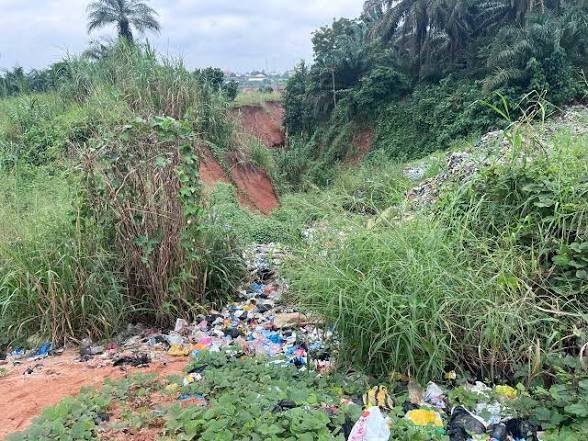
We all need development but not at the expense of the health of the people. For instance, today 13 March 2026 after the previous night rainfall gave the city an awful smell from indiscriminate waste disposal and open defecation.
Additionally, since 2022, the city have struggled to establish international waste management and disposal systems that meet international standards. The efforts is yet to yield the desired outcome.
For a city where individual citizens generate 0.55 to 0.70kg of waste daily and 330,000 metric tons annually, there are more than compelling urgency to have a scientific waste management system.
Dumpsites are no longer fashionable as they aggravate the health problems of citizens. There were noticeable efforts to have major dumpsites and official landfills to manage significant waste aggregation points. These are located across the Federal Capital Territory, primarily in Gosa, Wupa, Bwari, Dutse-Makaranta, Karshi, and Kubwa. These sites, managed or overseen by the Abuja Environmental Protection Board (AEPB) and Area Councils, handle the majority of solid waste, with Gosa and Ajata being major operating landfills.
As we go ahead, the FCT Administration need to realise that the green spaces in the various zones were intentional, deliberate and purpose driven. If nothing else scares us, let the impact of green areas destruction on health be a priority that people wellbeing is the reason our government exists.
AVM (RTD) AKUGBE IYAMU MNSA fsi
CONSULTANT ON CLIMATE CHANGE AND ANALYST ON ENVIRONMENTAL POLICIES
PRESIDENT ASSOCIATION OF ENVIRONMENTAL PROTECTION AND CLIMATE CHANGE PRACTITIONERS
BY ABUBAKAR YUSUF
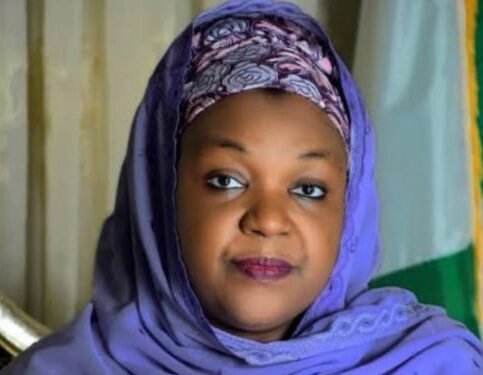
For Associate Professor Falmata Babagana Zulum, in the last six years has utilised the opportunity as wife of the Governor Babagana Umara Zulum, and Borno State first Lady to touch people’s life in all areas.
Not minding the emergency situations of the usual palpable environment, Associate Professor Falmata, a trained academic and expert in public health, with Master’s degree and Ph.D. in Veterinary Medicine from the University of Maiduguri, deployed her passion and wealth of experience into attending to social services on women and children, in collaboration with global partners on human development and emancipation.
Under her pet project, “Multi aid and Charity initiative,” empowerment, child welfare, gender programs has been taking to the highest pedestal to the advantages of women, children of Borno State.
No doubt , the renewed call by the Nigeria’s first Lady, Senator Oluremi Tinubu to align withe the Renewed Hope Initiative, RHI, her pet project at the state level activities to develop, empower women, youth in Agriculture, Health, and Education was the focus of Hajiya Falmata Babagana Zulum in the last six years, not minding the crises ridden environment.
Undaunted by the artificial and natural phenomenon, Hajiya Falmata in her wisdom has created an enabling environment through her pet project to resettle those ravaged by both natural and unforseen circumstances in the state, through attraction of grants, crisscrossing the state and local government areas, not minding the unpredictable security situations.
Falmata’s partnership with the Borno State government, corporate organization, public spirited individuals and both local and international development partners to rehabilitate women and youths through the organization seminars, symposiums, trainings, empowerment and capacity including skill development became a leeway to resolving many volatile areas problems, that is the hub of terrorists, insurgency and kidnapping.
She is inundated with attracting all sorts of relief to the women, youths and children of the state in collaboration with the state government, that had made Borno State the abode of development partners who on various occasions marked both local and international days, with empowerment, charity, and capacity building for women of the state.
Her career with international organizations, including the World Health Organization (WHO) and UNICEF made the state the stable of international communities and agencies, that engaged in programs of development of women, youths and children of the state.
With her profession in epidemiology, the international communities and private sector turned the state with focus on epidemics of all sorts on women, children prone to, in some parts of the war ravaged Borno State.
She also attracted 250 Million Naira for Borno women traders, 500 Million Naira for flood victims and also the donation of 1000 bags of Rice, including the Dangote Group donation among many others.
The Associate Professor passion and flare for humanity which led to the establishment of her pet project six years ago, the “Multi-Aid and Charity Initiative,” had improved the lives of women and children in Borno State and vulnerable Nigerians.
Her active supports to the initiatives of distributing food and humanitarian aid, such as Ramadan palliatives, succor, others and educational materials to schools made her won the heart of the populace.
With Advocacies on gender equality and parity, ending gender based violence, GBV, promotion of menstrual health to avoid complications, including the rights of girls to education.
Alive to the welfare of women and children, the wife of the Governor ensured the marking exclusively and extensively the last International Women’s Day for 2026, tagged “Give to Gain” that took place on Sunday, March 8 with series of programs spanned beyond the day.
The supports of her pet project, attractions of development partners, global bodies , local spirited individuals and corporate organizations with the supports of the state government has liberated the women and children of Borno from the shackles of poverty and neglect in recent times.
Written BY ABUBAKAR YUSUF on yus.abubakar3@gmail.com.
Dear All,
By Paul EJIME
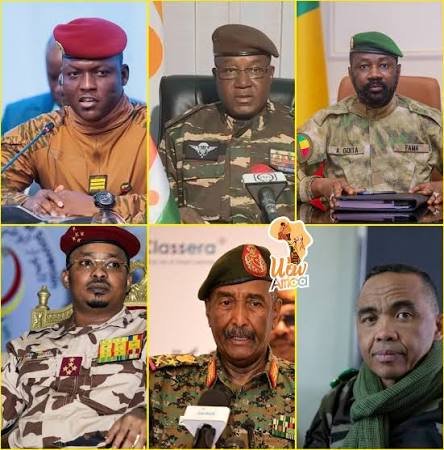
The Sahel region, including a large part of the ECOWAS space, bears the unenviable badge of the “epicentre of global terrorism.”
The attendant insecurity is compounded by poor and failed governance systems, resource mismanagement, the effects of climate change and geopolitical shifts, among the uncertainties challenging the world order.
Chatham House, London, the UK’s prominent policy and research think tank, also known as the Royal Institute of International Affairs, hosted the Foreign Affairs Ministers of Nigeria and Ghana to address these hydra-headed issues.
Attached for your kind attention and sharing.
PAUL EJIME IS AN AFRICAN AFFAIRS ANALYST