Foreign
US Signals Imminent Hormuz Breakthrough as Saudi-Turkey-Pakistan Forge Defense Bloc

Washington has signaled that a deal to reopen the Strait of Hormuz could be announced within days, even as three major Sunni powers unveiled a collective defense pact in a dramatic reshaping of Middle Eastern alliances.
A senior US official confirmed on Friday that Iran and Oman have made substantial progress toward restoring commercial shipping through the strategic waterway, which has remained largely closed since hostilities erupted in February.
The US official, speaking anonymously, said Washington would lift its blockade on Iranian ports once the agreement is finalized and commercial traffic flows without interference.
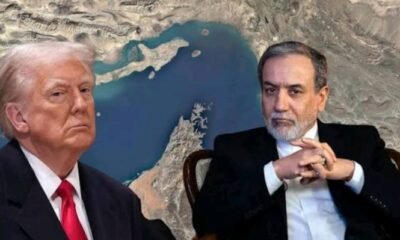
President Donald Trump echoed that optimism, telling reporters, “A lot of progress has been made,” and hinted that an announcement could come shortly.
However, he stressed that US actions depend entirely on Iran’s fulfillment of its commitments on the ground.
Iran’s Foreign Ministry spokesman, Esmail Baghaei, confirmed that negotiations with Oman are in their final drafting stage but cautioned that a joint statement could still be derailed by certain parties, an apparent swipe at the United States.
The draft text, already finalized by negotiators, now awaits approval from Iran’s Supreme Leader and is seen as a potential gateway to resuming broader nuclear talks between Tehran and Washington.
Under the proposed arrangement, ships would enter the Persian Gulf through an Iranian-controlled lane and exit via an Omani-controlled lane, with service fees attached for security and environmental protection.
The plan has drawn US opposition because it would implicitly legitimize Iranian oversight of the waterway, reversing the pre-war status quo.
Vice President JD Vance acknowledged the frustration, remarking that the Iranians are “extraordinarily difficult people” to negotiate with.
In a parallel move that has sent shockwaves across the region, Saudi Arabia, Turkey, and Pakistan signed a landmark joint defense agreement in Mecca on Friday, known as the Mecca Joint Defence Agreement.
The pact includes a NATO-style Article 5 clause stipulating that an armed attack against any one signatory will be treated as an attack against all three.
The document was signed by Saudi Crown Prince Mohammed bin Salman, Turkish President Recep Tayyip Erdogan, and Pakistani Prime Minister Shehbaz Sharif.
A Turkish official insisted the agreement is purely defensive and open to other nations in the region, denying any hostile intent toward specific actors.
Saudi Deputy Minister for Public Diplomacy Rayed Krimly similarly clarified that the accord is not designed to create a military axis or sectarian bloc.
Nevertheless, the alliance brings together NATO’s second-largest military, the Muslim world’s only nuclear power, and the Gulf’s preeminent armed force, forming a formidable deterrent against Iran.
Iranian officials have already dismissed the agreement, with one parliament member scoffing that a “paper pact” would not deliver real security.
The defense deal builds on a 2025 Saudi-Pakistan bilateral agreement and comes amid intelligence warnings of imminent coordinated attacks by Iran-backed militias on Saudi energy infrastructure. The twin developments underscore a region rapidly redrawing its security map.