Economy
World Bank Raises Nigeria’s Growth Forecast to 4.3%, Says Tinubu Reforms Strengthening Economy

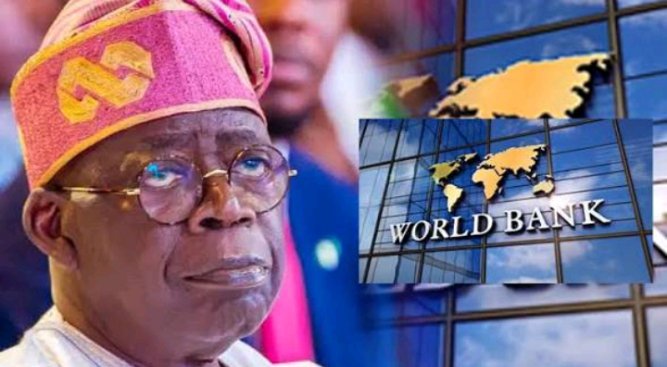
The World Bank has raised Nigeria’s economic growth forecast for 2026 to 4.3 percent, citing improving macroeconomic stability, stronger investor confidence and a gradual recovery in private investment under President Bola Tinubu’s reform agenda.
The projection was contained in the bank’s October 2026 Africa Economic Update released on Tuesday, which also forecast that Nigeria’s economy would grow by 4.4 percent annually in 2027 and 2028, up from an estimated 4.0 percent expansion in 2025.
“Economic activity in Nigeria is projected to strengthen from 4.0 percent in 2025 to 4.3 percent in 2026, before edging up to 4.4 percent annually in 2027–28, supported by improving macroeconomic stability, strengthening investor confidence, and a gradual recovery in private investment,” the World Bank stated.

The upgraded outlook follows stronger-than-expected performance in the second quarter of 2026, when Nigeria’s real GDP grew by 4.43 percent year-on-year, according to the National Bureau of Statistics.
Nigeria was listed alongside Zambia, Ethiopia and Angola as countries whose growth forecasts were upgraded by the lender, reflecting the impact of economic reforms and improved economic management.
The World Bank said growth continues to be driven primarily by the services sector, particularly financial services, ICT and real estate, which have benefited from ongoing digitalisation and resilient domestic demand.
Agricultural activity is expected to recover in 2026, while industrial growth is projected to moderate.
The bank also projected that Nigeria’s inflation rate would decline from 23.0 percent in 2025 to 15.7 percent in 2026, easing further to 12.2 percent by 2028, attributing the decline to monetary tightening, exchange-rate stabilisation and improving supply conditions.
World Bank Chief Economist for Africa, Andrew Dabalen, said the region had demonstrated resilience despite a challenging global environment.
“Economic activity in Sub-Saharan Africa continues to demonstrate remarkable resilience, with growth forecasts upgraded for nearly three-quarters of countries in the region,” Dabalen said.
The bank, however, warned that rising government spending ahead of the 2027 general elections could weaken reform momentum and erode the social consensus needed to sustain macroeconomic adjustment efforts.
It also cited tighter global financial conditions, the prolonged Middle East conflict, insecurity, climate-related shocks and disruptions to oil production as downside risks.
Earlier in February 2026, World Bank Managing Director of Operations Anna Bjerde described Nigeria as a global reference point for steady and credible reform leadership, noting that the country’s consistency and evidence of positive results had built strong confidence among investors and policymakers.
President Tinubu reaffirmed at that meeting that there would be “no turning back” on the reforms, stressing that the measures were anchored in transparency, accountability and stable policies.