
Business
Dollar Holds Firm on Soft U.S. Inflation; Yen Eases After 3% Surge

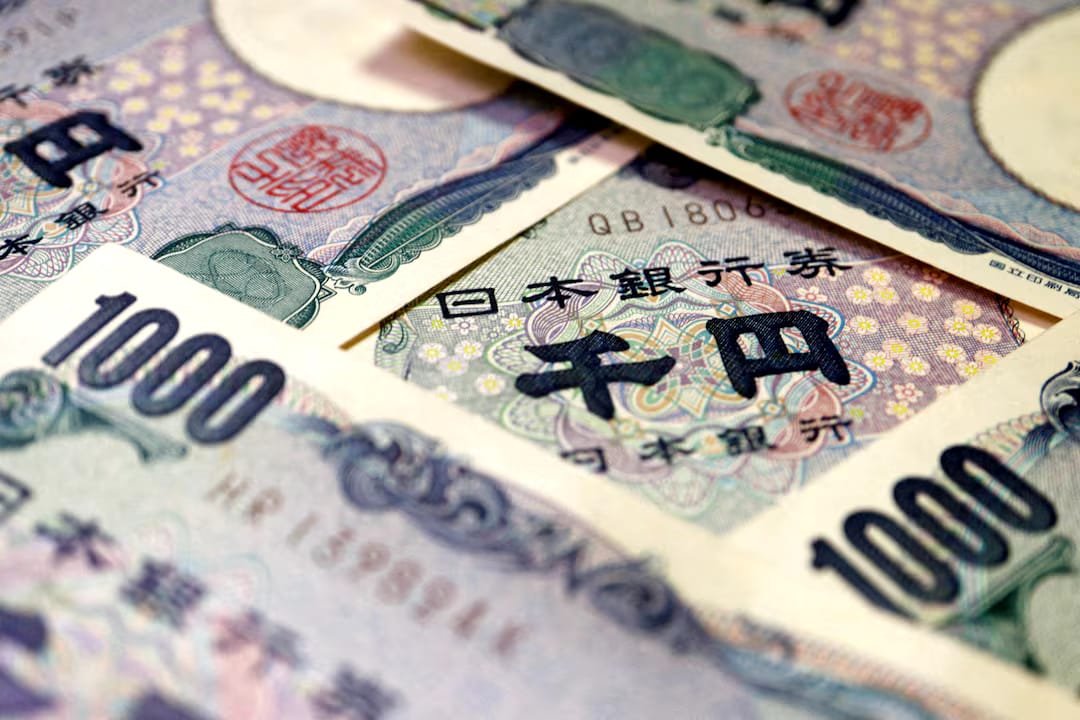
The Japanese yen edged lower on Monday, retreating slightly after recording its strongest weekly performance in over a year, while the U.S. dollar held steady amid growing expectations that the Federal Reserve could lower interest rates later this year.
Trading activity was subdued, with financial markets in the United States, China, Taiwan, and South Korea closed for public holidays.
The yen weakened by 0.3% to 153.15 against the dollar, giving back some of the nearly 3% gains it posted last week its biggest weekly rise in roughly 15 months. The surge followed a decisive election victory by Prime Minister Sanae Takaichi’s Liberal Democratic Party, which appeared to ease investor concerns over fiscal uncertainty.
Later on Monday, Bank of Japan Governor Kazuo Ueda is scheduled to meet Takaichi for the first time since the election. The talks are expected to focus on the country’s economic outlook and the direction of monetary policy.
Market analysts noted that the election outcome triggered an unexpected rally in both Japanese government bonds and the currency. Brent Donnelly, founder of Spectra Markets, said investors had anticipated that a commanding majority for the ruling party would weigh on bonds and the yen. Instead, both strengthened.
According to Donnelly, reduced political uncertainty encouraged long-term investors to return to Japanese assets. He described the renewed interest in Japanese yields, equities such as the Nikkei, and the currency itself as part of a broader “Buy Japan” trend.
However, fresh economic figures highlighted ongoing challenges for the government. Data released Monday showed Japan’s economy grew at an annualised pace of just 0.2% in the previous quarter, underscoring sluggish momentum.
The weak growth numbers could complicate the Bank of Japan’s path toward further monetary tightening. The central bank’s next policy meeting is set for March, with market pricing suggesting only a 20% probability of a rate increase. Economists surveyed by Reuters previously indicated that policymakers may hold off until July before raising rates again.
In December, the Bank of Japan raised its benchmark rate to 0.75%, the highest level in three decades, though it remains far below rates in other major economies. The wide interest-rate gap has contributed to persistent yen weakness in recent years, at times prompting authorities to step in directly to stabilise the currency.
Strategists at Goldman Sachs cautioned that if the BOJ uses the yen’s recent strength as justification for a more gradual tightening approach, the currency could resume its downward trend, and long-term bond yields may become volatile. Goldman forecasts the yen will trade around 152 per dollar over the next 12 months.
Meanwhile, in the United States, softer-than-expected inflation data released Friday reinforced the case for policy easing. Consumer prices rose less than anticipated in January, giving the Federal Reserve additional room to consider rate cuts.
Kyle Rodda, senior financial analyst at Capital..com, said markets are increasingly entertaining the possibility of a third rate cut this year.