General News
Electronic Transmission of Results: Reform or Recipe for Disenfranchisement

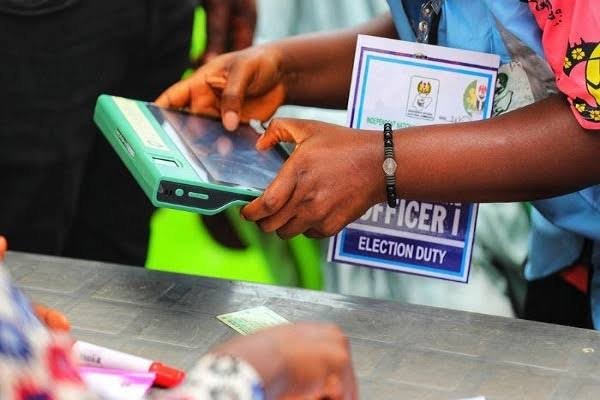
With the release of the 2027 general elections timetable by the Independent National Electoral Commission (INEC), Nigeria has once again been thrust into a familiar but unresolved debate: should election results be transmitted exclusively and immediately by electronic means?
The agitation has been led largely by opposition politicians and civil society groups who insist that only real-time electronic transmission can safeguard electoral integrity. The 10th Senate, however, has been cast as the villain for initially rejecting—and later cautiously approving—this demand with an important caveat.
On 9 February, Peter Obi led protesters to the National Assembly to pressure lawmakers to reverse their opposition to immediate electronic transmission. The following day, Rotimi Amaechi staged a similar protest. Before the demonstrations could gain momentum, the Senate amended Clause 60(3) of the proposed Electoral Act 2026, approving electronic transmission of results to INEC’s IReV portal.
Crucially, however, lawmakers retained a fallback provision: where internet connectivity or technology fails, the senior INEC official at a polling unit may rely on results recorded on Form EC8A.
That safeguard has infuriated protesters, who demand exclusive electronic transmission without exception. But this absolutist position raises a more troubling question: what happens to voters in polling units—particularly across at least nine states—where poor connectivity makes real-time transmission impossible?
Nigeria’s electoral history shows that result manipulation often occurs during the physical movement from polling units to collation centres. That reality explains public enthusiasm for electronic transmission. Yet refusing to recognise Form EC8A as a lawful fallback risks something worse: the outright disenfranchisement of voters whose results cannot be transmitted instantly through no fault of theirs.
It is puzzling that seasoned politicians such as Atiku Abubakar, Obi, and Amaechi—veterans of multiple elections—would champion a system that could invalidate legitimate votes and invite endless post-election litigation. Civil society activists and ordinary citizens may overlook this danger, but experienced political actors should know better.
The Senate’s compromise does not weaken electoral integrity; it strengthens it. By allowing electronic transmission while preserving a legal fallback, lawmakers have closed a dangerous loophole that could otherwise plunge the 2027 elections into chaos.
Reforms must protect democracy, not sacrifice voters on the altar of technological idealism. Ignoring foreseeable infrastructure failures is not progress—it is recklessness. In trying to cure malaria, Nigeria must not create cancer
While it is true that fewer Nigerians are exercising their right to vote, the statistics from the 2023 general elections are instructive. Of the approximately 93 million registered voters, about 87 million collected their Permanent Voter Cards (PVCs), yet only around 30
Millions actually voted.
Some commentators have attributed this poor turnout to a lack of trust in the electoral system, arguing that it is the primary cause of voter apathy. That explanation, however, may not be entirely accurate. Many Nigerians obtained their voter cards primarily as a means of national identification and to avoid being excluded from government programmes or activities that may require possession of a PVC.
Another significant factor is election-day violence. The grim statistics of violence recorded during elections—when thugs are unleashed by rival political parties—are frightening enough to deter many Nigerians from venturing out to cast their ballots.
Some proponents of real-time electronic transmission of election results argue that online banking transactions are conducted seamlessly across the country. However, a counterargument exists: the data required for a simple bank transfer is far less than what is needed to transmit comprehensive election results in real time. Comparing bank transfers to the real-time transmission of election results is therefore akin to comparing apples and oranges.
In fact, we all know the number of times we record ATM transfer failures and banks advise customers to fill out complaint forms which often take a couple of days to be resolved.
Who in Nigeria has not been informed by their bank that the ‘network is down’?
Furthermore, it is unhelpful that advocates of real-time electronic transmission often assume technology to be flawless and all-sufficient. Hackers abound in Nigeria and everywhere. If falling back on form EC8A is not an option what stops those determined to rig the election from procuring hacking technology to achieve the same goal? Incidentally, according to Senator Nwanonyi—the most vocal defender of the fallback provision using Form EC8A—the Electoral Act 2022 does not even contain the term “electronic transmission.” The 10th Senate has, however, inserted it into the proposed new Act in the interest of transparency. It will prevent the repetition of the situation whereby after the 2023 elections tge courts stated that IReV and electronic transmission contained in INEC rules was nkt recognized because they were not captured in the Electoral Act 2022.
The controversial clause—mandating INEC to fall back on results recorded on Form EC8A where poor internet connectivity prevents immediate transmission to the IReV portal—is the bone of contention. Yet this provision appears to be a long-term safeguard designed to avert legal disputes that could arise if the amended electoral law recognises only results transmitted electronically in real time, thereby excluding those recorded on Form EC8A.
What happens to votes from polling units where electronic transmission is impossible due to poor internet access?
The insistence by opposition politicians and activists that the proposed Electoral Act 2026 should recognise only electronically transmitted results—without any fallback—could jeopardise the entire electoral process. Such a position is likely to trigger prolonged legal battles by voters who may be disenfranchised if their votes, though duly recorded on Form EC8A, fail to appear on the INEC Results Viewing (IReV) portal due to technical limitations.
We are familiar with how losers with huge legal war chests often boast: l will meet you in court hoping to procure in court the victory they could not achieve through the ballot box.
To contextualise this discourse, it is useful to reference the work of Bayo Akomolafe, whose scholarship often explores resistance, freedom, and the importance of interrogating systems. Akomolafe, a public intellectual and fellow at the University of California, Berkeley’s Othering and Belonging Institute, argues:
“An intellectual cannot be neutral. To think deeply is already to enter conflict with systems that fear depth.
If you cannot concentrate, you cannot question.
If you cannot question, you cannot resist.
If you cannot resist, you cannot be free.”
Guided by this perspective, and without taking sides in what may be framed as the Senate versus the people, this analysis seeks to critically examine the propriety—or otherwise—of exclusive real-time electronic transmission of election results. It also interrogates the Senate’s decision to approve electronic transmission with a proviso allowing Form EC8A as a fallback in the event of technological failure—an outcome that is far from unlikely.
First, it is important to examine the practicality of real-time electronic transmission before considering the necessity of a fallback mechanism, which is the central argument advanced by the senators.
So, what does real-time electronic transmission of election results actually mean? It refers to the electronic transfer of official polling unit results, as recorded on Form EC8A, from the polling unit to a central results portal—namely IReV—immediately after voting ends, ballots are counted, and results are publicly announced at the polling unit.
This differs slightly from what the Senate approved, which is that electronic transmission should occur after voting, counting, and recording results on Form EC8A—but that where technology fails, the manually recorded form remains the primary source.
Reports cited by some researchers indicate that the success rate of Unstructured Supplementary Service Data (USSD) transactions in Nigeria is approximately 60 percent, with about 40 percent failing. Given these statistics, is it prudent to rely solely on real-time electronic transmission without an alternative?
Conversely, can senators guarantee that Form EC8A will not be hijacked, altered, or manipulated—as occurred in parts of the 2023 general elections, and which is the real reason agitators are insisting on real-time transmission to avoid human interaction with the result?
My personal take is: let us learn to walk first before we start running. It might amount to leaping into the dark without first looking at the depth of the space we are jumping into if we put all our eggs in the basket of technology.
Can we target electronic voting and real-time transmission in the 2031 elections circle building on the 2027 experience?
Power without control which real-time transmission of results could amount to, is dangerous.
It is noteworthy that in the US state of Florida, there was a resort to a manual counting of ballots in a presidential contest between former vice president Al Gore and George Bush Jr., owing to the type of technology glitch recorded in Nigeria in the 2023 elections of which,voters are wary of being disappointed by the electoral system once again in 2027.
As a nation, Nigeria and Nigerians must resolve that the 2027 election must stand out positively and work assiduously to make it happen. There are many more things we have to do to ring-fence our votes without putting all our hope in technology that can easily develop glitches.
To resolve what now resembles a complex jigsaw puzzle, all parties—the Senate, opposition politicians, civil society actors, and concerned Nigerians—must confront these issues squarely and urgently. Time is no longer on their side, as INEC has already set the electoral clock ticking by releasing the 2027 election timetable.
Frankly, technology without an override is not the ideal.
As such both real-time transmission of results and fall back on form EC8A can go pari-pasu. That is what obtains in the US where we obtained our presidential system of government franchise and the UK the country that introduced democracy to Nigeria.
The bottom line is that authorities must find a way to build trust in the system to restore the confidence of beleaguered Nigerian voters
Tomorrow, 17 February, senators are scheduled to return from a shortened recess to revisit the issue alongside a new development which has to do with election day clashing with religious obligations of both Christians and Muslims alike- Lent and Ramadan. Their decisions may well determine whether the 2027 elections become a defining moment—perhaps even a D-Day—in Nigeria’s electoral history.
Magnus Onyibe, an entrepreneur, public policy analyst, author, democracy advocate, development strategist, an alumnus of the Fletcher School of Law and Diplomacy, Tufts University, Massachusetts, USA, a Commonwealth Institute scholar, and a former commissioner in the Delta State government, sent this piece from Lagos.