General News
Senate Approves ₦140bn 2026 Budget for South East Development Commission, Demands Accountability

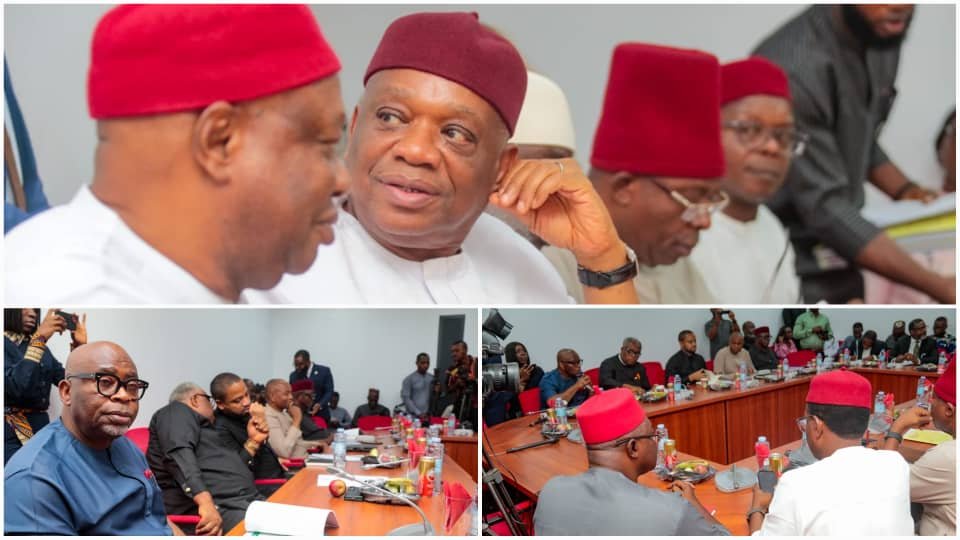
The Nigerian Senate on Tuesday approved the ₦140 billion 2026 budget proposal of the South East Development Commission (SEDC), while cautioning the agency to ensure fiscal discipline, deliver measurable security improvements and address worsening ecological challenges across the region.
Presenting the proposal before lawmakers, the Managing Director and Chief Executive Officer of the Commission, Mr. Mark Okoye, described the budget as a development-driven framework focused on infrastructure renewal, industrialisation, private sector-led growth and regional integration.
A breakdown of the proposal shows that ₦106.745 billion, representing 76.25 per cent, is allocated to capital expenditure; ₦25.955 billion (18.54 per cent) to recurrent expenditure excluding personnel; and ₦7.3 billion (5.21 per cent) to personnel costs.
Okoye told the Senate that the 2026 budget is structured around five pillars — infrastructure development, economic empowerment, environmental sustainability, social development, and security/peacebuilding.
He also unveiled a long-term vision to grow the South East economy to $200 billion by 2035. Central to the plan is the proposed South East Investment Corporation (SEIC), projected to build a $150 billion capital base and position the region as a prime investment destination in Africa.
According to him, the Commission aims to reach a $1 billion regional investment threshold and structure major infrastructure projects in a way that attracts international financing, rather than relying solely on federal allocations.
Although no capital releases were made in the 2025 fiscal year, Okoye explained that the Commission utilised the period to prepare feasibility studies and bankable project documents, including a proposed regional gas pipeline network estimated to cost between $1.5 billion and $2 billion.
Key allocations in the 2026 proposal include ₦3.3 billion for the Community Social Development Programme, ₦3.5 billion for the South East Venture Capital Fund, ₦2.5 billion for the Youth Entrepreneurship Programme, ₦7 billion for grassroots recreation infrastructure, ₦2.9 billion for headquarters and zonal offices, ₦4.1 billion for operational vehicles, ₦500 million for climate sustainability and green economy initiatives, ₦2.5 billion for a regional security programme, and ₦660 million for the M.I. Okpara Fellowship.
While commending the clarity of the proposal, several senators raised concerns over priorities and expected outcomes.
Senator Tony Nwoye stressed that development would remain elusive without improved security, demanding clear performance indicators for the ₦2.5 billion regional security allocation and details of collaboration with existing security agencies. He also warned against politicisation of the ₦3.5 billion Venture Capital Fund, insisting it must operate strictly on merit to support genuine entrepreneurs in commercial hubs such as Onitsha, Aba and Nnewi.
Lawmakers also criticised the ₦500 million allocation for environmental sustainability, describing it as inadequate for a region grappling with thousands of erosion sites.
Senator Kenneth Eze urged the Commission to manage public funds with the discipline of a private enterprise and cautioned against spreading limited resources too thinly, which could lead to abandoned projects. Senator Ezenwa Onyewuchi sought assurances that staff salaries are paid promptly and called for transparency in recruitment.
In their contributions, Senators Victor Umeh, Emmanuel Nwachukwu, Anthony Ani and Osita Ngwu expressed support for the proposal but emphasised the need for effective implementation and inter-state coordination, particularly in rail connectivity, gas infrastructure and industrial park development.
Chairman of the Senate Committee and former Abia State Governor, Orji Uzor Kalu, commended the management for presenting what he described as a bankable document capable of attracting global financing institutions. He stressed that the Commission must function strictly as a development institution and not a political platform.
Kalu assured that the Committee would exercise rigorous oversight to ensure compliance and accountability, warning that the Commission must not become a conduit for mismanagement of public funds.
With legislative backing secured, the ₦140 billion 2026 budget now moves into implementation phase under close parliamentary scrutiny, amid heightened expectations for tangible development results across the South East.