
General News
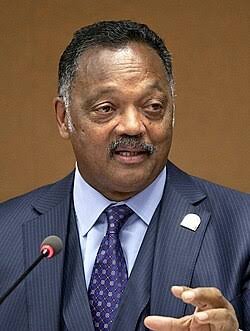
Jesse Jackson: A Life of Faith, Politics and Global Justice

By Bisi Olawunmi
The passing of the Rev. Jesse Jackson marked the end of an era in African American political activism and global advocacy for social justice. Beyond being a Baptist minister and political campaigner, Jackson emerged as one of the most influential civil rights voices of the late 20th and early 21st centuries, championing hope, equality and international solidarity.
Jackson’s political journey symbolised the gradual rise of Black political consciousness in American public life. His 1988 presidential campaign remains one of the most remarkable moments in U.S. electoral history. Competing in the Democratic Party primary, he defied early dismissals by political analysts and mainstream media to record a stunning victory in the Michigan primary, where he secured about 55 percent of the vote in a crowded field that included front-runners such as former Massachusetts Governor Michael Dukakis and then-Senator Al Gore.
Jackson’s campaign was built around the inspiring message of “Keep Hope Alive,” a slogan that resonated deeply with marginalized communities. His Rainbow Coalition strategy sought to unite Americans across racial, religious and class divides, transforming campaign rallies into gatherings that combined political mobilisation with spiritual fervour. Observers often compared his oratory to a minister preaching from a political pulpit, blending faith with civic engagement.
The 1988 campaign eventually ended with Jackson emerging as the second-strongest candidate after Michael Dukakis, amassing millions of popular votes and more than 1,200 delegates. Although he did not win the nomination, the campaign permanently altered perceptions of African American political participation and expanded opportunities for minority leadership in U.S. politics.
Beyond American politics, Jackson played a significant role in global human rights advocacy, particularly in the fight against apartheid in South Africa. He was a visible figure in the mass protest movements in Washington, D.C., that pressured the U.S. government to adopt economic sanctions against the apartheid regime.
The anti-apartheid struggle later contributed to the passage of the U.S. Anti-Apartheid Act of 1986, which was passed by Congress after overriding a veto by President Ronald Reagan. This legislative victory was widely regarded as a historic turning point in American foreign policy and international human rights advocacy.
Jackson’s relationship with Africa was equally significant. He visited several African countries and was appointed in 1997 by President Bill Clinton as Special Envoy for the Promotion of Democracy in Africa. His diplomacy reflected a belief that African development and African American progress were interconnected.
Scholars and commentators often describe Jackson as a symbolic bridge between African American political aspirations and broader African liberation struggles. His activism paralleled the global momentum for freedom movements across the continent and helped amplify international pressure against racial segregation systems.
The legacy of Jackson’s activism also intersected with the emergence of modern Black political leadership in the United States. The election of Barack Obama in 2008 was widely interpreted as part of the long political evolution that Jackson’s campaigns helped nurture, representing a new chapter in American history.
Despite political differences that later emerged between generations of African American leadership, Jackson remained committed to social justice advocacy. He continued promoting dialogue on economic empowerment, minority rights and global peace.
Jackson’s influence was not limited to politics. As a preacher, he used faith-based mobilisation to encourage hope among disadvantaged communities, often reminding audiences that social mobility was possible regardless of background.
The funeral service of the civil rights icon held at the House of Hope Chicago on March 6, 2026, attracted global attention, reflecting the far-reaching impact of his life’s work.
Awarded the Presidential Medal of Freedom in 2000, Jackson was widely celebrated as a statesman of conscience who devoted his life to the pursuit of equality, hope and human dignity.
The life of Rev. Jesse Jackson Sr. stands as a reminder that political activism, faith leadership and global solidarity can converge in the pursuit of a more inclusive world.