Connect with us

General News

NIGERIA’S NEW AMBASSADORS FACE REJECTION AS INDIA CITES TINUBU’S SHORT REMAINING TENURE

Published

on

Share

India has refused to accept Nigeria’s newly appointed ambassador to New Delhi due to a diplomatic policy that discourages receiving envoys from governments with less than two years left in office, according to officials in the Nigerian Presidency and the Ministry of Foreign Affairs.

The development casts a shadow over President Bola Tinubu’s recent posting of 65 ambassadors and high commissioners, with fears that other host nations may follow suit as the 2027 presidential election approaches.

A Presidency official confirmed on Tuesday that India is unwilling to grant agrément—the formal approval required for an ambassador to assume duty—for Ambassador Muhammad Dahiru, a career diplomat posted to the country. The official explained that the concern is not personal but procedural.

“India appears unwilling to accept a diplomat from an administration that may have less than two years left in office,” the source said. “The country is already showing signs of resistance to the request sent by Nigeria’s Ministry of Foreign Affairs.”

Another senior official in the foreign service confirmed India’s position but suggested Nigeria might leverage bilateral relations to seek an exception.
Some countries are reportedly hesitant because a new administration, if elected, could recall the ambassadors shortly after they begin their assignments. “Some foreign governments sometimes study political developments in a country before deciding whether to accept an envoy, especially when elections are close,” the official noted.

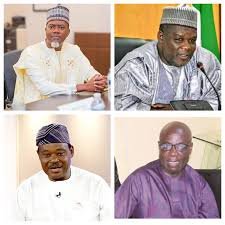
President Tinubu approved the posting of 65 envoys on March 6, assigning them to various countries and international bodies. Among the nominees are former Minister of Aviation Femi Fani-Kayode (Germany), presidential aide Reno Omokri (Mexico), former Katsina State Governor Abdulrahman Dambazzau (China), and Senator Jimoh Ibrahim (Permanent Representative to the United Nations).

See also  EDO GOVERNMENT HITS BACK AT PDP OVER ALLEGATIONS AGAINST GOVERNOR OKPEBHOLO

While the United Kingdom has accepted Aminu Dalhatu as High Commissioner and France has approved Ayodele Oke as ambassador, the remaining 63 nominees are still awaiting host country consent.

A third source disclosed that the Ministry of Foreign Affairs has secured funds for the mandatory training programme for the ambassador-designates, though a date has yet to be fixed.

Diplomatic practice, governed by the 1961 Vienna Convention on Diplomatic Relations, requires receiving states to grant consent before an ambassador can be formally recognised. Officials explained that background checks and approval processes can take months, meaning some envoys might not begin duties until August 2026—less than a year before the election.

“If the process takes too long, some of the ambassadors may only begin their duties around August 2026, leaving them with less than a year before the election,” a senior foreign service official said.

Nigeria’s next presidential election is scheduled for January 16, 2027, with President Tinubu’s current term ending in May of that year. While India’s policy is clearly stated, other countries may adopt similar stances based on their diplomatic traditions. For now, India remains the only nation where the rejection has been confirmed.

General News

Senate Approves Taiwo Oyedele’s Ministerial Appointment, Urges Bold Economic Reforms

Published

on

Share


The Nigerian Senate on Wednesday approved the ministerial nomination of Professor Taiwo Oyedele by President Bola Ahmed Tinubu, urging him to prioritize economic reforms, strengthen local manufacturing, and enhance the ease of doing business nationwide.

During plenary discussions, senators evaluated Oyedele’s proposed policies and readiness to address critical fiscal challenges, including rising public debt and underperformance in capital budget implementation.

Jibrin Barau, Deputy Senate President, encouraged the nominee to leverage Nigeria’s mineral wealth while improving the efficiency of capital spending.

Lawmakers also emphasized the need for initiatives that bolster domestic industries, reduce reliance on imports, improve the business climate, and secure adequate funding for security agencies through first-line charges to ensure national stability.

Responding, Oyedele highlighted that Nigeria’s budget size remains small relative to its economic scale, stressing prudent and strategic utilization of public funds. He also addressed concerns over the recent Capital Gains Tax increase from 5% to 30%, noting stakeholder reservations compared to the global average of roughly 15%.

Senate President Godswill Akpabio conducted a voice vote that overwhelmingly confirmed Oyedele’s appointment.

The confirmation is expected to bolster the government’s fiscal and tax reform agenda, enhancing revenue mobilization, infrastructure development, and overall economic stability.


See also  INEC REJECTS PETITION SEEKING RECALL OF KOGI CENTRAL SENATOR
Continue Reading

General News

Nigerians Safely Escorted Out of Iran Through Armenia Border Amid Rising Tensions

Published

on

Share


Some Nigerian citizens stranded in Iran have been safely escorted across the Armenian border by officials of the Nigerian Embassy as tensions continue to escalate in the Middle East.

The update was confirmed by the Director of Media at the Nigerians in Diaspora Commission (NIDCOM), Abdur-Rahman Balogun, who spoke on a statement issued by the Commission’s Chairman and Chief Executive Officer, Abike Dabiri-Erewa.

According to Dabiri-Erewa, none of the Nigerian citizens living in Iran have been harmed despite the ongoing crisis in the region. She added that Nigerian officials remain stationed at the border to assist any citizen who wishes to leave the country.

She assured that the Federal Government is closely monitoring the situation and has taken necessary steps to ensure the safety and evacuation of Nigerians who may be at risk.

“The Nigerian government is actively monitoring developments and ensuring that all citizens seeking safety are assisted promptly and securely,” the statement noted.

The evacuation effort reflects the continued commitment of the Nigerian government to safeguarding the welfare of its citizens abroad, especially those in conflict-prone regions.

Authorities are also working in coordination with diplomatic missions and relevant partners to ensure safe passage, proper documentation, and smooth transit for Nigerians leaving the country.

The development comes amid rising tensions across the Middle East, which has forced several countries to begin evacuation arrangements for their nationals in the region.

See also  INEC REJECTS PETITION SEEKING RECALL OF KOGI CENTRAL SENATOR
Continue Reading

Energy

Global Oil Market on Edge as Iran Threatens $200 Per Barrel

Published

on

Share

Iran has warned that global oil prices could surge to as high as $200 per barrel as tensions escalate in the Middle East and attacks on commercial vessels increase in the Gulf region.

Iran’s military command issued the warning on Wednesday, saying instability in the region could severely disrupt global energy supplies. A spokesperson for the command, Ebrahim Zolfaqari, said the world should prepare for a major spike in oil prices, blaming the situation on escalating military confrontations involving the United States and Israel.

The warning comes as several merchant ships were struck by projectiles in the Strait of Hormuz, a vital maritime corridor for global oil shipments. Reports indicate that at least three additional vessels were recently hit, bringing the number of affected ships in the region to more than a dozen since the conflict intensified.

The Strait of Hormuz is one of the world’s most critical oil transit routes, handling roughly 20% of global oil supply, and disruptions there have already led to sharp volatility in energy markets. Shipping traffic through the waterway has dropped dramatically as companies avoid the area due to safety concerns.

Iran has also warned that oil shipments destined for the United States, Israel, and their allies could be targeted, further heightening fears of a prolonged disruption to global energy supplies.

In response to the growing crisis, the International Energy Agency (IEA) has ordered the release of about 400 million barrels of emergency oil reserves from member countries in an attempt to stabilize global markets and prevent further price spikes.

See also  ISRAELI FORCES FIRE AT INTERNATIONAL DIPLOMATS IN OCCUPIED WEST BANK

The ongoing conflict between Iran, the United States, and Israel has intensified in recent weeks, with missile strikes, attacks on military bases, and disruptions to shipping routes raising concerns about wider economic consequences worldwide.

Continue Reading