World News
Israel Warns Iran of ‘Dire Consequences’ as Hormuz Tanker Attacks Escalate Crisis

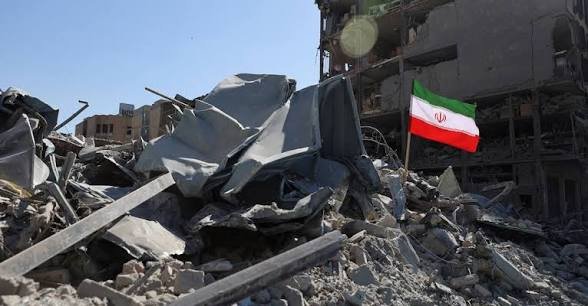
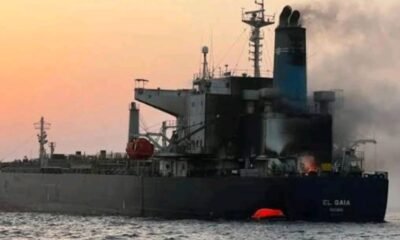
Israel has issued a stern warning to Iran that it will face “dire consequences” for any further escalation, following Iranian Revolutionary Guard gunboats opening fire on at least two oil tankers transiting the strategic Strait of Hormuz. The attacks occurred just hours after Iran reversed a decision to reopen the waterway, declaring it fully closed until the United States lifts its naval blockade on Iranian ports.
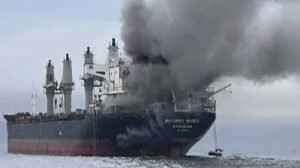
In a statement carried by Israeli military channels, a spokesperson said Iran would bear the consequences for choosing to escalate the situation any further. The warning came as two Indian-flagged vessels, including a Very Large Crude Carrier carrying two million barrels of Iraqi oil, were fired upon and forced to turn back while attempting to pass through the strait. The British military’s United Kingdom Maritime Trade Operations centre confirmed that two gunboats linked to Iran’s Revolutionary Guard opened fire on a tanker approximately 20 nautical miles northeast of Oman, adding that the vessel and its crew were reported safe.
Iran’s Revolutionary Guard navy announced late Saturday that the Strait of Hormuz would remain closed until the US blockade on Iranian ports is lifted. “No vessel should make any movement from its anchorage in the Persian Gulf and the Sea of Oman, and approaching the Strait of Hormuz will be considered as cooperation with the enemy and will be targeted,” the navy warned in a statement carried by Iranian state media. The announcement came barely 24 hours after Iran had briefly reopened the strait to commercial vessels, allowing a limited number of ships to pass through.
Iranian Parliamentary Speaker Mohammad Bagher Ghalibaf, who serves as Tehran’s chief negotiator in talks with Washington, acknowledged that while some progress had been made, a final peace deal remained far off. “We are still far from the final discussion,” Ghalibaf said in a televised address. “It is impossible for others to pass through the Strait of Hormuz while we cannot.” The comments cast doubt on mediators’ optimism that a new agreement could be reached before the current 10-day truce expires on April 22.
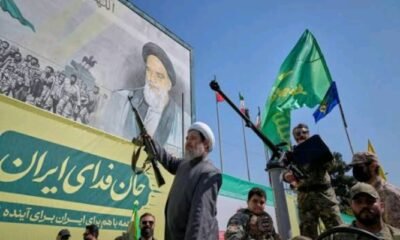
Meanwhile, Iran’s new Supreme Leader Mojtaba Khamenei issued a stark warning to both the United States and Israel during Armed Forces Day commemorations. “Just as Iran’s drones strike like lightning against the US and Zionist criminals, the brave navy is also prepared to inflict new bitter defeat on enemies,” Khamenei said in a message read on Iranian state television. The remarks signalled that Tehran’s military posture remains defiant despite ongoing diplomatic efforts to de-escalate the conflict.
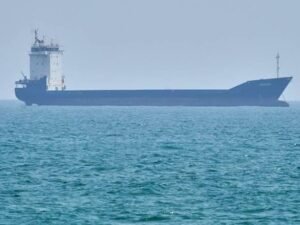
The escalating standoff has sent shockwaves through global energy markets, with roughly one-fifth of the world’s oil passing through the Strait of Hormuz under normal conditions. The renewed closure threatens to deepen an already severe energy crisis, driving prices higher just as the global economy showed tentative signs of recovery. Gulf equities were subdued in early trading on Sunday as renewed uncertainty dampened ceasefire optimism.
The broader conflict has exacted a devastating human toll since the US and Israel launched attacks on Iran on February 28. At least 3,000 people have been killed in Iran, nearly 2,300 in Lebanon, 23 in Israel, more than a dozen in Gulf Arab states, and 13 US service members. The fighting has also spread to southern Lebanon, where Israeli strikes have continued despite the fragile truce, with the Israeli military reporting another soldier killed in combat there.
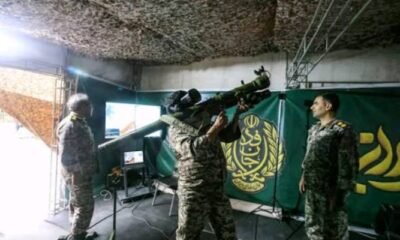
Iran’s Revolutionary Guards Aerospace Force commander announced that the country was now replenishing its missile and drone launchers at a higher speed than before the war, suggesting that Tehran is preparing for a prolonged confrontation. The comments were accompanied by video footage of underground missile facilities, drones, and ground launch systems, though Reuters was unable to independently verify the footage.
US President Donald Trump has insisted that the naval blockade “will remain in full force” until Tehran reaches a comprehensive deal that addresses its nuclear programme. Trump warned that Iran could not blackmail the United States by shutting the waterway, even as he cited “very good conversations” with Iranian officials. The conflicting signals from Washington have added to the uncertainty, with no date set for the next round of formal negotiations.
For now, vessels in the Persian Gulf remain at anchor, holding their positions as they await clarity on whether any transit attempt will be met with force. The closure has effectively choked off one of the world’s most vital maritime arteries, leaving global trade and energy security hanging in the balance.