Connect with us

International

China Pushes Ethnic Unity Law as Mandarin Becomes Dominant Language in Minority Regions

Published

on

Share

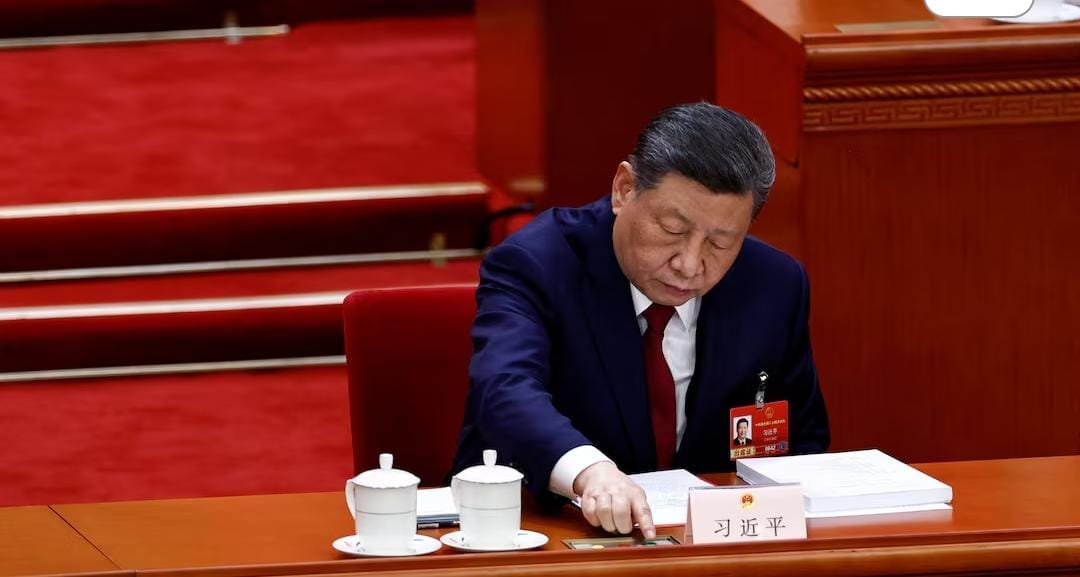
China’s legislature has approved a controversial new law aimed at promoting ethnic unity, with a key provision prioritising the use of Mandarin in education, governance, and public life across the country’s ethnic minority regions.

The legislation, passed by China’s National People’s Congress (NPC), seeks to strengthen what the government calls a shared national identity among the country’s 56 officially recognised ethnic groups. Mandarin will now serve as the primary language in schools and official communication, even in areas traditionally dominated by minority languages such as Tibetan, Uyghur, and Mongolian.


Under the new framework, Mandarin must take precedence in public signage, education, and government business when used alongside local minority languages. Authorities say the policy is designed to promote social integration, improve communication across regions, and support national development.

Chinese officials insist the law still protects ethnic cultures and religious traditions, stating that it aims to encourage interaction and unity among different ethnic communities while maintaining social stability and border security.

However, critics and human rights groups argue the law could weaken the cultural and linguistic rights of minority groups. Analysts say the move reflects Beijing’s broader push for “Sinicisation,” a policy aimed at integrating ethnic minorities more closely into the dominant Han Chinese culture.

Experts warn that the policy may accelerate the decline of minority languages and traditions, especially in regions such as Xinjiang, Tibet, and Inner Mongolia where authorities have already expanded Mandarin-language schooling in recent years.

China’s government maintains that the law is intended to promote national unity and long-term stability, but debate continues over whether it strengthens cohesion or undermines the cultural autonomy of minority communities.

See also  North Korea Condemned U.S. and Israeli Military Strikes on Iran
Continue Reading
Click to comment

Leave a Reply

Your email address will not be published. Required fields are marked *

Government

UK Implements Airspace and Road Restrictions Ahead of President Tinubu’s State Visit

Published

on

Share


The United Kingdom has announced heightened security measures, including temporary airspace restrictions, in Windsor ahead of President Bola Ahmed Tinubu’s state visit next week.

According to Thames Valley Police, the measures are part of a coordinated security operation involving the Royal Borough of Windsor and Maidenhead, the Royal Household, and other partners to safeguard dignitaries, spectators, and the general public.

Chief Superintendent Adrian Hall, of Thames Valley Police’s Joint Operations Unit, stated:

“The air restrictions are just one aspect of a robust security operation. Many measures will be visible, others will not. Our experience in policing Royal events ensures that we have thoroughly planned and prepared for this visit. We will keep all attendees safe while allowing the public to enjoy this historic occasion.”

Windsor Castle already has permanent airspace restrictions year-round, but on Wednesday, March 18, these will be extended from 7:00 a.m. to 11:59 p.m., in coordination with the Civil Aviation Authority (CAA). Any violation will be treated as a criminal offense under the Air Navigation Order.

Police will deploy officers with specialist capabilities, including search teams, mounted units, armed officers, roads policing, and Project Servator personnel. Windsor’s CCTV network, hostile vehicle mitigation barriers, and other security measures will also be in use.

Members of the public are urged to report any suspicious activity by calling 101, or 999 in case of an emergency.

The measures reflect the UK’s commitment to ensuring both the safety of dignitaries and the smooth conduct of this high-profile state visit.

See also  Nightclub Bombing in Peru Leaves 33 Injured, Including Minors
Continue Reading

International

Iran’s New Supreme Leader Reportedly in Coma After US-Israeli Airstrike

Published

on

Share


Iran has been thrown into fresh uncertainty after reports emerged that the country’s newly installed Supreme Leader, Mojtaba Khamenei, is in a coma following a United States–Israeli airstrike.

The 56-year-old cleric, son of the late Iranian leader Ali Khamenei, has reportedly not been seen in public since assuming leadership earlier this week. His father and wife were killed in a joint U.S.–Israeli airstrike on February 28, an incident that triggered the current conflict.

According to reports citing sources familiar with the situation, Mojtaba Khamenei sustained severe injuries during the attack. The injuries allegedly include the loss of at least one leg and serious internal damage, possibly to the liver or stomach.

A source quoted in the report said the Iranian leader is currently in critical condition.

“One or two of his legs have been cut off. His liver or stomach has also ruptured. He is apparently in a coma as well,” the source claimed.

Despite the reported condition, Mojtaba Khamenei issued a written statement on Thursday his first since succeeding his father vowing retaliation against those responsible for the attacks on Iran.

“I assure everyone that we will not refrain from avenging the blood of your martyrs,” he said in the statement. “Every member of the nation who is martyred by the enemy is an independent subject for the revenge case.”

He also pledged justice for victims of a reported American Tomahawk missile strike on the Shajarah Tayyebeh elementary school, which allegedly killed 175 children.

Meanwhile, the Iranian leader is believed to be receiving treatment at Sina University Hospital in Tehran, where parts of the facility have reportedly been sealed off and heavily guarded by security personnel.

See also  Nigeria, Germany Deepen Strategic Ties in High-Level Diplomatic Meeting

The escalating conflict has prompted thousands of foreign nationals to leave the Persian Gulf region. The United Kingdom’s Foreign Office said more than 45,000 British citizens had departed the region, while the U.S. State Department confirmed that around 40,000 Americans had returned home.

Casualty figures from the conflict continue to rise. Nearly 500 people have reportedly been killed in Lebanon, while Iranian authorities say more than 1,300 people have died in the fighting. Israel has reported 12 fatalities.

The United States military has also confirmed the deaths of seven soldiers, with eight others suffering serious injuries as the conflict widens across the region.

Continue Reading

Government

NIDCOM Seeks Explanation Over Detention of 42 Nigerians in Mozambique

Published

on

Share


The Nigerians in Diaspora Commission (NIDCOM) has demanded clarification from Mozambican authorities over the arrest and continued detention of 42 Nigerian nationals in the country.

According to the commission, the arrests were reportedly carried out by Mozambique’s National Criminal Investigation Service (SERNIC), which claimed the Nigerians were staying illegally in the country. However, NIDCOM said the claim has not been officially confirmed.

In a statement issued by the commission’s spokesperson, Abdur-Rahman Balogun, NIDCOM noted that Nigeria’s High Commission in Mozambique had not been formally notified about the circumstances surrounding the arrests.

Chairman and Chief Executive Officer of the commission, Abike Dabiri-Erewa, said the families of the detained Nigerians have been making distress calls, expressing concern about the welfare of their relatives.

“They confiscated their cell phones, personal belongings and the money they had with them at the time of the arrest,” Dabiri-Erewa stated.

She added that the Nigerian Embassy has written to Mozambique’s Ministry of Foreign Affairs and the office of the Attorney-General to seek clarification on the matter.

Dabiri-Erewa stressed that if the Nigerians committed any offence, the authorities should formally charge them in court and make the allegations public. Otherwise, they should be released instead of being held without due process.

She also reiterated that while the Nigerian government does not support criminal activities by its citizens abroad, no Nigerian should be detained without clear charges or knowledge of the reason for their arrest.

See also  Trump Expresses Frustration Over Iran Nuclear Talks, Warns “They Cannot Have Nuclear Weapons”
Continue Reading