Connect with us

International

China Builds ‘Invisible Battlefield’ Beneath the Sea in U.S. Rivalry

Published

on

Share


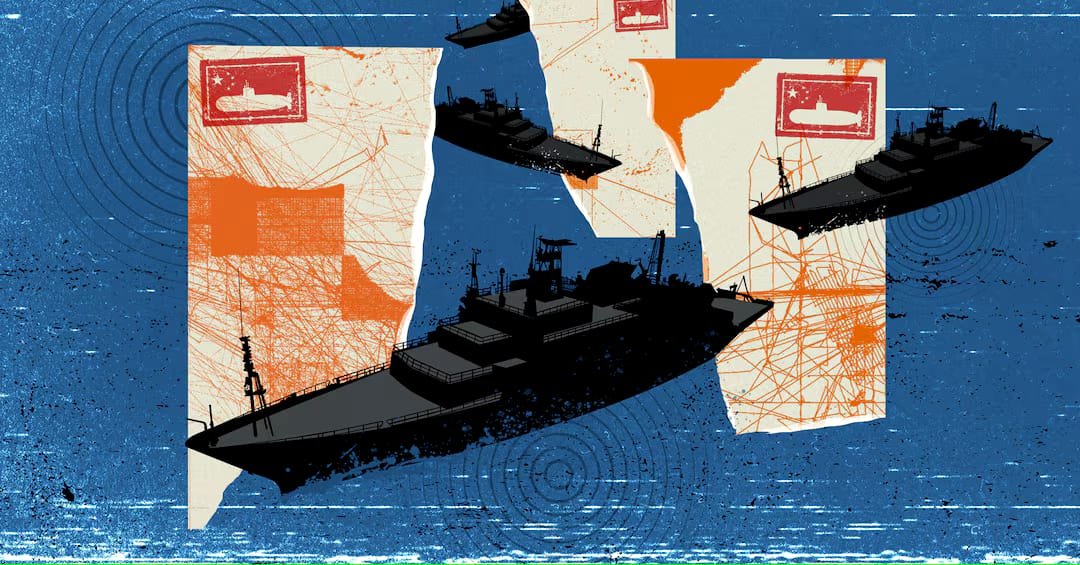
China is undertaking an extensive campaign to map the ocean floor across key global waters, a move analysts say is aimed at strengthening its submarine warfare capabilities, particularly in preparation for potential conflict with the United States.


According to multiple reports, Chinese research vessels have been actively surveying the seabed in the Pacific, Indian, and Arctic Oceans, gathering detailed data on underwater terrain, currents, and acoustic conditions.


While Beijing presents much of the activity as scientific exploration, naval experts warn that the data has clear military applications. Mapping the ocean floor allows submarines to navigate more effectively, remain hidden, and detect rival vessels key advantages in modern undersea warfare.


One vessel, the Dong Fang Hong 3, has reportedly operated near strategically sensitive regions such as Taiwan, Guam, Japan, and the Malacca Strait; areas critical to the U.S. and allied naval operations.


Analysts say the initiative aligns with China’s broader “civil-military fusion” strategy, where civilian research supports military development. By building a detailed understanding of the maritime environment, China is effectively preparing the “battlespace” for potential underwater conflict.


U.S. defence officials and security experts have raised concerns that these developments could erode America’s long-standing advantage in submarine warfare. The growing network of underwater sensors and mapping systems could enable China to track enemy submarines in real time and expand its naval reach beyond regional waters.


The development marks a significant shift in global naval competition, as undersea dominance remains one of the most critical and least visible frontiers in modern military strategy.

See also  Church Split Looms as Conservative Anglicans Announce Rival Leadership Structure
Continue Reading
Click to comment

Leave a Reply

Your email address will not be published. Required fields are marked *

International

Minnesota Sues Trump Administration Over Fatal Federal Shootings

Published

on

Share


Minnesota officials have filed a federal lawsuit against the administration of Donald Trump, accusing it of withholding critical evidence tied to a series of controversial shootings by federal immigration officers, including the deaths of Alex Pretti and Renee Good.


According to court filings, the state alleges that federal authorities failed to honour earlier commitments to cooperate with local investigations following the incidents, which occurred during a large-scale immigration crackdown known as Operation Metro Surge.


The operation, described by federal agencies as the largest of its kind, saw thousands of officers deployed across Minneapolis–Saint Paul as part of a broader deportation campaign. However, it quickly drew criticism from Minnesota leaders, who questioned the conduct of federal agents and the use of force.


At the centre of the lawsuit are the fatal shootings of Alex Pretti, a 37-year-old intensive care nurse, and Renee Good, both killed in separate encounters with federal officers in January 2026. Their deaths, along with another shooting involving a civilian, sparked widespread protests and demands for accountability.


State authorities argue that federal agencies, including the Department of Homeland Security, have refused to release investigative materials needed to determine whether criminal laws were violated. The lawsuit contends that withholding such evidence amounts to shielding federal officers from scrutiny.


Hennepin County Attorney Mary Moriarty criticized the federal government’s stance, calling it “unprecedented and alarming,” and warning that it undermines the state’s ability to pursue justice.


Meanwhile, the U.S. Department of Justice has opened a civil rights investigation into Pretti’s killing but declined to pursue a similar probe in Good’s case, marking a departure from past federal responses to police-involved shootings.

See also  Starmer Defends UK Position on Iran Strikes, Says Decision Guided by Law and National Interest


The case highlights escalating tensions between state and federal authorities over oversight, transparency, and accountability in law enforcement operations tied to immigration enforcement.

Continue Reading

General News

Global Oil Prices Rise on Strait Disruptions, as Iran Rejects U.S. Dialogue, Supply Risks Persist

Published

on

Share

Global oil prices climbed sharply on Tuesday as ongoing supply disruptions in the Middle East and renewed geopolitical tensions between Iran and the United States rattled energy markets.


Benchmark crude prices rose above the $100 per barrel mark, with Brent crude gaining nearly $2 and U.S. West Texas Intermediate also posting significant increases. The surge comes amid persistent concerns over disrupted supply routes, particularly through the strategic Strait of Hormuz; a critical chokepoint that handles roughly 20% of global oil shipments.


Tensions escalated further after Iran denied claims by the U.S. officials that negotiations were underway to ease the conflict. The denial contradicted earlier remarks, suggesting progress in diplomatic engagement, adding to uncertainty in global markets.


The ongoing conflict has already disrupted energy infrastructure across the region, with reports indicating that dozens of oil and gas facilities have been damaged. Analysts warn that these disruptions could keep prices elevated for an extended period, even if hostilities ease in the near term.


Adding to market volatility are continued military exchanges and attacks on energy assets, which have heightened fears of a prolonged supply crunch. Oil prices have already surged significantly since late February as traders factor in the risk of further escalation.


Energy experts caution that if the disruption to shipping routes persists, prices could spike even higher, potentially exceeding previous record levels. The uncertainty surrounding diplomatic efforts and the ongoing damage to infrastructure continue to weigh heavily on global energy markets.


The developments underscore the fragile state of global oil supply chains, with markets reacting swiftly to both geopolitical tensions and conflicting signals on potential negotiations.

See also  UAE Intercepts 7 Iranian Ballistic Missiles, 27 Drones in Latest Attack
Continue Reading

International

Taliban Releases U.S. Citizen Dennis Coyle After Year-Long Detention

Published

on

Share

Afghanistan’s Taliban-led government has released an American national, Dennis Coyle, who had been held in detention for more than a year.

Coyle, an academic researcher, was arrested in January 2025 in Kabul and remained in custody without publicly disclosed charges. Afghan authorities claimed he violated local laws, although the specifics were never clarified.

His release was announced on Tuesday and coincided with the Islamic holiday of Eid al-Fitr. According to Afghanistan’s Foreign Ministry, the country’s Supreme Court reviewed his case and deemed the period he had already spent in detention as sufficient.


The decision followed appeals from Coyle’s family, including a direct plea from his mother, and was facilitated through diplomatic efforts involving countries such as the United Arab Emirates and Qatar.


U.S. Secretary of State Marco Rubio welcomed the development, describing it as a positive step while stressing that more work remains to secure the release of other Americans believed to be held in Afghanistan.


Coyle’s detention had earlier been classified by the United States as “wrongful,” with Washington accusing the Taliban government of engaging in what it termed “hostage diplomacy.” Afghanistan has denied these allegations, insisting that foreign nationals are detained only for legal violations.


Attention has now shifted to other unresolved cases, including that of Afghan-American businessman Mahmood Habibi, who disappeared in 2022 and is believed by the U.S. officials to be in Taliban custody; an assertion the Afghan authorities deny.


Coyle is expected to return home following his release, marking the end of a detention that had drawn international concern and diplomatic pressure.

See also  Honda Posts First Annual Loss in Nearly 70 Years Amid $15.7 Billion EV Write-Down
Continue Reading