Economy
Naira Firms Against Dollar as Official Rate Hits N1,356

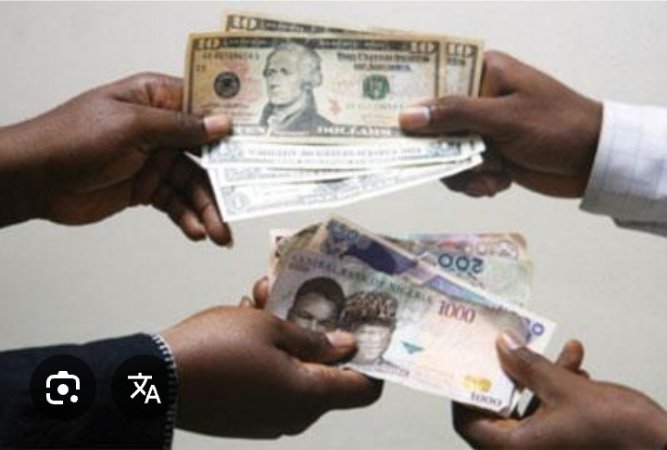
The Nigerian naira recorded a marginal gain against the United States dollar at the official foreign exchange market on Tuesday, April 14, 2026, as improved liquidity and increased interbank activity supported the currency.

Data from the Central Bank of Nigeria showed that the naira strengthened to N1,356.19 per dollar in the Nigerian Autonomous Foreign Exchange Market, extending last week’s gains when the currency appreciated by 1.76 percent. Intraday trading ranged between N1,354.50 and N1,362.50 per dollar, reflecting stronger supply conditions.
Interbank turnover rose significantly to $114.89 million across 141 deals, up from $71.16 million recorded in the previous session. The parallel market also recorded gains, with the currency trading at N1,385 to N1,410 per dollar, while the gap between official and parallel rates narrowed slightly.
However, FX inflows into the official window declined sharply to $571.8 million from $1.06 billion in the previous week, indicating tighter supply conditions. Foreign portfolio investors remained the dominant source of FX supply, contributing $282.2 million, while the CBN accounted for $103.2 million.
“The naira’s recent strength is largely liquidity-driven, not structural, and may prove difficult to sustain without consistent FX inflows,” said an economist at a Lagos-based research firm. “The decline in weekly inflows highlights ongoing pressure on supply, especially as global financial conditions remain tight.”

The positive movement came as Nigeria achieved a significant milestone, becoming a net exporter of premium motor spirit in March 2026. The Dangote Petroleum Refinery exported 44,000 barrels per day of petrol, including a 317,000-barrel cargo delivered to Mozambique, allowing the country to earn fresh foreign exchange to help boost the naira’s value.
Despite the currency’s recent stability, global rating agency Fitch projected that Nigeria’s external reserves would decline to $47 billion by the end of 2026, from $49.4 billion at the end of March, reflecting higher spending pressures and external risks. The agency affirmed Nigeria’s long-term foreign currency issuer default rating at ‘B’ with a stable outlook.
“We forecast a marginal decline to $47 billion at end 2026, reflecting higher spending pressures and external risks,” Fitch stated in its latest assessment.
The agency noted that while reserves provide about seven months of import cover above the median for countries within the ‘B’ rating category, fiscal pressures and external vulnerabilities could drive modest currency depreciation in the near term. Fitch expects Nigeria’s budget deficit to widen to nearly five percent of gross domestic product in 2026, while inflation is projected to average 16 percent.
Nigeria’s external reserves recently hit a 17-year high of $50.02 billion on March 11, before easing to $48.80 billion as of April 10. The CBN has pledged to stabilise the naira and boost sales of high-yield short-term debt to attract dollar inflows.
Economists remain cautiously optimistic about the naira’s trajectory, though structural challenges persist. The Centre for the Promotion of Private Enterprise reported that the naira stabilised within a relatively narrow band of about N1,340 to N1,430 to the dollar in the official market during the first quarter of 2026, helping to moderate imported inflation and boost business confidence.
However, analysts warned that the ongoing Middle East conflict introduces fresh upside risks, with Brent crude trading above $100 per barrel, which could feed into domestic fuel costs and create renewed cost-push inflation pressures.