General News
Dafinone Backs Tinubu’s Reforms, Apoki Laments Governance Failures at Advocate Lecture Series

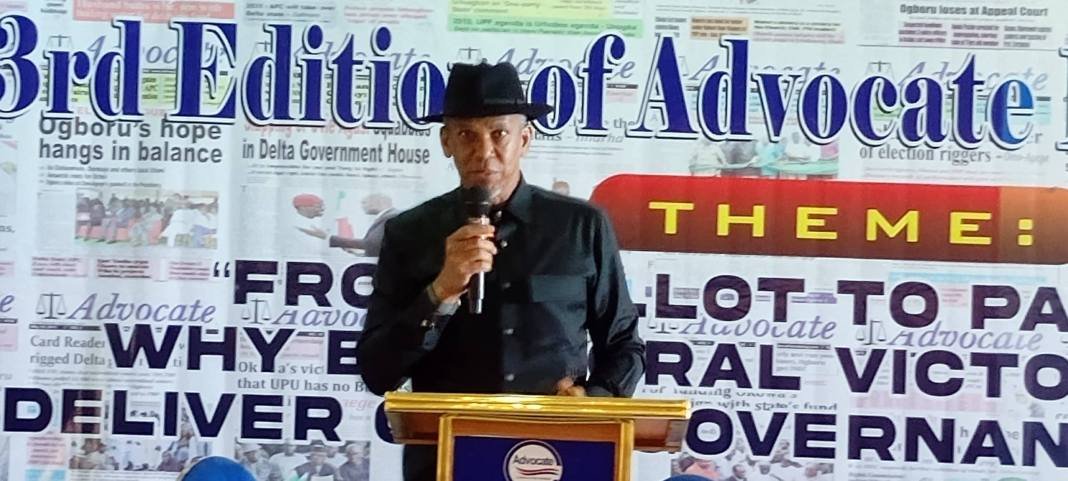
Prominent political and policy stakeholders on Thursday gathered at the 3rd edition of the Advocate Lecture Series, where Senator Ede Dafinone defended the economic reforms of President Bola Ahmed Tinubu, while governance advocate Dr. Charles Apoki criticised Nigeria’s political class over weak service delivery and accountability gaps.
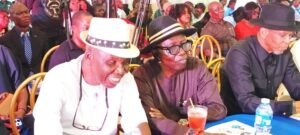
The event, held in Delta State, centred on the theme of governance and the persistent disconnect between electoral victories and public welfare, attracting policymakers, traditional leaders, and civil society actors.
Advocate Lecture Series 3rd Edition
Speaking at the lecture, Senator Dafinone reaffirmed his support for the Tinubu administration’s economic reforms, describing them as difficult but necessary steps to reposition the Nigerian economy.
He argued that early indicators suggest the policies are beginning to yield positive outcomes despite short-term hardship.
He urged Nigerians to remain patient with ongoing fiscal adjustments, noting that reforms such as subsidy removal and economic restructuring were critical to long-term stability and growth.
In a contrasting tone, keynote speaker Dr. Charles Apoki delivered a sharp critique of Nigeria’s political system, blaming the ruling class for the widening gap between electoral promises and actual governance outcomes.
Apoki warned that Nigeria’s democratic process has increasingly failed to translate electoral victories into tangible development, citing patronage politics, weak institutions, and lack of accountability as key drivers of governance failure. He called for urgent reforms to strengthen transparency and restore public trust in leadership.
Other speakers at the event echoed concerns about governance inefficiency and stressed the need for stronger civic engagement, institutional reforms, and performance-driven leadership across all levels of government.
The lecture series has continued to serve as a platform for national dialogue on governance challenges, bringing together political leaders, academics, and civil society stakeholders to examine pathways toward improved accountability and development outcomes in Nigeria.