Economy
Naira Rallies to N1,365 as Oil Windfall and Reforms Reshape Nigeria’s Economy

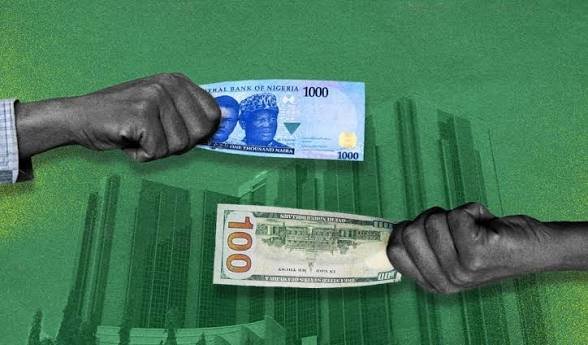
The Nigerian naira continued its impressive recovery against the United States dollar on Monday, May 4, 2026, closing at N1,365.24 per dollar at the official Nigerian Foreign Exchange Market, representing a gain of N9.70 from the previous session’s close of N1,374.94. This appreciation marks the latest in a sustained strengthening trend that has seen the local currency breach the psychological N1,400 per dollar threshold for the first time in over a year.
At the parallel market, the naira also gained N3 to trade at N1,400 per dollar, compared to N1,402 per dollar previously, though some sources reported rates as high as N1,410 per dollar depending on location and transaction size. The gap between the official and parallel markets has now narrowed to less than two percent, a dramatic improvement from over 60 percent in previous years, providing strong evidence of the Central Bank of Nigeria’s success in unifying the foreign exchange market.


Central Bank of Nigeria Governor Olayemi Cardoso attributed the naira’s stability to organic rebuilding of foreign reserves and comprehensive monetary reforms. “What is most important here is that our FX reserves are being rebuilt organically, not by borrowing, but through improved market functioning, stronger non‑oil exports, and robust capital inflows,” Cardoso explained at a recent policy forum. He noted that macroeconomic indicators now show Nigeria is “more resilient to external shocks today than at any point in our recent history”.
The naira’s resurgence is being significantly bolstered by surging global oil prices, with Brent crude trading above $105 per barrel following escalating geopolitical tensions in the Middle East involving Israel and Iran. This price level is substantially above Nigeria’s 2026 federal budget benchmark of $64.85 per barrel, and BMI, a unit of Fitch Solutions, projects Nigeria could earn an additional ₦6.8 trillion in oil revenue in 2026 due to the price surge. The report also revised upward Nigeria’s 2026 GDP growth forecast from 4.3 percent to 4.4 percent, citing stronger support from the oil sector.
President of the Association of Bureaux De Change Operators of Nigeria, Aminu Gwadabe, expressed confidence in the currency’s trajectory, stating that the naira “has remained stable across market for several months, ending years of volatility in the market”. Managing Director of Financial Derivatives Company, Bismarck Rewane, offered an even more optimistic assessment, estimating the naira’s fair value at approximately N1,257 to the dollar based on purchasing power parity models, suggesting the currency remains undervalued by about 11 percent. Rewane made this submission during his keynote address at the 2026 Economic Outlook organised by the Association of Corporate Treasurers of Nigeria, where he noted that currencies typically converge toward their PPP-implied values over a five-year horizon.
Nigeria’s external reserves have strengthened considerably, reaching approximately $48.44 billion as of late April 2026, providing more than 12 months of import cover according to analyst estimates. The Central Bank maintains its year-end target of $51.04 billion remains achievable despite headwinds from the Middle East crisis. The country’s current account balance rose over 85 percent to $5.28 billion in the second quarter of 2025, up from $2.85 billion in the preceding quarter, reflecting stronger export earnings and improved inflows.
Global economist and author Charlie Robertson offered an external perspective on Nigeria’s currency strength, stating: “A weak dollar is dislocating many markets, but it is good for Africa, as we are seeing with the naira”. This view aligns with broader macroeconomic data showing Nigeria’s dollar-denominated Gross Domestic Product jumped 22 percent to approximately $307 billion in 2025, according to a Quartus Economics report titled “Nigeria on the Rise Again” . The report noted that nominal GDP rose from N372.8 trillion in 2024 to N441.5 trillion in 2025, while GDP per capita increased by 19.5 percent to $1,295 during the same period.
The World Bank, however, has taken a more cautious stance, downgrading Nigeria’s 2026 growth outlook to 4.1 percent in its April 2026 Africa Economic Update, down from an earlier estimate of 4.4 percent, citing structural challenges and weaker investment. The bank noted that while poverty remains elevated, it is expected to decline gradually as inflation eases, though more slowly due to higher fuel prices linked to the Middle East conflict. The World Bank projects inflation will decline from 23 percent in 2025 to 14.9 percent in 2026, before easing further to 10.7 percent by 2028.
Despite these positive macroeconomic indicators, the Nigerian Economic Summit Group has issued a sobering warning that the benefits of ongoing reforms have not yet translated into improved living conditions for the average citizen. NESG Research Director Dr. Joseph Ogebe described 2026 as a “make or break year” for the country’s economic recovery. “The average Nigerian has not yet felt the impact” of macroeconomic improvements, Ogebe stated at a news conference in Abuja. While acknowledging that GDP growth has risen to about 3.9 percent and inflation has fallen to approximately 15 percent, he emphasized that “growth cannot be limited to a few sectors like finance and oil,” calling for inclusive, broad-based growth driven by agriculture, manufacturing, trade, and construction to create jobs and reduce poverty.
The rising oil prices that are bolstering government revenue have come at a significant cost to Nigerian citizens, with domestic petrol prices surging 40 to 50 percent since the Middle East conflict began. An estimated ₦6.8 trillion windfall in oil revenue is expected to flow into the national treasury, yet the increase in government revenue may not translate into immediate relief for the public as fuel and transportation costs continue to climb . BMI noted in its report that the relatively stronger naira has helped mitigate the inflationary effects of higher oil prices, but the impact on inflation is expected to be temporary. Some experts from the NESG suggest that if the Israel-Iran crisis continues or escalates further, the windfall could potentially bring an additional ₦30.2 trillion to the Nigerian treasury.
Diaspora remittances have shown renewed momentum, increasing by approximately 12 percent as confidence returns to official channels following enhancements in transparency, settlement efficiency, and reporting. The introduction of initiatives such as the Non-Resident Bank Verification Number, launched earlier in 2025, is expected to further enhance inflows in 2026 as it becomes more widely adopted . Non-oil exports have also grown by more than 18 percent year-on-year, reflecting rising competitiveness under a truly market-driven foreign exchange framework.