Climate Change
Nigeria Moves to Strengthen Disaster Preparedness as NEMA, NiMet Agree on National Early Warning System Framework

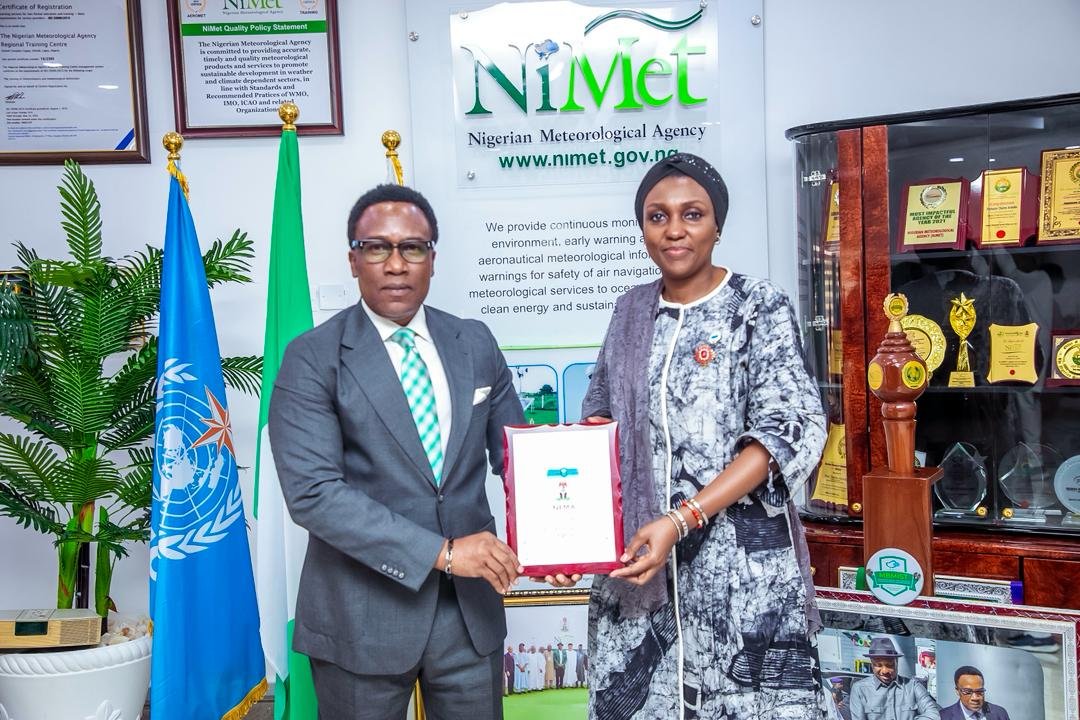
The National Emergency Management Agency (NEMA) and the Nigerian Meteorological Agency (NiMet) have agreed to deepen institutional collaboration on climate risk management with plans to develop a unified national Early Warning System Roadmap aimed at improving disaster preparedness and response across Nigeria.



The development followed a courtesy visit by the Director General/CEO of NEMA, Mrs. Zubaida Umar, to the Director General/CEO of NiMet, Prof. Charles Anosike, on Thursday, May 7, 2026, at the NiMet Headquarters in Abuja.
During the visit, Mrs. Umar commended NiMet for the timely release of its 2026 Seasonal Climate Prediction (SCP) and the agency’s improved accuracy in daily weather forecasting. She said the engagement was part of ongoing efforts to strengthen collaboration between key disaster management institutions in the country.

She emphasized the importance of integrating NiMet more directly into NEMA’s Emergency Operations Centre (EOC), noting that real-time weather intelligence remains critical to effective disaster preparedness, early response, and mitigation strategies.
According to her, stronger coordination between both agencies would significantly reduce the impact of climate-related emergencies such as flooding and extreme weather events.

In his response, Prof. Anosike welcomed the NEMA delegation and appreciated the recognition of NiMet’s operational improvements. He reaffirmed NiMet’s commitment to supporting national disaster risk reduction efforts in partnership with NEMA and the Nigeria Hydrological Services Agency (NIHSA).
He described the three institutions as central pillars in Nigeria’s climate resilience architecture, stressing the need for structured collaboration to improve efficiency and public safety outcomes.
Prof. Anosike also proposed the development of a Nigerian Early Warning System Roadmap, jointly owned and implemented by NiMet, NEMA, and NIHSA. He said such a framework would enhance coordination, improve data sharing, and build greater trust among agencies responsible for managing climate-related risks.
At the end of the meeting, both agencies agreed to immediately constitute a joint technical committee to design and implement the roadmap.
The initiative is expected to strengthen early warning dissemination systems, improve inter-agency coordination, and ensure faster, more effective responses to natural disasters across the country.