
General News
Presidency Defends Tinubu’s Economic Reforms, Rebuts Atiku’s Criticism

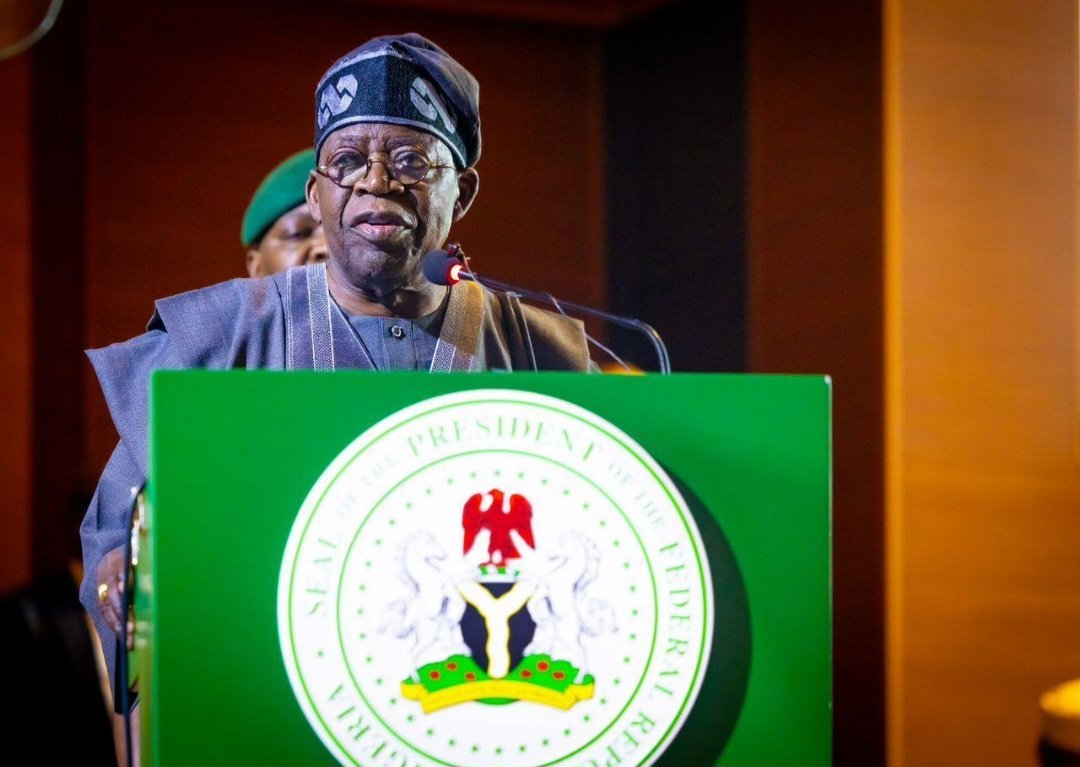
The Presidency has strongly defended the economic policies of President Bola Ahmed Tinubu, dismissing allegations by former Vice President Atiku Abubakar that the administration has pursued reckless borrowing and mismanaged the country’s finances.

In a statement titled “Facts, Not Fear: A Point-by-Point Response to Atiku Abubakar on Nigeria’s Reform Journey,” Special Adviser to the President on Information and Strategy, Bayo Onanuga, argued that Atiku’s criticism was based on outdated economic data from 2024 and failed to acknowledge the progress recorded under the Tinubu administration.
According to Onanuga, Nigeria’s economy has evolved significantly since the difficult reforms introduced shortly after Tinubu assumed office, including the removal of fuel subsidies and the liberalisation of the foreign exchange market.
The Presidency stated that following the exchange-rate adjustment in 2024, Nigeria’s dollar-denominated Gross Domestic Product (GDP) initially declined to about $253 billion, but has since recovered to approximately $377 billion, representing what it described as a 49 percent increase.
It also claimed that Nigeria’s GDP in naira terms rose from about ₦314 trillion in 2024 to around ₦530 trillion, attributing the growth to increased economic activity and ongoing structural reforms.
Onanuga maintained that economic reforms should be judged over time rather than by their initial impact, insisting that the administration had always acknowledged the temporary hardships associated with the reforms.
Responding to concerns over Nigeria’s rising debt profile, the Presidency argued that the country’s debt level remains manageable when compared with the size of the economy.
According to the statement, Nigeria’s debt-to-GDP ratio stands at about 40 percent, which it said is lower than that of several African and developed economies. It also claimed that the country’s debt service-to-revenue ratio has fallen from nearly 100 percent in December 2022 to less than 60 percent, reflecting improved government revenue generation and better debt management.
The government stressed that current borrowing is largely directed toward infrastructure and other long-term investments rather than recurrent expenditure.
The Presidency also defended President Tinubu’s decision to remove petrol subsidies, describing it as one of the administration’s boldest economic reforms.
According to Onanuga, successive governments had acknowledged the burden created by fuel subsidies but failed to eliminate them. He argued that subsidy removal has significantly increased allocations to states and local governments through the Federation Account Allocation Committee (FAAC), enabling greater spending on infrastructure, education, healthcare, salaries and pensions.
The statement added that the policy had strengthened fiscal federalism by giving sub-national governments greater financial capacity to deliver development projects.
Addressing Atiku’s criticism of ongoing tax reforms, the Presidency insisted that the objective is not to impose additional hardship on Nigerians but to create a fairer tax system.
The statement explained that individuals earning ₦1 million or less annually, as well as small businesses with turnovers below ₦100 million, would continue to enjoy tax reliefs, while wealthier individuals and larger companies would shoulder a greater share of the tax burden.
According to the government, the reforms are intended to broaden the tax base, reduce tax evasion and improve public revenue.
The Presidency also listed what it described as major achievements in the health and education sectors.
It said more than 3,000 Primary Healthcare Centres have been renovated or upgraded, while over 78,000 frontline health workers have received additional training over the past three years.
On education, the statement said over 11,000 projects have been implemented through the Universal Basic Education Commission (UBEC).
It also highlighted the Nigerian Education Loan Fund (NELFUND), claiming that more than 1.64 million students have benefited from tuition and upkeep loans worth over ₦303 billion.
The Presidency further pointed to ongoing investments in roads, railways, airports, power infrastructure, housing, gas development and digital connectivity as evidence of the administration’s commitment to economic growth.
It also referenced recently launched social intervention initiatives, including the NG-CARES, HOPE and SOLID programmes, valued at over $3 billion, alongside cash transfers targeting 15 million vulnerable households.
According to the statement, these initiatives are designed to cushion the impact of economic reforms on ordinary Nigerians.
The statement also rejected Atiku’s claim that the Federal Government had received an undeclared ₦7.98 trillion oil windfall.
Onanuga argued that while global crude oil prices had exceeded the government’s benchmark, lower-than-expected oil production and existing crude-backed loan obligations reduced the potential revenue available to the government.
He said calculations based solely on oil prices and production volumes ignore production costs, contractual obligations and the revenue-sharing arrangements between government and oil companies.
Concluding the statement, the Presidency urged Nigerians to assess the Tinubu administration based on long-term outcomes rather than short-term economic challenges.
While acknowledging that the reforms have imposed significant hardships, the government maintained that they are necessary to correct structural distortions, strengthen public finances and place the economy on a path toward sustainable growth.
The Presidency insisted that Nigeria’s economy is recovering steadily and expressed confidence that the benefits of the reforms would become increasingly evident in the years ahead.