
Government
Tinubu’s Economic Reforms: Three Years of Pain, or the Price of Recovery?

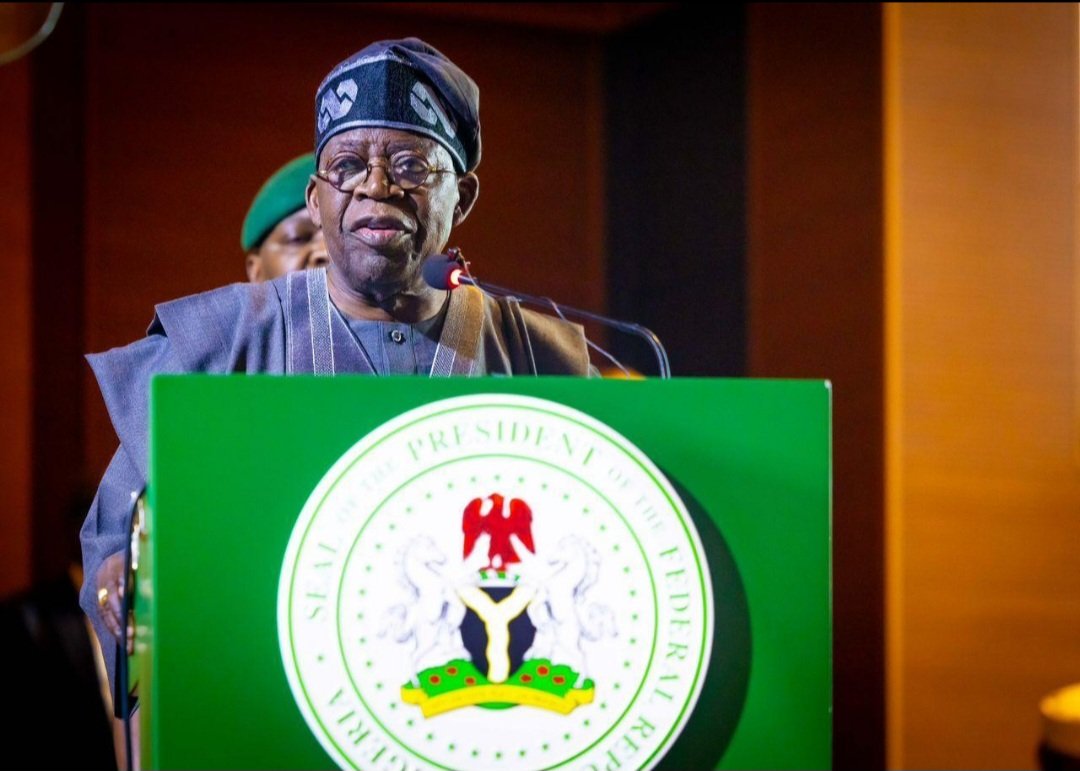
As Nigeria approaches the 2027 general elections, the economic record of President Bola Ahmed Tinubu’s administration is expected to become one of the central issues in the political debate.
Already, competing narratives are emerging. Supporters of the administration point to improved government revenues, increased foreign-exchange reserves and signs of greater macroeconomic stability as evidence that its economic reforms are beginning to work.
Critics, however, argue that the reforms have imposed an enormous burden on households and businesses, with ordinary Nigerians yet to feel meaningful relief.
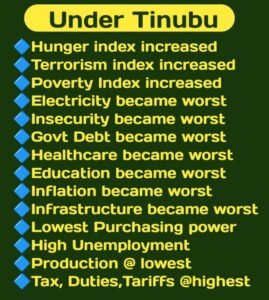
At the centre of that debate are two major decisions taken shortly after Tinubu assumed office in May 2023: the removal of the petrol subsidy and the move towards a market-driven foreign-exchange regime.
Tinubu’s declaration that “fuel subsidy is gone” on his inauguration day immediately changed the economics of transportation and energy in Nigeria.
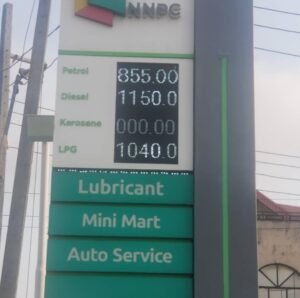
Petrol prices rose sharply, increasing transport costs and pushing up the cost of moving food and other goods around the country.
The impact was particularly severe because millions of households and businesses depend on petrol and diesel for transportation and electricity generation.
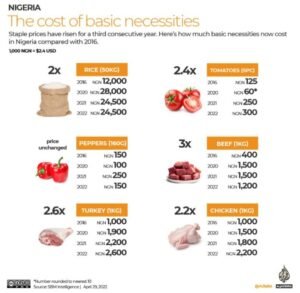
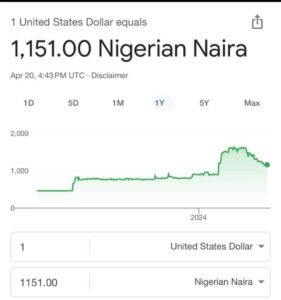
The exchange-rate reforms that followed also weakened the naira considerably, increasing the local cost of imported goods, machinery and raw materials.
For businesses dependent on imported inputs, the combination of higher energy costs and foreign-exchange pressures created a difficult operating environment.
The cost-of-living crisis was compounded by high inflation.
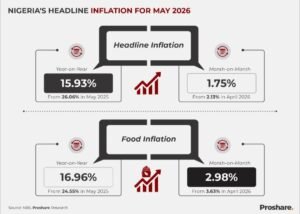
According to the National Bureau of Statistics, headline inflation stood at 22.41% in May 2023.
Inflation subsequently climbed substantially before the NBS rebased its Consumer Price Index in 2025. Under the rebased series, headline inflation was 22.97% in May 2025, while food inflation stood at 21.14%.
Although the inflation rate has since moderated, a slowdown in inflation does not mean prices have returned to their previous levels. It simply means prices are rising more slowly.
That distinction remains important for millions of households whose incomes have struggled to keep pace with the cumulative increase in the cost of food, transportation, housing and other essentials.
The economic hardship has also intensified the debate over poverty.
The World Bank estimates that more than 60% of Nigerians lived below the national poverty line in 2025, with food inflation disproportionately affecting poorer households that can spend as much as 70% of their income on food. The Bank also estimated that about seven million additional Nigerians fell into poverty in 2025.
This is significant, but it does not substantiate the claim that 70 million Nigerians were pushed into poverty specifically by the Tinubu administration.
The distinction matters, particularly as the 2027 political contest approaches. Poverty figures depend on the definition and methodology used, and Nigeria’s latest internationally comparable household-survey data also lag behind current economic conditions. The World Bank has itself noted limitations in the availability of recent Nigerian poverty survey data. 9
The Tinubu administration has consistently argued that the reforms were necessary to correct longstanding economic distortions.
Removing the petrol subsidy reduced one major drain on government finances, while exchange-rate reforms were intended to eliminate distortions in the foreign-exchange market and improve transparency.
The World Bank has acknowledged that the reforms have improved some macroeconomic indicators, including government revenues and foreign-exchange reserves. However, it has also warned that these improvements have yet to translate sufficiently into better living standards for ordinary Nigerians.
The Bank has called for stronger social protection, better infrastructure, improved electricity supply, job creation and policies capable of converting economic stability into higher household incomes.
This is where much of the criticism of the government’s approach has focused.
Critics argue that economic reforms of such magnitude should have been accompanied by stronger and faster measures to cushion vulnerable households.
The government introduced cash transfers and other interventions, while the World Bank approved billions of dollars in financing to support Nigeria’s reforms and help protect vulnerable households.
However, the World Bank says the rollout of targeted cash transfers to 15 million vulnerable households has been slower than planned.
For critics, this gap between reform and relief remains one of the defining weaknesses of the administration’s economic programme.
With the 2027 elections approaching, the argument over Tinubu’s economic record is unlikely to disappear.
The administration will campaign on reforms that it says were necessary to rescue Nigeria from longstanding fiscal and structural problems.
The opposition will point to the immediate consequences: higher living costs, reduced purchasing power, expensive transportation, pressure on businesses and persistent poverty.
Ultimately, the 2027 political debate may come down to one fundamental question: Have Tinubu’s reforms created the foundation for sustainable economic recovery, or has the cost of adjustment become too heavy for ordinary Nigerians to bear?
For millions of Nigerians, the answer will be judged not simply by inflation charts, government revenue or foreign-exchange reserves, but by whether their salaries can buy more, businesses can survive, food becomes affordable and families can live with greater economic security.