
Government
Diri Calls for True Federalism, Says Injustice Is Undermining Democracy

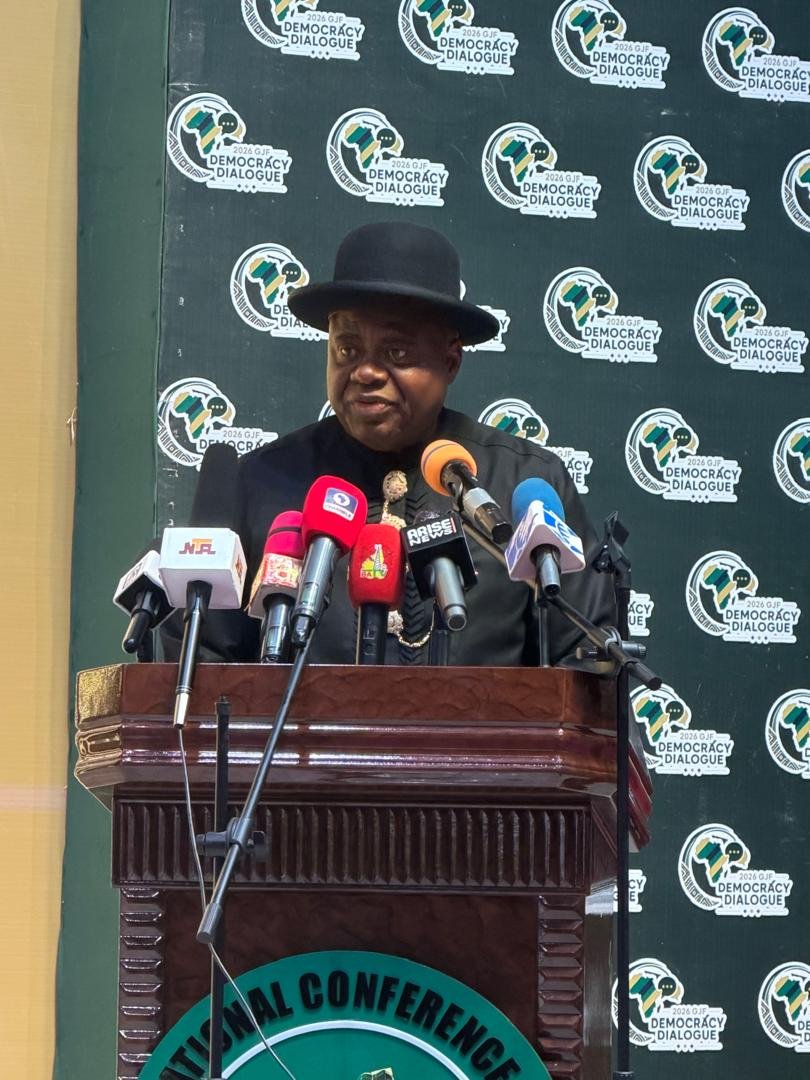
Bayelsa State Governor Douye Diri has identified injustice, inequity and lack of fairness as major factors undermining Nigeria’s democratic development, calling for structural reforms and a stronger practice of federalism.
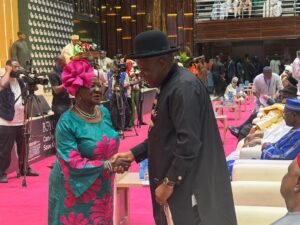
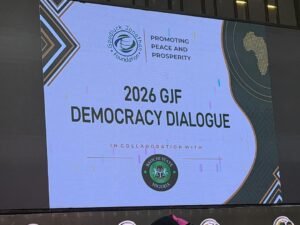
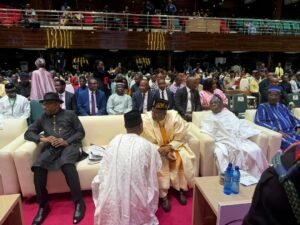
Diri spoke on Tuesday at the 2026 Goodluck Jonathan Foundation Democracy Dialogue held at the International Conference Centre in Bauchi.
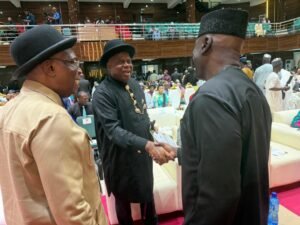
The dialogue, organised around the theme “Beyond Elections: Can Political Parties and the Judiciary Save African Democracy?”, brought together political leaders, former public office holders and other stakeholders to discuss the future of democracy in Nigeria and Africa.
The Bayelsa governor argued that democracy could not thrive without justice, equity, fairness and the rule of law.
He said Nigeria had taken the wrong path in its democratic journey and needed to address structural imbalances that had continued to affect development and the equitable distribution of resources.
According to Diri, the challenges are particularly evident in resource-producing communities, which he said have often failed to receive development commensurate with the wealth generated from their territories.
Using Bayelsa as an example, he pointed to the continued underdevelopment of communities in the Niger Delta more than six decades after the commencement of oil exploration.
Diri said the situation raised fundamental questions about Nigeria’s system of resource allocation and revenue distribution.
The governor cited Southern Ijaw Local Government Area of Bayelsa, describing it as an oil-producing area that had historically suffered from inadequate infrastructure.
He recalled that the area had lacked road access to its headquarters for decades before his administration constructed a 630-metre bridge to connect the community.
Diri questioned the fairness of a system in which revenues generated from resource-rich areas are pooled and distributed nationally without what he considers adequate consideration for the communities where the resources originate.
He also raised concerns over the disparity in the number of local government areas across states and its implications for revenue allocation.
The Bayelsa governor also drew a connection between natural resource exploitation and insecurity.
He cited gold-producing areas in northern Nigeria, arguing that the discovery and exploitation of valuable resources in some areas had coincided with security challenges.
He therefore called for a system of governance that would give greater consideration to the interests of resource-producing communities while strengthening accountability.
Diri maintained that fiscal federalism and a stronger rule of law were essential if Nigeria’s democracy was to become more effective.
He argued that the country’s current system had elements of what he described as “pseudo-democratic” and “pseudo-autocratic” governance because of excessive centralisation.
According to him, Nigeria must have an honest conversation about its federal structure and how resources are controlled and distributed.
“Democracy is built on three pillars – justice, equity, and fairness,” Diri said.
He added that the country needed to continue engaging in open dialogue to resolve its structural and democratic challenges.
Diri commended former President Goodluck Jonathan and the Goodluck Jonathan Foundation for sustaining the annual democracy dialogue, describing such platforms as necessary for national reflection and dialogue.
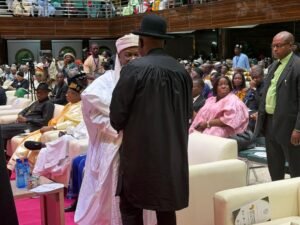
The event was chaired by former President Olusegun Obasanjo.
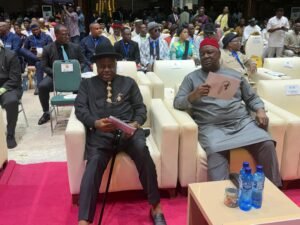
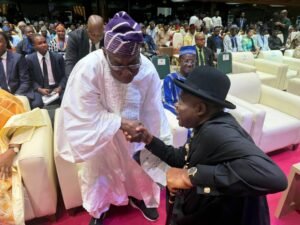
Among those in attendance were former President Goodluck Jonathan and his wife, Dame Patience Jonathan; former Vice-President Namadi Sambo; Bauchi State Governor Bala Mohammed; former Senate President and former Secretary to the Government of the Federation Anyim Pius Anyim; and former Anambra State Governor Peter Obi.
The gathering comes amid renewed national debate over the strength of Nigeria’s democratic institutions, the role of political parties and the judiciary, and the reforms required to deepen democratic governance.