Government
Governors Opposed State Police Because They Didn’t Want To Pay For It, Says Onyibe

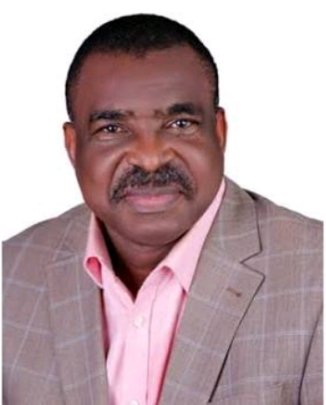
Former Delta State Commissioner and public policy analyst, Dr Magnus Onyibe, has revealed how state governors frustrated former President Olusegun Obasanjo’s plan to establish state police, saying they resisted the initiative because they did not want to bear the financial burden of funding the police.
Onyibe, who made this known in a fresh interview, explained that Obasanjo called for state police shortly after assuming office in 1999 when he realised the challenge of using the military to suppress civil disobedience in a democracy, but the governors threatened to impeach him.
He said the governors’ opposition was rooted in economics rather than principle.
“The basic reason for doing so was because, since policing was in the Concurrent List and not in the exclusive preserve of the Federal Government, which was getting the lion’s share of the funds, they didn’t want to bear the burden of paying the salaries of the police,” Onyibe stated.
Onyibe, an author and democracy advocate, explained that the governors were already agitating for a change in the revenue-sharing formula and feared that accepting state police would mean spending their limited funds on salaries while the Federal Government continued to keep the larger share of national revenue.
He noted that the governors at that time were more interested in not spending additional funds on policing than in the security of the people, because insecurity was not as severe then.
Onyibe also traced the origin of Nigeria’s centralised policing system to the 1966 military coup and the events that followed, explaining that local police, known as the Native Police Authority before 1966, was used effectively by the colonialists to manage insecurity through traditional rulers before policing became centralised.
He said the military government centralised policing because it believed local police were used by secessionists in declaring the State of Biafra, and successive military regimes entrenched the system through the command-and-control doctrine.
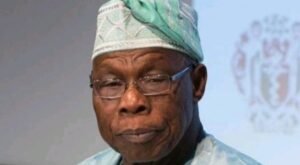
Onyibe stated that although presidents after Obasanjo, including Umaru Musa Yar’Adua, Goodluck Jonathan and Muhammadu Buhari, did not have the boldness to push for state police, President Bola Tinubu has now reopened the debate.
He noted that Tinubu’s administration has a better opportunity to succeed because states now have greater revenues following the removal of fuel subsidy, while governors are increasingly being held accountable for security within their jurisdictions.
Onyibe, who recently authored a book titled “The Imperative of State Police in Nigeria,” has argued that Nigeria’s centralised policing structure is inadequate for a country whose population has grown from about 45 million at independence to over 230 million today.