
Business
Dollar Under Pressure as Investors Grow Uneasy Over US Debt

The US dollar remained close to multi-month lows on Monday as growing concerns over America’s rising government debt and uncertainty surrounding Treasury market intervention weighed on investor sentiment.
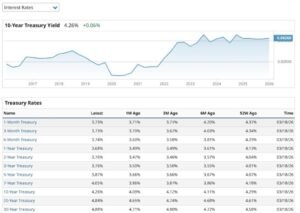
The greenback has come under renewed pressure after the US Treasury announced plans to double its purchases of long-dated government bonds to $4 billion per operation, a move aimed at supporting the Treasury market but which has unsettled some investors.
Although the planned purchases are relatively small compared with the roughly $32 trillion US Treasury market, traders have interpreted the move as a sign that authorities are becoming increasingly concerned about elevated long-term borrowing costs.
Long-term bond yields have been rising globally amid persistent inflation expectations, solid economic growth and concerns about ballooning government debt. The rise in US borrowing costs has added to questions about the dollar’s attractiveness to international investors.
The dollar’s weakness has benefited several major currencies.
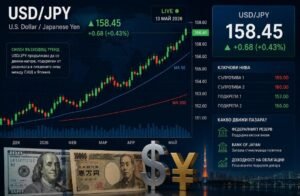
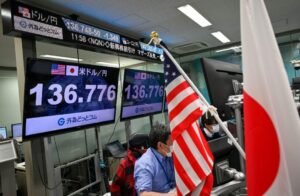
The euro was trading above $1.16, while the Japanese yen remained on the stronger side of 159 yen per dollar. The Australian and New Zealand dollars were also close to three-month highs.
The Canadian dollar, however, weakened after trade negotiations between Ottawa and Washington collapsed, with both countries imposing or threatening retaliatory tariffs.
The dollar’s decline has also coincided with strength in alternative assets. It recorded its biggest weekly decline against bitcoin in more than three years, while gold continued to benefit from investor demand amid concerns about the US currency and debt outlook.
Investors are also watching Washington’s expected announcement on new sanctions against Iran.
US Treasury Secretary Scott Bessent is expected to provide details of the measures, with particular attention on whether they could affect countries and companies involved in Iran’s trade. The uncertainty surrounding the sanctions has added another source of volatility to global financial markets.
Oil prices and currencies have been sensitive to developments surrounding the US-Iran confrontation, while traders are also preparing for important speeches from US Federal Reserve Chair Kevin Warsh and Bank of Japan Deputy Governor Ryozo Himino later in the week.
Warsh’s remarks at the Jackson Hole economic symposium will be closely watched for clues about the Federal Reserve’s interest-rate outlook and its approach to the balance sheet.
Despite stronger-than-expected US services activity in August, which recorded its strongest growth in nearly two years, the data has so far failed to spark a sustained recovery in the dollar.

Investors remain focused on whether US policymakers can address concerns surrounding government borrowing, inflation and long-term Treasury yields without undermining confidence in the dollar.
For now, the greenback remains under pressure, with markets closely watching Treasury policy, US economic data, Federal Reserve guidance and geopolitical developments for signs of its next major move.