
Disaster/Tragedy
Nepal Flash Flood: 384 Missing, Including 291 Foreign Tourists

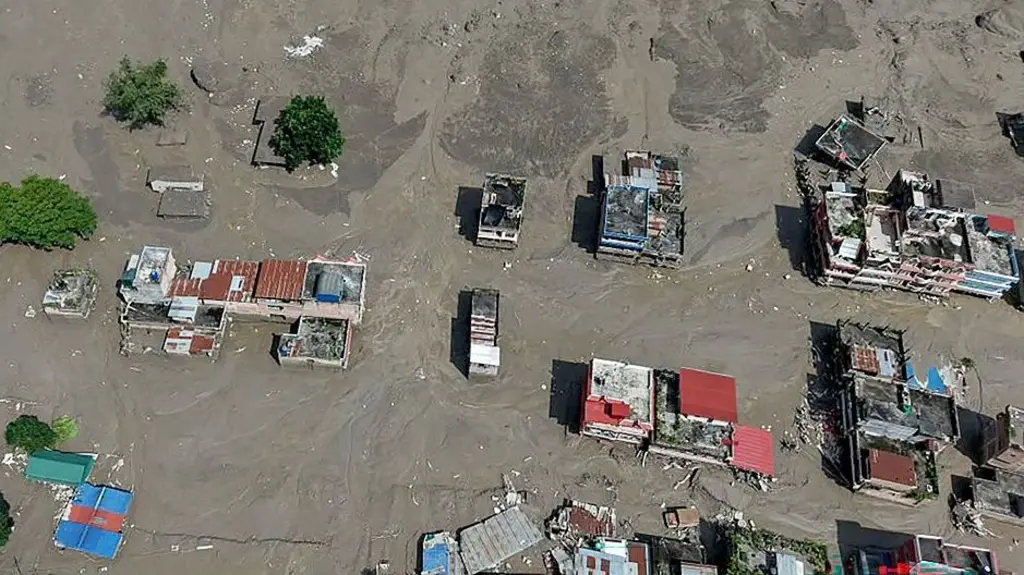
At least 22 people have been killed and hundreds remain missing after a devastating flash flood swept through Nepal’s northern border region near Tibet on Wednesday, destroying homes, roads, bridges and hydropower infrastructure.
Nepal’s authorities said 384 tourists and other travellers have been reported missing, including 291 foreign nationals, as rescue teams struggle to reach communities cut off by the disaster.
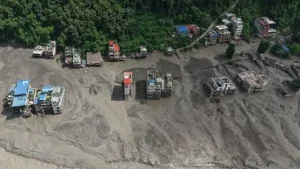
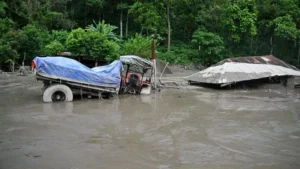
The flooding struck the Bhotekoshi River in the mountainous Rasuwa and Nuwakot districts, near the border with China’s Tibet Autonomous Region. Several villages were inundated, while vehicles, buildings and other infrastructure were buried under huge quantities of mud and debris.
Among those reported missing are nationals from India, the United States, Britain, Malaysia, South Korea, South Africa, Australia and the Netherlands. At least 105 Indians and 12 British citizens are among those listed as missing, according to reports from Nepalese authorities and foreign governments.
Many of the missing travellers were reportedly on their way to Mount Kailash in Tibet, a major pilgrimage destination for Hindus. South Korean nationals working on a hydropower project in the affected area are also among those unaccounted for.
Authorities and scientists believe an avalanche of ice and rock may have blocked the Lhende Khola River before the accumulated water suddenly surged downstream into the Bhotekoshi River.
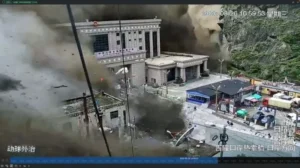
Reuters reported that a 4.4-magnitude earthquake was detected in the region shortly before the flood, raising the possibility that the tremor triggered the ice-rock avalanche. However, investigators have not yet conclusively established the exact sequence of events.
The International Centre for Integrated Mountain Development said an ice-rock avalanche from a glacier was a likely trigger for the flooding.
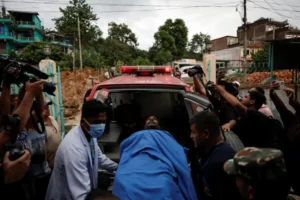
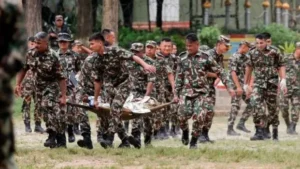
Nepal has mobilised police, soldiers and other emergency personnel for search-and-rescue operations. However, the mountainous terrain, heavy sediment and continuing high water levels are making access extremely difficult.
Rescue helicopters have struggled to land in some of the worst-hit areas, while roads and bridges have been destroyed or blocked by debris.
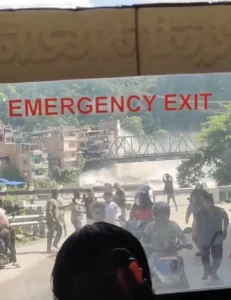
China has also deployed hundreds of rescuers to the Gyirong border crossing on the Tibetan side after the flooding and mudslide affected roads, communications and electricity supplies.
Chinese President Xi Jinping ordered an intensified search for missing people and called for stronger monitoring to guard against further disasters.
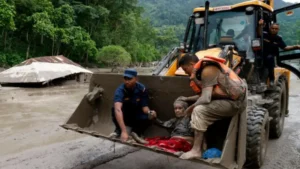
India has offered humanitarian assistance, with Prime Minister Narendra Modi speaking with Nepal’s Prime Minister Balendra Shah and pledging support for rescue and relief operations. South Korea has also established a task force and is preparing to send a rapid-response team to Nepal.
The danger has not completely passed.
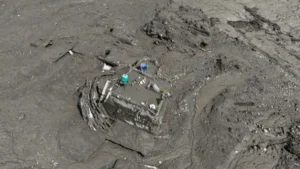
Officials have warned that a blockage remains upstream on the Lhende Khola River, raising fears that another surge of water could occur.
Residents living along the Bhotekoshi, Trishuli and Narayani rivers have been urged to move to safer areas and remain alert. Flood warnings have also been issued in parts of northern India because several rivers flowing through the region originate in the Himalayas.
The disaster has also caused significant damage to Nepal’s energy infrastructure. The country’s Energy Ministry said about 430 megawatts of electricity capacity, representing more than 12% of Nepal’s total hydropower capacity, had been affected.
The full scale of the disaster remains unclear as rescue teams work to reach isolated communities and establish the whereabouts of hundreds of people.
With communications disrupted across parts of the border region and dangerous conditions hampering rescue efforts, authorities fear the death toll could rise further.