
Disaster/Tragedy
Thousands Seek Shelter as Bangkok Floods Cause Over $320m in Damage

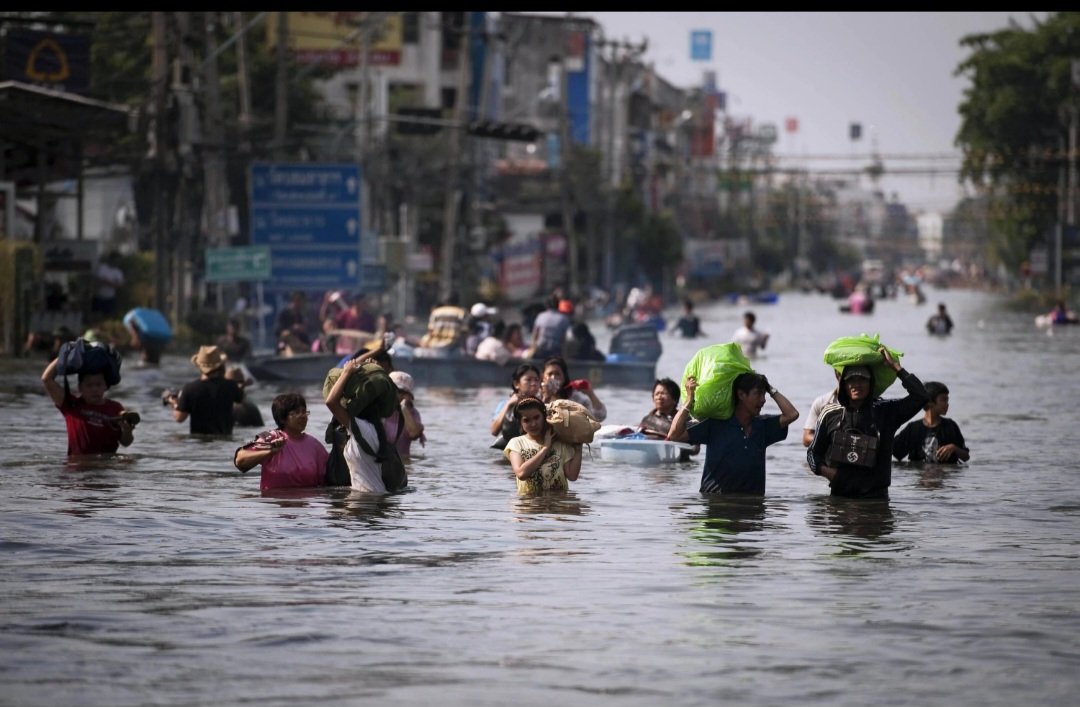
Thousands of residents have been moved into evacuation centres in Bangkok as severe flooding caused by days of heavy rain continued to disrupt Thailand’s capital, with nationwide economic damage estimated at more than $320 million.
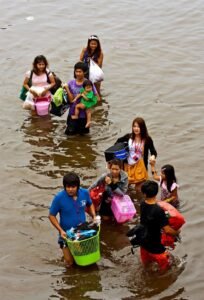
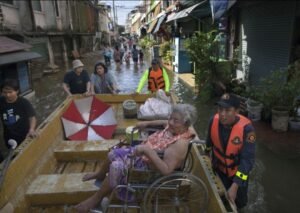
At least 5,901 people had been moved to 234 evacuation centres across Bangkok by Monday, according to city officials, while more than 80,000 people living in flooded areas were unable to leave their homes, Thailand’s Interior Ministry said.

The flooding has affected 41 provinces since September 16, killing at least eight people and disrupting more than 580,000 homes. Bangkok has been among the worst-hit areas, with entire neighbourhoods inundated and roads becoming difficult or impossible to use.
The capital received about 320 millimetres of rain over two or three days last week, almost equivalent to the amount of rain Bangkok normally receives throughout September. In some areas, more than 330 millimetres was recorded between Thursday and Sunday, according to Thailand’s weather authorities.

Residents in parts of Bangkok have been forced to wade through knee- and waist-deep water to obtain food and other necessities. In Bang Kapi, some vendors moved their goods to makeshift floating stalls using plastic containers and drums as customers struggled through the floodwaters.
Thai authorities have mobilised boats and mobile kitchens to assist affected communities. Interior Ministry permanent secretary Unsit Sampuntharat said the relief operation aims to provide three meals a day to residents throughout the flooding and for at least seven days after the water recedes.
The economic impact is also mounting. Aat Pisanwanich of Rangsit University estimated that the floods could cause at least 11 billion baht, or about $327 million, in economic damage nationwide. He said the losses could increase if conditions do not improve.

Aat also estimated that the flooding could reduce Thailand’s economic growth for the year by 0.3 percentage points to 2.1%, while third-quarter growth could be reduced by about 0.5 percentage points to 1.7%. Bangkok and the eastern region are expected to suffer particularly heavy losses in wholesale and retail activity, while agriculture and industry could be affected elsewhere.
The flooding has also prompted additional evacuation orders in Rayong province, east of Bangkok, after rising water levels pushed two reservoirs beyond their capacity. The province lies near an important industrial area, raising concerns about further disruption if the situation deteriorates.

Bangkok’s geography adds to its vulnerability. Much of the city sits on a low-lying river delta, around 1.5 metres above sea level in places, and the city is sinking by several millimetres a year. Flooding is a recurring problem during Thailand’s rainy season, although residents and authorities have described the latest conditions as particularly severe.
The latest flooding comes after catastrophic floods in southern Thailand last year, when at least 145 people were killed and more than 33,000 homes were inundated. Authorities are continuing to monitor rainfall, reservoir levels and drainage systems as Bangkok works to move floodwaters out of affected areas.