
Disaster/Tragedy
Thousands Evacuate India’s Eastern Coast as Cyclone Arnab Nears Landfall


Thousands of people have been moved to safer locations along India’s eastern coast as Cyclone Arnab intensifies over the Bay of Bengal, threatening coastal communities with powerful winds, heavy rainfall and possible flooding.
The storm is expected to make landfall along the Andhra Pradesh coast on Wednesday, October 28, 2026, prompting authorities to accelerate evacuation efforts, prepare emergency shelters and suspend some transport services.
According to Reuters, nearly 50,000 people had been moved to shelters in Andhra Pradesh by Monday night, out of an estimated 400,000 people considered to be in need of evacuation. Authorities said the operation was continuing as the cyclone approached.
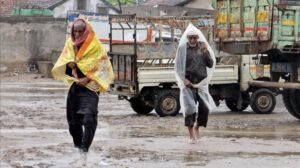
India’s weather department has forecast sustained winds of between 115 and 125 kilometres per hour, with gusts reaching 140 kilometres per hour. The storm is expected to bring heavy to extremely heavy rainfall to coastal districts of Andhra Pradesh and neighbouring Odisha.
The Indian government said the cyclone could cross the coast between Bapatla and Visakhapatnam as a very severe cyclonic storm. Disaster response teams have been deployed, while additional rescue personnel and military resources remain on standby to support emergency operations.
In Andhra Pradesh, officials have ordered evacuations from vulnerable and low-lying areas. The state has also arranged for pregnant women in at-risk locations to be moved to health facilities. The Indian Express reported that 4,711 pregnant women had been transferred to primary health centres, community health centres and hospitals.

Authorities have also ordered the closure of educational institutions in affected districts, while fishermen have been warned to remain ashore. Rail services have been disrupted, with Reuters reporting that at least 12 trains were cancelled and services on 53 routes along the southern coast were suspended for Tuesday and Wednesday.
Neighbouring Odisha is also preparing for the storm’s impact. Schools and colleges in five districts were ordered closed, while authorities mobilised rescue teams and made arrangements for residents of vulnerable areas to move to designated shelters. Officials have warned of heavy rainfall and possible disruption to roads, electricity and communications.

The Indian government’s Cabinet Secretariat said emergency control rooms had been activated and that the National Disaster Response Force, State Disaster Response Forces, armed forces and Coast Guard were preparing for possible rescue and relief operations. Authorities have emphasised that the priority is to prevent loss of life and minimise damage to property and infrastructure.
The cyclone has also prompted concern in neighbouring Nepal, where authorities warned tourists against travelling to high-altitude areas because of the risk of torrential rain, snowstorms and avalanches later in the week.
The Bay of Bengal is one of the world’s major cyclone-forming regions, leaving India’s eastern coastline particularly exposed to destructive tropical storms. Authorities are continuing to monitor Cyclone Arnab’s movement and have urged residents in threatened areas to follow official weather warnings and evacuation instructions.