
Disaster/Tragedy
Cyclone Arnab Kills Three in India as More Than 180,000 Evacuated


At least three people have been killed after Cyclone Arnab struck India’s eastern coast, damaging homes, destroying crops and disrupting transport services as authorities evacuated more than 180,000 people from vulnerable areas.
The powerful storm made landfall in Andhra Pradesh early on Wednesday, October 28, bringing heavy rainfall and strong winds to coastal communities along the Bay of Bengal. Neighbouring Odisha was also affected, although authorities said the damage there was less severe.
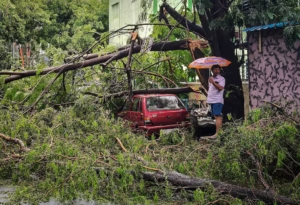
Narendra Singh Bundela, a senior official with India’s National Disaster Response Force (NDRF), confirmed the deaths, saying Andhra Pradesh had been the worst-affected state. Officials said two of the fatalities resulted from a falling tree and electrocution.
According to Andhra Pradesh Chief Minister N. Chandrababu Naidu, the storm destroyed at least 180 houses, uprooted 220 trees and disrupted electricity supplies in several areas. Emergency teams were deployed to clear roads, assess damage and assist affected residents.
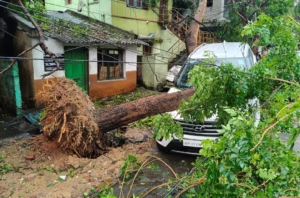
Cyclone Arnab was classified as a very severe cyclonic storm by the India Meteorological Department (IMD), which forecast sustained winds of between 125 and 135 kilometres per hour, with gusts reaching 150 kilometres per hour.
The weather agency also warned of a storm surge of between one and 1.5 metres above normal tide levels, raising concerns about flooding in low-lying coastal communities. Damage to crops, thatched houses and communication infrastructure was also anticipated.

More than 180,000 people were evacuated across Andhra Pradesh and Odisha before the cyclone made landfall, with emergency shelters established for residents living in areas exposed to flooding and destructive winds.
The storm also disrupted transport and daily activities, forcing the closure of some schools and the cancellation of train and flight services. Operations at three airports in Andhra Pradesh were suspended, according to India’s civil aviation ministry.

Emergency response teams continued working in affected communities as authorities assessed the extent of the destruction. Fishermen were warned to remain ashore because of dangerous sea conditions, while residents in vulnerable locations were advised to follow official safety instructions.
The cyclone’s effects were also expected to extend beyond India. In neighbouring Nepal, authorities suspended the issuance of trekking permits for high-altitude areas for three days amid warnings that moisture associated with the storm could contribute to heavy rainfall, snowstorms and avalanches in the Himalayan region.

Cyclones regularly develop over the Bay of Bengal and can threaten densely populated coastal areas. India has strengthened its forecasting, early-warning and evacuation systems over the years to reduce casualties from major storms.
However, the destruction caused by Cyclone Arnab has again highlighted the risks facing coastal communities, particularly residents whose homes, livelihoods and access to essential services are vulnerable to extreme weather.