
Disaster/Tragedy
China Resumes Rescue Efforts at Nepal-Tibet Border After Fears of Second Flood

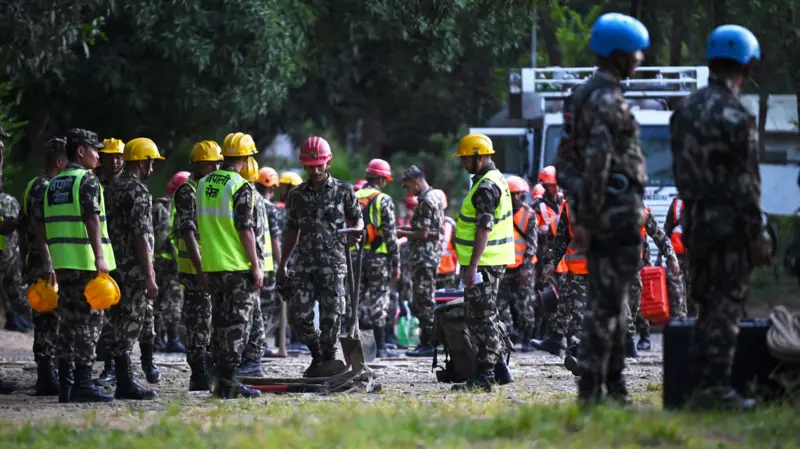
China has resumed parts of its search-and-rescue operation in Tibet after temporarily suspending activities over fears that a newly formed lake could burst its banks and trigger another devastating flood along the Nepal-China border.
The latest development comes as rescuers continue battling dangerous conditions following Wednesday’s catastrophic flash floods, which were triggered by a glacier collapse and subsequent landslide in the Himalayas.

Chinese authorities had paused rescue operations around Gyirong County, where a major border crossing was devastated by mud, water and debris, after a lake formed upstream began showing signs of overflowing. As the immediate threat eased in some areas, rescue teams began returning to the affected zone, according to reports.
The newly formed lake was created when debris from the landslide blocked a river channel. China’s engineering teams estimated that the lake’s volume had grown to more than 2.5 million cubic metres, raising fears that a sudden breach could send another surge of water downstream.

The danger forced rescuers to temporarily withdraw from some areas and authorities to issue warnings to communities at risk. A similar threat has also emerged on the Nepalese side of the border, where a landslide-created lake has overflowed.
The unstable conditions have complicated an already difficult search for hundreds of missing people.
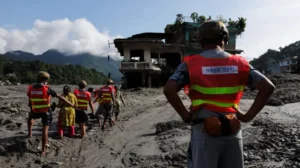
Chinese state broadcaster CCTV has reported that 558 people remain missing in Tibet’s Gyirong County, including about 260 foreign nationals.
The Gyirong border crossing was among the areas hardest hit. The complex, including customs and immigration facilities, was buried under thick mud and debris after the flood struck.
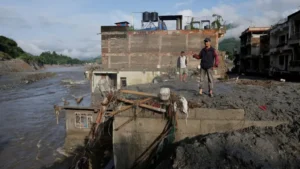
China has deployed rescue personnel, heavy equipment and emergency supplies to the region. Chinese Premier Li Qiang also visited flood-hit Gyirong to oversee relief and rescue operations.
On the Nepalese side, the disaster has proved even more devastating. The death toll has risen to at least 469, while around 1,000 people remain missing across Nepal and Tibet, according to the latest Reuters reporting.

Rescuers in Nepal are using helicopters, heavy machinery and search dogs to locate survivors and recover bodies from huge piles of mud and debris.
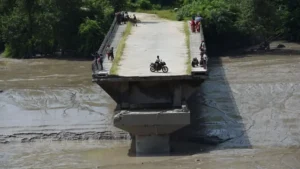
The disaster destroyed homes, roads, bridges and other infrastructure along the important route linking Nepal with Tibet. Entire communities were swept by torrents of water, rocks and mud.
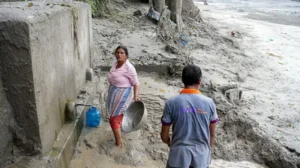
Although some Chinese rescue operations have resumed, authorities remain on high alert because of the possibility of further flooding, landslides and unstable terrain.
The disaster has also left hundreds of foreign tourists and pilgrims unaccounted for. Many had been travelling through the Himalayan region on their way to religious sites including Mount Kailash and Lake Manasarovar.
The flash floods are believed to have been caused by the collapse of a glacier and an enormous ice-and-rock avalanche, which sent a surge of water and debris through valleys on both sides of the border.
As rescue teams return to the most affected areas, families across several countries continue to wait anxiously for news of missing relatives.