General News
₦605 Petrol Target Just First Step, Hashim Says, Plans ₦200–₦300 Per Litre

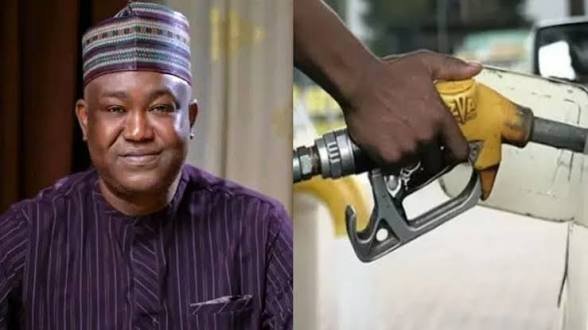
Presidential candidate of the Accord Party, Dr Gbenga Olawepo-Hashim, has said his proposed ₦605–₦610 per litre petrol price is only the starting point of a broader energy policy aimed at eventually reducing pump prices to between ₦200 and ₦300 per litre.

Hashim, who is campaigning on an “energy security first” agenda ahead of the 2027 presidential election, said Nigeria could achieve significantly cheaper petrol without returning to the opaque subsidy regime that preceded the 2023 petrol subsidy reforms.
In a statement issued on Monday, the energy executive argued that the central question should not simply be the international price of crude oil but the actual cost of producing crude, refining it and delivering petroleum products to Nigerian consumers.
He said his campaign’s proposed starting price was based on a domestic crude production benchmark of $45 per barrel, comprising an estimated $30 industry cost and a $15 margin.
The campaign’s model also used $57 per barrel as the benchmark for its illustrative calculation, dividing the figure by the standard 159-litre barrel to arrive at approximately $0.36 per litre.
Using an illustrative exchange rate of ₦1,400 to the dollar, the calculation translates to roughly ₦502 per litre.
The campaign added estimated costs of $5 per barrel for refining and $7 for distribution, transportation and insurance, while proposing an Energy Stabilisation Tax of about ₦104 per litre to arrive at a pump-price target close to ₦605.

Hashim, however, acknowledged that the calculation should be treated as a benchmark rather than a complete refinery cost model because a barrel of crude does not produce 159 litres of petrol.
Instead, crude oil is refined into a basket of products, including petrol, diesel, aviation fuel, LPG and other outputs.
He said the broader objective of his proposal was to reduce the underlying cost of Nigeria’s petroleum value chain rather than simply impose a lower pump price.
Hashim Demands Forensic Audit Of Oil Value Chain
Hashim called for an independent forensic audit of the country’s petroleum value chain to determine what it actually costs to produce and deliver petroleum products to consumers.
He said the audit should cover crude exploration and production, contracting, procurement, security, transportation, refining, storage, insurance, pipelines and distribution.
“Show Nigerians the books. Publish the production cost. Publish refinery cost. Publish transportation. Publish insurance. Publish every margin. Let the data speak,” he said.
The Accord candidate also questioned the automatic application of international opportunity costs to crude produced domestically.
According to him, Nigeria should distinguish between the cost of producing energy for its citizens and the international market value of the country’s crude.
He described some conventional arguments surrounding petrol pricing and subsidy removal as “accounting magic,” arguing that selling a domestically produced product below an international opportunity price does not automatically establish that government is subsidising the product.
Domestic Refining Key To Lower Prices
Hashim said Nigeria’s expanding refining capacity provides an opportunity to fundamentally restructure the country’s petroleum economics.
He proposed stronger support for large-scale and modular refineries, regional refining facilities, petrochemical plants, storage infrastructure and crude evacuation systems.
He said domestic refining should go beyond replacing imported petroleum products by reducing energy costs, retaining more value within Nigeria and supporting industrial development.
“We must stop exporting cheap energy and importing expensive products. Nigeria must refine more, manufacture more and export more value-added energy products,” he said.
However, Hashim cautioned that increased refining capacity alone would not be sufficient if domestic refineries could not access adequate crude at competitive prices.
Exchange Rate Stability Also Crucial
The Accord presidential candidate identified exchange rate stability as another major component of his proposed energy strategy.
He proposed an exchange rate range of approximately ₦525 to ₦700 to the dollar, arguing that a stronger and more stable naira would reduce the domestic cost of imported equipment, technology and other dollar-linked inputs required across the energy sector.
Hashim said a combination of lower crude production costs, efficient domestic refining and a stronger naira could eventually bring petrol prices down to between ₦200 and ₦300 per litre.
He stressed that the ultimate objective was not simply to make petrol cheaper but to reduce the cost of transportation, agriculture, manufacturing, mining and other productive activities.
“The best revenue strategy is not to make everything expensive. It is to make Nigerians more productive and her manufacturers more competitive,” he said.
Hashim said the 2027 presidential election should provide Nigerians with an opportunity to compare competing economic models rather than focus solely on personalities.
He maintained that an Accord administration would assess its energy policy not only by petroleum revenue generated but also by whether lower energy costs make Nigerians and businesses more productive.
“₦605 is where we start. ₦200–₦300 is where we can go. The route is not magic. It is lower production costs, domestic refining, a stronger naira, greater energy production and a government that understands that affordable energy is an investment in national productivity,” he said.