
War
US Precision Missile Linked to Deaths of 21 Civilians in Iran, Investigation Finds

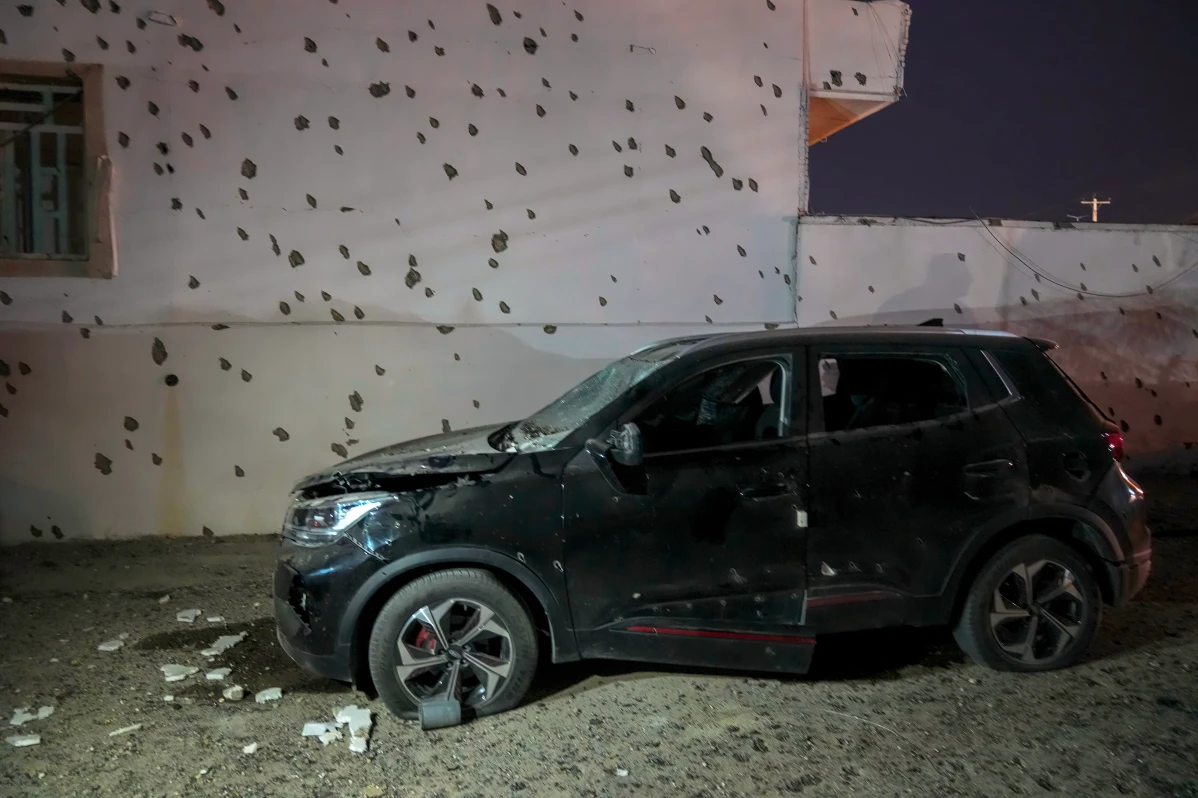
A new American missile touted as a long-range, precision weapon is facing scrutiny after an investigation found that its apparent first use in combat may have caused widespread civilian deaths and destruction in the southern Iranian city of Lamerd.
An analysis by conflict-monitoring organisation Airwars, reviewed and independently examined by the Associated Press, found evidence suggesting that three Precision Strike Missiles (PrSMs) struck Lamerd on February 28, the opening day of the US-Israeli war against Iran. The United States, however, has denied launching weapons into Lamerd.
According to Iranian officials cited in the investigation, the strikes killed at least 21 civilians, including seven children, while Airwars reported that as many as 170 people may have been injured.
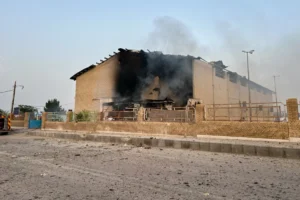
The investigation found that the missiles appeared to have caused damage across a considerably wider area than would normally be associated with a weapon marketed for precision strikes.
The PrSM is manufactured by US defence giant Lockheed Martin and is designed to replace the Army Tactical Missile System, or ATACMS.
Unlike conventional missiles that primarily rely on the explosive force generated at the point of impact, the PrSM variant examined in the Lamerd attack is designed to detonate in the air and release tens of thousands of tungsten pellets in multiple directions.
Airwars’ analysis found that the deadly fragments travelled at least 50 metres from one of the apparent detonation points, while visible damage extended to approximately 170 metres in one location.
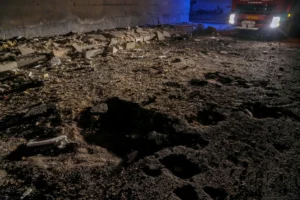
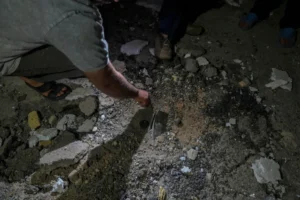
Photographs, videos and satellite imagery examined by Airwars and AP showed buildings, roads and vehicles covered with numerous impact marks; a pattern weapons experts said was consistent with the missile’s fragmentation mechanism.
The investigation found particularly disturbing evidence around a sports complex in Lamerd.
One apparent missile explosion occurred above the Shahid Naimi Sports Hall, with damage extending to a school approximately 170 metres away. Iranian state media reported that seven civilians, mostly children, were killed in the blast.
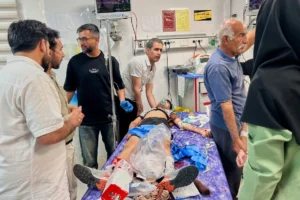
Among those reported killed were three teenage girls who were playing volleyball and a woman who was outside her home. Airwars also traced the death of a two-year-old girl, Avina Barzegar, to a pellet that investigators estimated travelled roughly 50 metres from the explosion.
Investigators said they could not find evidence that military personnel were killed in the three strikes or that military infrastructure was damaged. An Islamic Revolutionary Guard Corps compound was located nearby, but satellite imagery showed no damage to the compound.
The US military has acknowledged using PrSM missiles in Iran but strongly disputes responsibility for the Lamerd attacks.
US Central Command said its forces did not launch PrSMs or other weapons into Lamerd on February 28. It argued that footage from one of the strikes was consistent with an Iranian Hoveyzeh cruise missile.
Weapons experts interviewed by AP, however, disputed that assessment, saying the missile visible in security-camera footage did not match the characteristics of the Iranian weapon.
Israel also told AP that its forces did not strike as far south as Lamerd on the first day of the war. Experts noted that Israel was not known to possess missiles with the same type of mid-air fragmentation capability.
Six weapons experts, including two former military officials, told AP they believed PrSMs were responsible for the Lamerd strikes. They also warned that the weapon should not be used near civilian population centres because of its potentially wide lethal area.
The findings come as the United States and its allies continue to invest heavily in the PrSM programme.
The Pentagon has awarded Lockheed Martin a contract worth more than $4 billion to expand production of the missile, while Britain and Australia have also committed significant funding toward acquiring or developing the weapon.
The PrSM is capable of striking targets more than 500 kilometres away, giving the US military a longer-range option for attacking targets deep inside an adversary’s territory.
But the Lamerd findings have raised questions about how such weapons should be deployed in or around populated areas.
Michael Meier, a former US Army adviser on the laws of war, told AP that it would be difficult to justify using the PrSM in a densely populated area because of the potential for civilian casualties.
The investigation does not establish definitively that the United States intentionally targeted civilians in Lamerd. It instead presents evidence linking the destruction to a weapon that experts believe was the PrSM, while the US military continues to deny that it carried out the strikes.
The episode is likely to intensify debate over the growing use of long-range precision weapons, and whether the label “precision” necessarily means limited civilian damage when such weapons are deployed near homes, schools and other populated areas.