
War
Ukraine Claims Strikes Have Knocked Out More Than Half of Russia’s Oil Refining Capacity

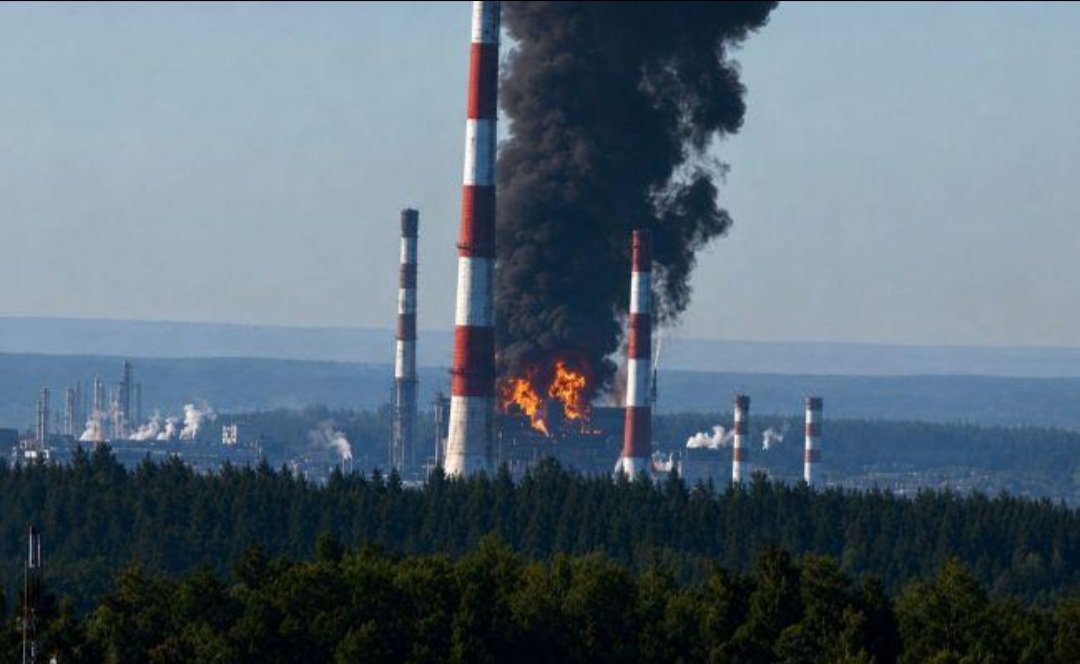
Ukraine says its long-range strikes have put more than half of Russia’s oil refining capacity out of action, as Kyiv intensifies attacks on energy infrastructure that it says supports Moscow’s war effort.
Ukraine’s Defence Ministry said on Sunday that recent strikes had disabled 51% of Russia’s oil refining capacity. The ministry said the assessment was based on analysis by Ukrainian intelligence services, the General Staff and defence officials. The claim has not been independently verified.
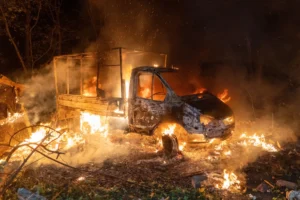
Ukrainian Defence Minister Yevhenii Khmara said the strikes represented a significant blow to Russia’s economy and its ability to supply fuel to military forces. He said Ukrainian forces had recently targeted refineries and oil facilities in Moscow, Yaroslavl, Perm, Ilsky, Saratov, Syzran and Ust-Luga, among others.
The claims come after months of increasingly frequent Ukrainian drone attacks on Russian energy infrastructure. Reuters reported in September that three of Russia’s six largest diesel-producing refineries had either halted production or sharply reduced output following drone attacks. The six facilities together account for about half of Russia’s diesel production.
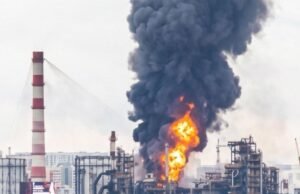
Reuters also reported that the Kirishi refinery had been completely shut down, while the Volgograd refinery and NORSI were operating at roughly one-quarter of their normal capacity at the time of the report. The disruption contributed to Russia restricting exports of gasoline, diesel and jet fuel.
The International Energy Agency said a Russian refinery was successfully hit, on average, every three days during the first eight months of 2026, according to Reuters. The repeated attacks have added pressure to Russia’s domestic fuel market and disrupted its exports of refined petroleum products.
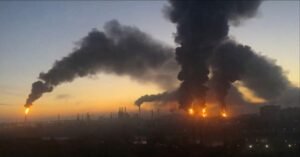
Reuters has separately documented damage or operational stoppages at a number of Russian refineries following Ukrainian attacks. These have included NORSI, Novoshakhtinsk, Afipsky, Perm, Taneco, Orsk, Ilsky, Yaroslavl, Volgograd, Saratov, Ryazan, Syzran and the Moscow refinery.
Russia has not publicly released a comprehensive assessment of the overall damage to its refining sector. However, President Vladimir Putin acknowledged last week that Ukrainian attacks on Russian oil refineries had affected the economy, saying the strikes had contributed to an estimated 1% reduction in gross domestic product. He described their effect as partial rather than complete.
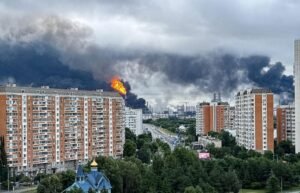
The Ukrainian campaign is part of a broader effort to strike targets deep inside Russian territory. Kyiv argues that oil refineries are legitimate military targets because refined fuel is used by Russian armed forces and the energy sector provides revenue for the war effort.
President Volodymyr Zelenskyy said this month that Ukraine would continue targeting Russian refineries in response to what he described as a new Russian policy of intensified air attacks against Ukrainian cities. He said Ukraine would not target civilians.

The attacks have also become part of a wider aerial escalation between the two countries. Ukraine has continued striking Russian military and energy infrastructure, while Russia has intensified missile and drone attacks on Ukrainian cities and critical infrastructure.
On Monday, Ukraine said Russia had launched 205 drones overnight, with 172 either shot down or suppressed. Russia, meanwhile, said its forces had downed 199 Ukrainian drones over Russian regions, Crimea and the Black Sea.

The extent to which the Ukrainian strikes have permanently removed refining capacity remains uncertain. Damage to individual facilities can result in temporary shutdowns, reduced production or lengthy repairs rather than the permanent loss of the plant’s full capacity.
For now, the 51% figure remains a Ukrainian government assessment rather than an independently verified measure. But independent reporting has established that repeated strikes have disrupted several major Russian refineries and contributed to fuel-supply pressures, making the refining sector an increasingly important part of the wider Russia-Ukraine conflict.