
Opinion
European Football Blueprint: We Watch Their Leagues — But Do We Embrace The Structures That Protect Their Players? Why Don’t Our Players Have The Same Seat at The Table?

By Paul Lucky Okoku
Nigeria does not have to copy Europe. But if we admire the product, we should understand how the people producing it are represented, protected and given a voice.
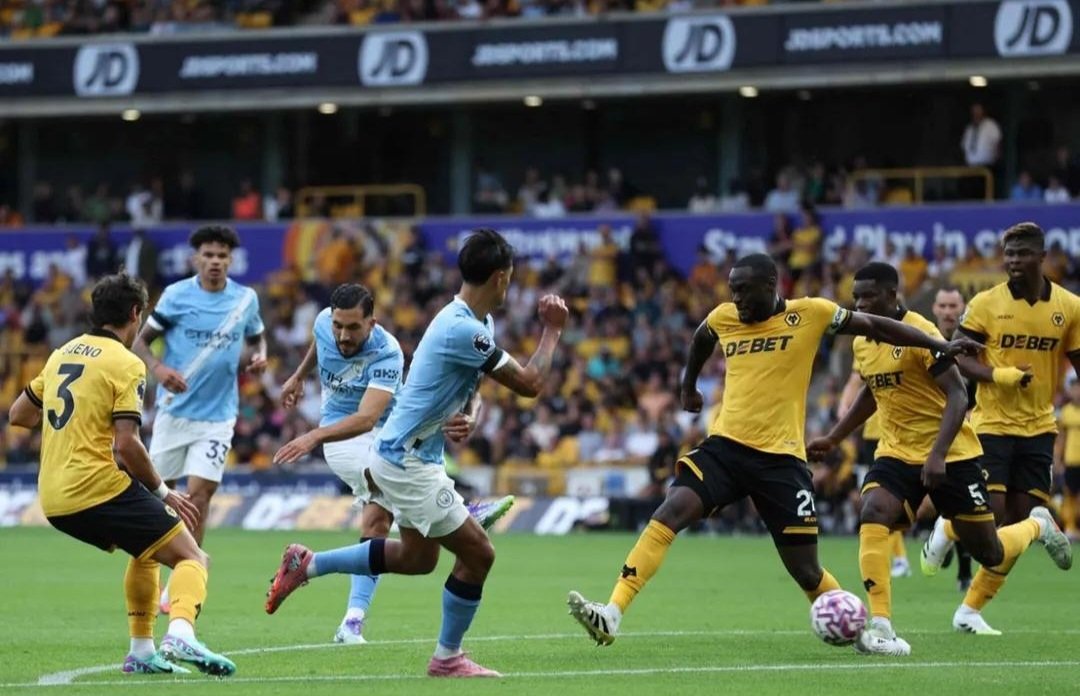
Millions of Nigerians watch the English Premier League, Spain’s LaLiga and other European competitions every week.
We know the clubs. We know the managers. We wear the jerseys. We follow transfers. We argue about referees and VAR.
But perhaps we have concentrated too much on the product and not enough on the machinery behind it.
Who represents the players? Who negotiates their working conditions? Who protects them when wages are unpaid? Who speaks when competition schedules threaten their welfare? And when football’s rules are being written, are the players inside the room?
Those questions matter because footballers are not simply entertainers who appear for ninety minutes.
They are the workforce producing the product.
ENGLAND: THE PLAYERS HAVE A SEAT AT THE TABLE — AND THEY USE IT
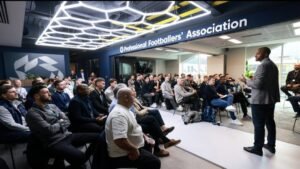
In England, professional footballers are represented by the Professional Footballers’ Association — the PFA.
Its role goes far beyond welfare assistance.
The PFA participates in the Professional Football Negotiating and Consultative Committee, where matters affecting players and the professional game are discussed alongside representatives of the leagues and The Football Association.
According to the PFA, changes to players’ conditions cannot simply be imposed without its agreement. The union also represents player interests on bodies including the FA Council and the Professional Game Match Officials Limited Technical Board.
That means the players are not standing outside football administration waiting to be informed of decisions affecting them.
Their representatives are part of the conversation.
And they do not merely occupy that seat symbolically.
The PFA has repeatedly raised concerns about fixture congestion, inadequate recovery time and excessive player workload.
PFA chief executive Maheta Molango has publicly warned about the pressures created by an increasingly crowded football calendar, while players themselves have complained that their concerns about workload and scheduling are not always given sufficient weight.
The issue became serious enough that, in 2024, the PFA joined other European player unions in legal action challenging FIFA’s approach to the international match calendar and the expanded Club World Cup. FIFPRO Europe and European Leagues also filed a complaint with the European Commission, arguing that the overloaded calendar threatened player safety and well-being.
That is important because it shows what representation looks like in practice.
A players’ union does not exist only to speak when everything is going well. It exists precisely for the moments when players believe their working conditions are becoming unacceptable.
It gathers their concerns.
It presents evidence.
It negotiates.
And when necessary, it challenges the authorities responsible for those conditions.
England is not perfect. There are disputes over refereeing, VAR, ownership, ticket prices, scheduling and working conditions.
But that is precisely the point.
The lesson is not that English football has no problems. The lesson is that when the players have a problem, they have an institution capable of fighting the problem with them.
That is what a meaningful seat at the table looks like.

SPAIN: WHO SPEAKS FOR THE PLAYERS? THE PLAYERS DECIDE
Spain adds another principle — legitimacy.
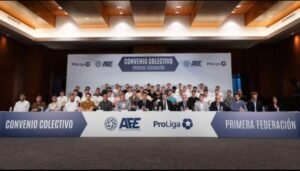
In May 2026, players in the 42 dressing rooms of LaLiga’s First and Second Divisions voted on who should represent them in negotiations for their next collective agreement.
The Asociación de Futbolistas Españoles — AFE — received 856 votes, representing 93.14 percent of valid votes cast.
Those negotiations cover fundamental employment matters including minimum salary, rest periods, holidays and preseason conditions.
Consider the principle.
The federation does not choose who speaks for the players.
The league does not appoint the players’ voice.
The clubs do not select the organisation that will negotiate with them.
The players choose their own representatives.
That is what makes representation credible.
THE NETHERLANDS: WORKING CONDITIONS CAN BECOME COLLECTIVE RIGHTS
The Netherlands provides another useful lesson, particularly for women’s football.
Dutch women footballers and their unions have pushed for stronger employment conditions as the professional game has developed.
On August 20, 2026, clubs including Ajax, Feyenoord, PSV, FC Twente, AZ and HERA United, together with employers and the players’ unions VVCS and ProProf, announced a broader collective agreement for professional women’s football.
Among other protections, it provides continued pay during pregnancy and illness and establishes minimum contractual working hours.
That did not happen because football administrators suddenly decided everything was fine.
Players organised.
Their unions negotiated.
Working conditions became part of a formal agreement.
That is what institutional representation can produce.
AND THEN WE LOOK AT NIGERIA
This is where the comparison becomes uncomfortable.
Nigeria already has rules requiring NPFL clubs to meet their financial obligations to players and coaches. Yet salary and contractual disputes continue.
In 2024, several clubs were taken before the NFF Players Status/Arbitration Committee over unpaid salaries and other entitlements. When some failed to comply with the rulings, the NPFL went further: on October 24, 2024, it indefinitely withdrew the licences of newly registered players from nine clubs until those decisions were obeyed.
That enforcement deserves recognition.
But the larger lesson is that sanctions must become predictable, consistent and strong enough to change behaviour.
A professional contract is not a suggestion.
If a club uses a player’s labour, it must honour the obligations attached to that labour. And when it does not, the consequence must stick.
Rules protect players only when ignoring them becomes more costly than obeying them.
The concerns are not theoretical.
Former NPFL players have publicly complained that poor salaries and working conditions are driving footballers to leagues elsewhere in Africa. The Super Falcons have also pursued unpaid bonuses and allowances, with FIFPRO assisting them in 2023 over payments dating back to 2021.
These are not minor administrative problems.
When somebody works, that person should be paid.
Players also need decent accommodation, medical care, insurance, enforceable contracts, workplace safety and attention to their well-being.
And when those standards are violated, they should not have to fight alone.
That is where the European comparison matters.
England, Spain and the Netherlands do not have perfect systems. But their players have organised institutions capable of negotiating, challenging authorities and defending collective interests.
Nigeria has rules and arbitration mechanisms.
What it still needs is an independent, credible players’ voice with enough institutional weight to make those protections meaningful before problems become crises.
We cannot demand professional performances while repeatedly accepting unprofessional conditions. When players are expected to work, perform and carry the product while basic contractual and welfare obligations are ignored, that becomes exploitative.
WOMEN PLAYERS NEED MORE THAN OUR APPLAUSE
The same principle becomes even more important in women’s football.
Nigeria celebrates the Super Falcons when they win.
But representation cannot begin and end with applause after a tournament.
Women footballers have their own workplace concerns — pay, maternity, medical care, safeguarding, harassment, career security and conditions within clubs.
There have also been longstanding reports concerning poor welfare, irregular salaries and inadequate facilities in Nigerian women’s football.
The Netherlands is now putting pregnancy and illness protections into collective employment agreements.
That should make us ask a straightforward question in Nigeria:
When decisions affecting Nigerian women footballers are being made, who is sitting at the table specifically representing the women who play the game?
Have we systematically asked them what they need?
Have their representatives presented those needs directly?
If not, then reform remains incomplete.
FIFPRO: A PLAYERS’ UNION DOES NOT HAVE TO STAND ALONE
There is another structure Nigerians should understand.
FIFPRO Europe represents more than 35,000 professional footballers through 36 national player unions.
In February 2026, UEFA approved something historic: FIFPRO Europe gained a seat on the UEFA Executive Committee with voting rights.
For the first time, a player representative became a voting member of European football’s highest decision-making body.
Then, on June 10, 2026, FIFA formally recognised FIFPRO as the global representative body for professional footballers and as the social partner representing players as employees.
The agreement establishes a Global Social Dialogue Platform bringing players, clubs and leagues into collective discussions over transfers, welfare, occupational safety and other regulatory matters.
That is a seat at the table.
Nigeria, meanwhile, was still listed among seven African countries represented by non-member unions at the FIFPRO Africa General Assembly in Cairo in August 2025.
That should concern every Nigerian footballer.
WE COPY THE NAMES — WHY NOT THE PRINCIPLES?
Nigeria has never been shy about borrowing football terminology. Our historic Challenge Cup eventually became the Federation Cup — often loosely compared with England’s Football Association (FA) Cup — while our top domestic competition has carried successive “professional” league identities, including the Nigeria Professional Football League and today’s Nigeria Premier Football League (NPFL).
We have been willing to modernise the names. The harder question is whether we have been equally willing to embrace the structures — especially player representation and protection — that make professional football truly professional.
Our competitions use modern names.
We study European coaching methods, academies, transfers and commercial models.
But a professional name does not create a professional institution.
You cannot copy the appearance of professional football while leaving the footballer — the gladiator producing the spectacle — outside the structure.
Perhaps Nigeria’s current reform moment gives us an opportunity to change that.
Not by handing football to one constituency.
Not by excluding administrators, clubs, states or investors.
But by recognising that footballers must have an independent, legitimate and meaningful voice wherever decisions affecting their profession are made.
A BETTER PRODUCT CAN BRING THE SUPPORTERS BACK
And this is where supporters and investors enter the picture.
On August 26, 2026, the NPFL announced a three-year, $7.5 million title-sponsorship agreement with Poland-based EUROMATCH Group.
Hon. Gbenga Elegbeleye and his NPFL team deserve commendation for attracting an international investment of that scale.
Now the opportunity is to justify that confidence.
Nigeria has more than 200 million people.
The first year should establish a baseline for television audiences, attendance, digital engagement and sponsor visibility.
In Project Management (PM) and Integrated Master Scheduling (IMS), the principle is straightforward: establish the baseline first, then measure performance against it over time.
The same principle should apply here. The second year should show measurable year-over-year growth, and the third year should build on that progress again.
If the numbers rise, EUROMATCH may want to renew — and other investors may want to compete.
Fans can watch European football and still rediscover their domestic clubs.
But give them a product worth returning to.
And that starts with respecting the people who produce it.
THE BLUEPRINT IS THERE
England shows us institutional representation.
Spain shows us player-selected legitimacy.
The Netherlands shows us collective bargaining translating into workplace protection.
FIFPRO shows us international strength through organised player representation.
Nigeria does not have to copy Europe.
But if we continue wearing their jerseys, watching their leagues and admiring their football, perhaps we should study one of the most important structures behind it:
The players are not merely on the field.
They have a seat at the table.
Nigeria’s footballers deserve one too.