
Opinion
FIFA Is at The Table With NSC & NFF — But What Will An “Inclusive New NFF” Really Look Like?

By Paul Lucky Okoku
For once, Nigerian football appears to have moved through a potentially explosive governance crisis without immediately descending into another confrontation with FIFA.
That deserves recognition.
Following the resignation of Nigeria Football Federation President Ibrahim Musa Gusau, General Secretary Mohammed Sanusi and members of the Executive Committee, there were competing reports, rumours of government interference, speculation about FIFA sanctions and even a fabricated letter claiming Nigeria had been given a seven-day ultimatum.
That letter has since been rejected by the NFF as fake.
More importantly, Nigeria went directly to FIFA.
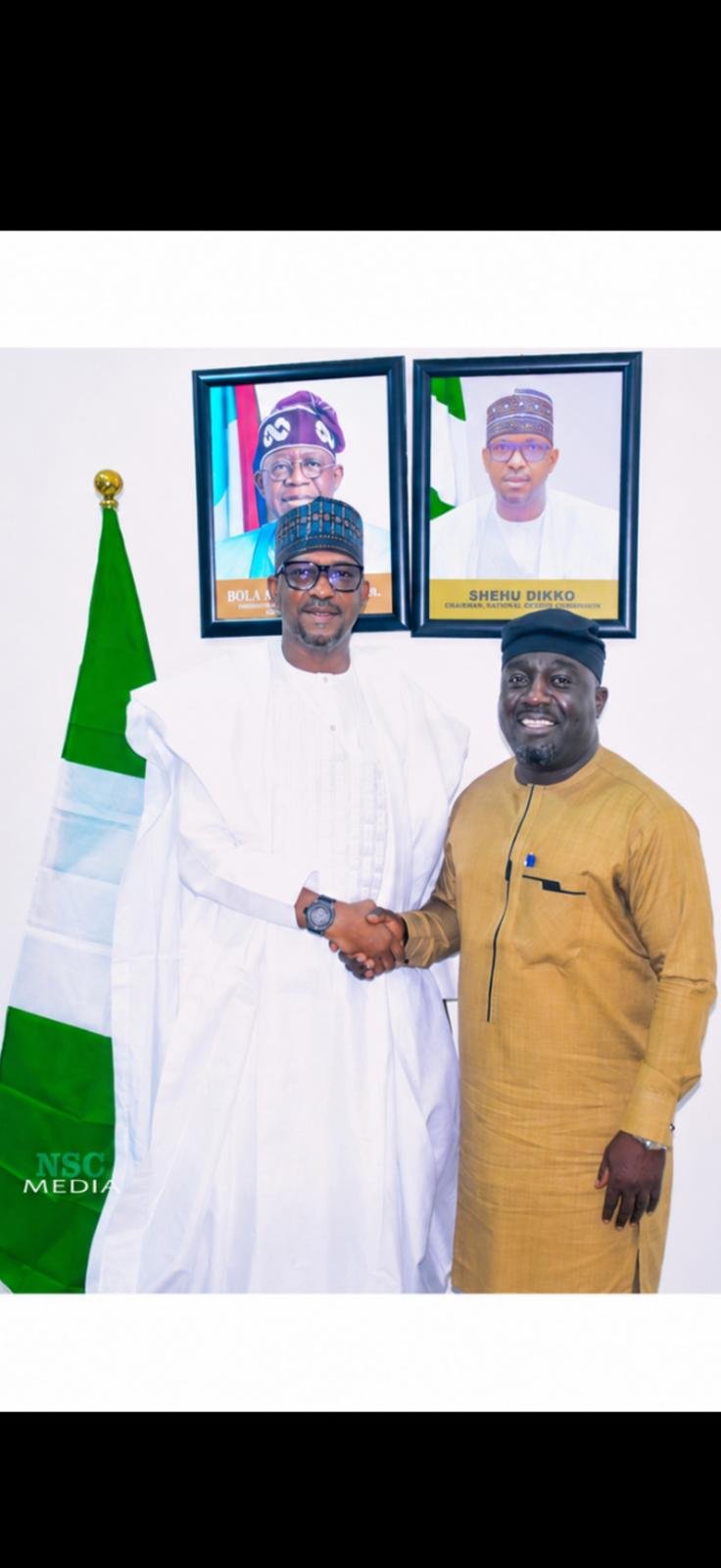
On September 1, a Nigerian delegation led by National Sports Commission Chairman Shehu Dikko and Director-General Bukola Olopade met FIFA and CAF officials in Zurich. The NFF subsequently announced that FIFA had accepted the resignations and agreed to continue discussions with Nigeria, CAF and the NFF administration on a comprehensive reform roadmap.
The language coming out of Zurich is significant.
The stated objective is the emergence of an “inclusive new NFF” capable of operating in a peaceful and stable environment and delivering better results on and off the field.
That sounds encouraging.
But now comes the harder question:
What exactly will “inclusive” mean?
GUSAU’S EXIT SHOULD ALSO BE ACKNOWLEDGED
Whatever criticisms have been directed at the Gusau administration, his departure should be considered fairly.
He left while Nigerian football was under severe pressure following major national-team failures, and while the EFCC confirmed that its investigation into the utilisation of the Federal Government’s ₦12 billion intervention fund released to the NFF remained ongoing. An investigation, of course, is not proof of wrongdoing.
Gusau could have resisted.
Nigeria has seen football leadership disputes before in which rival claims to authority eventually drew FIFA into confrontation with government.
Instead, Gusau resigned and publicly encouraged others to consider doing the same. FIFA has now accepted those resignations.
Whatever the pressures surrounding his decision, allowing an orderly transition rather than creating another international standoff deserves acknowledgement.
“INCLUSIVE” MUST BECOME MORE THAN A WORD
If the objective is simply to replace Gusau with another president while preserving substantially the same political structure underneath the office, then Nigeria will have changed leadership without necessarily reforming football.
An inclusive NFF should force difficult questions.
Who should constitute Congress?
How much electoral power should any single constituency possess?
How should professional clubs, leagues, coaches, referees, women’s football, grassroots football and other recognised stakeholders participate?
And yes, what meaningful institutional voice should current and former footballers have within the game they helped build?
These questions should not be answered by allocating seats merely to satisfy competing interest groups.
Representation must come with competence, responsibility and accountability.
REFORM THE SYSTEM BEFORE ELECTING THE PEOPLE
The NFF has already suspended every process connected with the September 27 election and says a fresh electoral process will begin after comprehensive reforms undertaken in consultation with FIFA and CAF.
That may prove to be one of the most important decisions in this entire process.
Nigeria should resist the temptation to begin another presidential campaign before determining what the reformed institution will actually look like.
First define the Congress.
Define eligibility.
Define term limits.
Define financial disclosure and conflict-of-interest rules.
Define the relationship between elected officials and the professional secretariat.
Define the independence of the technical department.
Define how leagues are governed.
Then let qualified Nigerians compete under those rules.
FIFA SUPPORT SHOULD NOT BECOME FIFA DEPENDENCE
There is also a lesson in how this episode has unfolded.
Engaging FIFA and CAF is necessary because Nigeria belongs to the international football system.
But FIFA should not have to rescue Nigerian football every time domestic governance breaks down.
The purpose of this reform should ultimately be to create institutions strong enough to resolve ordinary disputes internally, lawfully and transparently.
The Zurich meeting therefore should not be regarded as the conclusion of the reform.
It is the beginning.
There is also an important distinction worth making. What Nigeria is undertaking now resembles a normalisation process in substance, even though FIFA has not formally appointed a Normalisation Committee. The leadership has stepped aside, the electoral process has been suspended, an interim administration is maintaining continuity, and FIFA and CAF are directly engaged in shaping the reform roadmap before fresh elections.
That distinction matters. As I have previously argued when examining the possibility of normalisation, government involvement does not automatically have to produce a FIFA ban if reform is pursued through consultation with football’s recognised institutions rather than through unilateral political control. So far, Nigeria appears to have found that path.
Instead of sanctions, FIFA is at the table.
Nigeria now has FIFA and CAF engaged, an interim administration in place and an opportunity to reconsider the structure beneath almost six decades of football governance.
The question is no longer simply:
Who will become the next NFF president?
The more important question is:
What kind of NFF will that person be elected to lead?
If Nigeria answers that correctly, then “inclusive new NFF” may become more than another attractive phrase.
It could become the foundation of a genuinely different football system.