
Opinion
NFF & Football Reform in Nigeria: Former Footballers Do Not Need One Voice To Lead The Nigerian Football Federation (NFF)

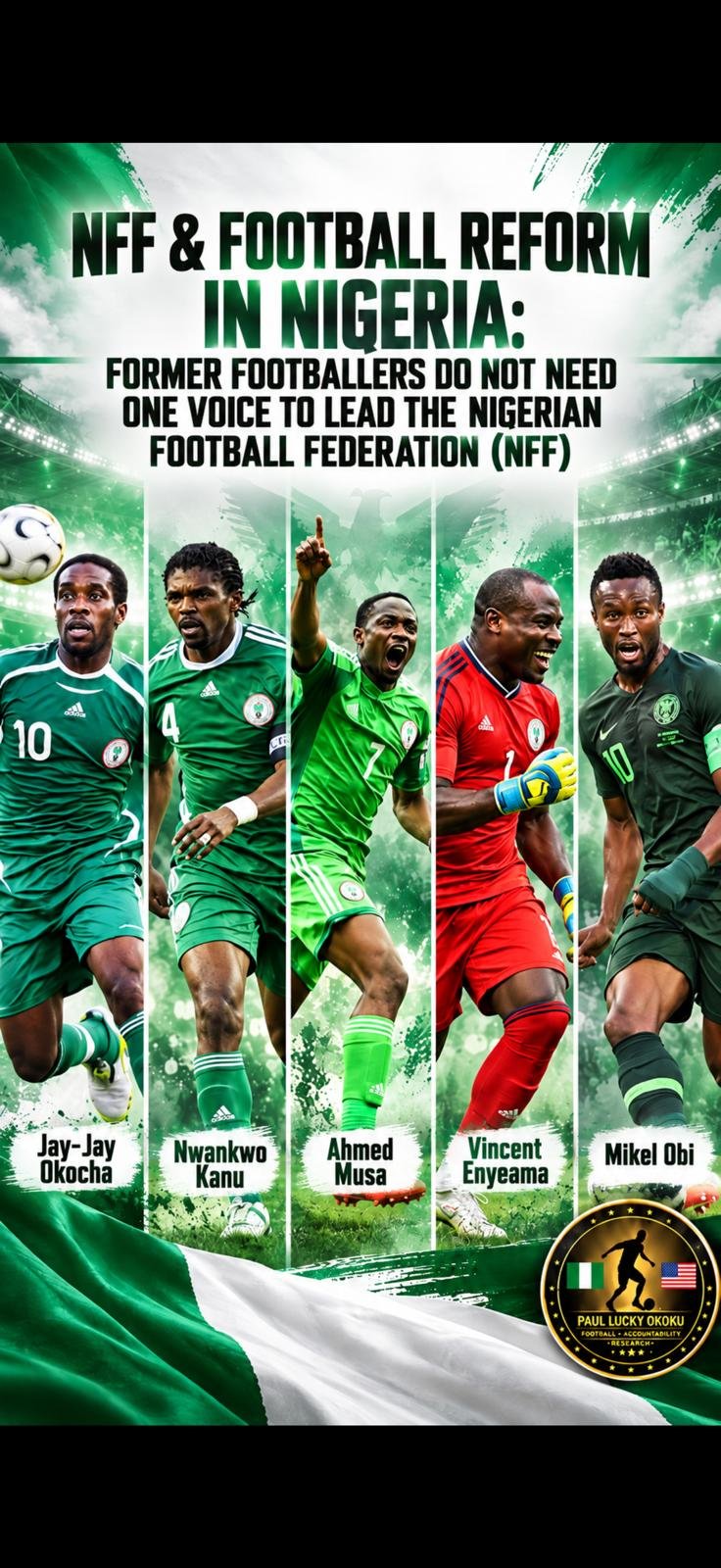
By Paul Lucky Okoku
Different opinions do not diminish qualifications. Nigerian football needs competent leadership, transparent selection, and accountability—not compulsory agreement.
Somewhere along the way, we began confusing disagreement among former footballers with an inability to lead Nigerian football.
But since when did speaking with one voice become evidence of competence?
Whenever former internationals express different preferences for the leadership of the 𝐍𝐢𝐠𝐞𝐫𝐢𝐚 𝐅𝐨𝐨𝐭𝐛𝐚𝐥𝐥 𝐅𝐞𝐝𝐞𝐫𝐚𝐭𝐢𝐨𝐧 (𝐍𝐅𝐅), accusations of division and fragmentation begin to surface.

One supports a former teammate. Another prefers a different candidate. Someone questions another aspirant’s administrative experience.
Suddenly, the discussion shifts from qualifications to whether footballers are capable of organizing themselves.
Yet the administrators, politicians, businessmen, and other stakeholders who have traditionally occupied positions of influence in Nigerian football disagree among themselves. They challenge one another’s credentials, compete for votes, build alliances, and sometimes become political adversaries.
They still contest elections. They still become NFF presidents.
𝐖𝐡𝐲 𝐬𝐡𝐨𝐮𝐥𝐝 𝐟𝐨𝐫𝐦𝐞𝐫 𝐟𝐨𝐨𝐭𝐛𝐚𝐥𝐥𝐞𝐫𝐬 𝐛𝐞 𝐣𝐮𝐝𝐠𝐞𝐝 𝐛𝐲 𝐚 𝐬𝐭𝐚𝐧𝐝𝐚𝐫𝐝 𝐭𝐡𝐚𝐭 𝐨𝐭𝐡𝐞𝐫𝐬 𝐚𝐫𝐞 𝐧𝐨𝐭 𝐫𝐞𝐪𝐮𝐢𝐫𝐞𝐝 𝐭𝐨 𝐦𝐞𝐞𝐭?
𝐖𝐇𝐄𝐍 𝐀𝐃𝐌𝐈𝐍𝐈𝐒𝐓𝐑𝐀𝐓𝐎𝐑𝐒 𝐃𝐈𝐒𝐀𝐆𝐑𝐄𝐄, 𝐈𝐓 𝐈𝐒 𝐂𝐀𝐋𝐋𝐄𝐃 𝐂𝐎𝐌𝐏𝐄𝐓𝐈𝐓𝐈𝐎𝐍
Consider the NFF presidential election held in 𝐁𝐞𝐧𝐢𝐧 𝐂𝐢𝐭𝐲 on 𝐒𝐞𝐩𝐭𝐞𝐦𝐛𝐞𝐫 𝟑𝟎, 𝟐𝟎𝟐𝟐.
𝐈𝐛𝐫𝐚𝐡𝐢𝐦 𝐌𝐮𝐬𝐚 𝐆𝐮𝐬𝐚𝐮, 𝐒𝐞𝐲𝐢 𝐀𝐤𝐢𝐧𝐰𝐮𝐧𝐦𝐢, 𝐒𝐡𝐞𝐡𝐮 𝐃𝐢𝐤𝐤𝐨, former international goalkeeper 𝐏𝐞𝐭𝐞𝐫𝐬𝐢𝐝𝐞 𝐈𝐝𝐚𝐡, and other candidates contested the presidency.
In the first round, Gusau received 𝟐𝟏 votes, Akinwunmi 𝟏𝟐, and Dikko 𝐬𝐢𝐱. Gusau failed to secure the required majority.
Akinwunmi and Dikko subsequently withdrew, while Peterside continued into the runoff. Gusau eventually won by 𝟑𝟗 votes to 𝐨𝐧𝐞.
These were experienced football stakeholders with different ambitions, allegiances, and assessments of who should lead.
Nobody suspended the electoral process because they failed to agree on one candidate.
Nobody established unanimity as a prerequisite for becoming NFF president.
Their differences were resolved through an election.
Why should a similar competition among former internationals suddenly become evidence that footballers lack leadership capacity?
𝐖𝐞 𝐦𝐮𝐬𝐭 𝐛𝐞 𝐜𝐚𝐫𝐞𝐟𝐮𝐥 𝐧𝐨𝐭 𝐭𝐨 𝐭𝐮𝐫𝐧 𝐨𝐮𝐫 𝐨𝐰𝐧 𝐝𝐢𝐬𝐚𝐠𝐫𝐞𝐞𝐦𝐞𝐧𝐭𝐬 𝐢𝐧𝐭𝐨 𝐚𝐦𝐦𝐮𝐧𝐢𝐭𝐢𝐨𝐧 𝐚𝐠𝐚𝐢𝐧𝐬𝐭 𝐨𝐮𝐫𝐬𝐞𝐥𝐯𝐞𝐬.
𝐄𝐈𝐆𝐇𝐓𝐘-𝐎𝐍𝐄 𝐘𝐄𝐀𝐑𝐒, 𝟎% 𝐅𝐎𝐑 𝐅𝐎𝐑𝐌𝐄𝐑 𝐈𝐍𝐓𝐄𝐑𝐍𝐀𝐓𝐈𝐎𝐍𝐀𝐋𝐒: 𝐖𝐇𝐎 𝐇𝐀𝐒 𝐁𝐄𝐄𝐍 𝐀𝐂𝐂𝐎𝐔𝐍𝐓𝐀𝐁𝐋𝐄?
Since 𝟏𝟗𝟒𝟓, the traditionally recognized founding year of Nigeria’s football association, 𝟖𝟏 𝐲𝐞𝐚𝐫𝐬 have passed.
Across that period, documented former Nigeria senior internationals have occupied 𝟎% of substantive NFA/NFF presidencies or chairmanships.
𝐍𝐨𝐭 𝐨𝐧𝐞.
Yet for decades, traditional football administrators have competed, disagreed, challenged one another, and formed rival alliances while continuing to seek positions of influence.
Their disagreements have not prevented them from participating in leadership.
But when former footballers express different preferences, we are quick to describe ourselves as fragmented.
Meanwhile, the financial record demands far greater attention.
𝐍𝟏𝟐 𝐛𝐢𝐥𝐥𝐢𝐨𝐧: The Federal Government intervention fund approved to address outstanding national-team obligations. In 𝐀𝐮𝐠𝐮𝐬𝐭 𝟐𝟎𝟐𝟔, the 𝐄𝐜𝐨𝐧𝐨𝐦𝐢𝐜 𝐚𝐧𝐝 𝐅𝐢𝐧𝐚𝐧𝐜𝐢𝐚𝐥 𝐂𝐫𝐢𝐦𝐞𝐬 𝐂𝐨𝐦𝐦𝐢𝐬𝐬𝐢𝐨𝐧 confirmed that its investigation into the fund’s utilization remained ongoing.
𝐍𝟏𝟕 𝐛𝐢𝐥𝐥𝐢𝐨𝐧: The higher intervention figure reported in connection with the same funding controversy. The 𝐀𝐫𝐞𝐰𝐚 𝐘𝐨𝐮𝐭𝐡 𝐒𝐩𝐨𝐫𝐭𝐬 𝐅𝐨𝐫𝐮𝐦 publicly demanded an investigation into the reported amount. The difference between the ₦12 billion and ₦17 billion accounts requires a clear reconciliation from the relevant authorities.
𝐀𝐩𝐩𝐫𝐨𝐱𝐢𝐦𝐚𝐭𝐞𝐥𝐲 ₦𝟓𝟐 𝐛𝐢𝐥𝐥𝐢𝐨𝐧: The running public-record ledger identified in my continuing examination of nearly three decades of NFF-related financial controversies, encompassing questioned expenditures, audit findings, investigations, and other documented financial scrutiny. These categories cannot be treated collectively as proven stolen funds.
This is the history against which any discussion of Nigerian football leadership must be measured.
𝐀 𝐫𝐞𝐯𝐨𝐥𝐯𝐢𝐧𝐠 𝐝𝐨𝐨𝐫 𝐨𝐟 𝐜𝐨𝐫𝐫𝐮𝐩𝐭𝐢𝐨𝐧 𝐚𝐥𝐥𝐞𝐠𝐚𝐭𝐢𝐨𝐧𝐬, financial controversies, and unanswered accountability questions cannot be separated from the conduct of those entrusted with managing the institution.
Public funds intended for football development, players, coaches, and national-team obligations must be accounted for. Where investigations establish diversion for personal consumption, those responsible must face the consequences.
The standard is not complicated: 𝐦𝐨𝐧𝐞𝐲 𝐫𝐞𝐜𝐞𝐢𝐯𝐞𝐝 𝐦𝐮𝐬𝐭 𝐛𝐞 𝐚𝐜𝐜𝐨𝐮𝐧𝐭𝐞𝐝 𝐟𝐨𝐫, 𝐨𝐛𝐥𝐢𝐠𝐚𝐭𝐢𝐨𝐧𝐬 𝐦𝐮𝐬𝐭 𝐛𝐞 𝐡𝐨𝐧𝐨𝐫𝐞𝐝, 𝐚𝐧𝐝 𝐥𝐞𝐚𝐝𝐞𝐫𝐬𝐡𝐢𝐩 𝐦𝐮𝐬𝐭 𝐚𝐧𝐬𝐰𝐞𝐫 𝐟𝐨𝐫 𝐢𝐭𝐬 𝐬𝐭𝐞𝐰𝐚𝐫𝐝𝐬𝐡𝐢𝐩.
Disagreement exists in corporate boardrooms, professional associations, political institutions, and football administration itself.
Sometimes, in our eagerness to criticize one another, we unintentionally reinforce perceptions that weaken our collective standing. Outside voices can then magnify differences that would be considered normal competition elsewhere.
For 𝟖𝟏 𝐲𝐞𝐚𝐫𝐬, former senior internationals have recorded 𝟎% representation in the federation’s substantive presidency, yet we sometimes subject ourselves to a unity test that traditional administrators have never been required to pass.
We cannot continue measuring footballers by their disagreements while overlooking the documented leadership record of those who have governed the institution.
𝐖𝐡𝐞𝐫𝐞 𝐢𝐬 𝐭𝐡𝐞 𝐦𝐨𝐧𝐞𝐲?
𝐖𝐡𝐞𝐫𝐞 𝐢𝐬 𝐭𝐡𝐞 𝐚𝐜𝐜𝐨𝐮𝐧𝐭𝐚𝐛𝐢𝐥𝐢𝐭𝐲?
𝐖𝐡𝐞𝐫𝐞 𝐢𝐬 𝐥𝐞𝐚𝐝𝐞𝐫𝐬𝐡𝐢𝐩 𝐛𝐲 𝐞𝐱𝐚𝐦𝐩𝐥𝐞?
Those questions deserve at least as much attention as whether two former teammates agree on a presidential candidate.
𝐓𝐡𝐞 𝐬𝐭𝐚𝐧𝐝𝐚𝐫𝐝 𝐦𝐮𝐬𝐭 𝐛𝐞 𝐜𝐨𝐦𝐩𝐞𝐭𝐞𝐧𝐜𝐞.
𝐓𝐡𝐞 𝐫𝐞𝐪𝐮𝐢𝐫𝐞𝐦𝐞𝐧𝐭 𝐦𝐮𝐬𝐭 𝐛𝐞 𝐚𝐜𝐜𝐨𝐮𝐧𝐭𝐚𝐛𝐢𝐥𝐢𝐭𝐲.
𝐓𝐡𝐞 𝐨𝐩𝐩𝐨𝐫𝐭𝐮𝐧𝐢𝐭𝐲 𝐦𝐮𝐬𝐭 𝐛𝐞 𝐟𝐚𝐢𝐫.
𝐁𝐄𝐘𝐎𝐍𝐃 𝐓𝐇𝐄 𝐉𝐄𝐑𝐒𝐄𝐘: 𝐅𝐎𝐎𝐓𝐁𝐀𝐋𝐋𝐄𝐑𝐒 𝐇𝐀𝐕𝐄 𝐁𝐑𝐀𝐈𝐍𝐒 𝐓𝐎𝐎
For decades, many former Nigerian internationals have remained trapped in the public imagination as footballers whose achievements ended with their playing careers.
People remember their goals, tackles, trophies, and national-team appearances.
But what happened after the final whistle?
Some became 𝐥𝐚𝐰𝐲𝐞𝐫𝐬, 𝐛𝐚𝐧𝐤𝐞𝐫𝐬, 𝐬𝐜𝐢𝐞𝐧𝐭𝐢𝐬𝐭𝐬, 𝐞𝐝𝐮𝐜𝐚𝐭𝐨𝐫𝐬, 𝐜𝐨𝐫𝐩𝐨𝐫𝐚𝐭𝐞 𝐞𝐱𝐞𝐜𝐮𝐭𝐢𝐯𝐞𝐬, 𝐞𝐧𝐭𝐫𝐞𝐩𝐫𝐞𝐧𝐞𝐮𝐫𝐬, and 𝐨𝐫𝐠𝐚𝐧𝐢𝐳𝐚𝐭𝐢𝐨𝐧𝐚𝐥 𝐥𝐞𝐚𝐝𝐞𝐫𝐬. Others developed careers involving substantial responsibility for personnel, budgets, projects, and institutions.
These accomplishments deserve proper consideration.
My recent initiative highlighting the professional achievements of former internationals was built around that conviction.
Drawing on my management-consulting experience, I established preliminary screening criteria rather than selecting individuals based on popularity, friendship, or sporting reputation.
A 𝐛𝐚𝐜𝐡𝐞𝐥𝐨𝐫’𝐬 𝐝𝐞𝐠𝐫𝐞𝐞 could satisfy the academic threshold. Where that qualification was absent, approximately 𝟏𝟓 𝐲𝐞𝐚𝐫𝐬 of clearly documented senior management or organizational leadership experience could provide an alternative route.
The assessment also considered responsibility for people, resources, departments, projects, businesses, and institutions.
Some individuals met the criteria. Others remained on hold pending additional verification. Some did not meet the evidentiary threshold.
𝐖𝐞𝐚𝐫𝐢𝐧𝐠 𝐭𝐡𝐞 𝐠𝐫𝐞𝐞𝐧-𝐚𝐧𝐝-𝐰𝐡𝐢𝐭𝐞 𝐣𝐞𝐫𝐬𝐞𝐲 𝐧𝐞𝐯𝐞𝐫 𝐠𝐮𝐚𝐫𝐚𝐧𝐭𝐞𝐞𝐝 𝐢𝐧𝐜𝐥𝐮𝐬𝐢𝐨𝐧.
The exercise relied on publicly available information. It was not an official NFF screening process, a comprehensive background investigation, or an endorsement of any individual for the presidency.
Its purpose was to challenge an outdated perception.
A footballer who becomes an accomplished executive deserves to be evaluated as an accomplished executive—not permanently confined to the identity he carried onto the pitch.
𝐔𝐍𝐈𝐓𝐘 𝐎𝐅 𝐏𝐔𝐑𝐏𝐎𝐒𝐄 𝐈𝐒 𝐍𝐎𝐓 𝐔𝐍𝐈𝐅𝐎𝐑𝐌𝐈𝐓𝐘 𝐎𝐅 𝐎𝐏𝐈𝐍𝐈𝐎𝐍
There is a difference between building credible collective representation for footballers and expecting every former international to endorse the same presidential candidate.
Players’ unions require legitimate membership, democratic participation, accountable leadership, and a mandate to protect players’ interests.
An NFF presidential contest serves another purpose: choosing an individual to lead a national football institution.
Former footballers are independent citizens with different experiences, convictions, and professional judgments.
Disagreement should not automatically become a declaration of disunity.
Nor should outside commentary persuade us to question one another’s credibility before examining the facts.
Journalists and other stakeholders have every right to scrutinize aspirants. But scrutiny should illuminate qualifications, not inflame personal rivalries.
𝐖𝐞 𝐬𝐡𝐨𝐮𝐥𝐝 𝐧𝐨𝐭 𝐜𝐨𝐧𝐟𝐮𝐬𝐞 𝐢𝐧𝐝𝐞𝐩𝐞𝐧𝐝𝐞𝐧𝐭 𝐯𝐨𝐢𝐜𝐞𝐬 𝐰𝐢𝐭𝐡 𝐢𝐧𝐬𝐭𝐢𝐭𝐮𝐭𝐢𝐨𝐧𝐚𝐥 𝐰𝐞𝐚𝐤𝐧𝐞𝐬𝐬.
A profession can disagree over personalities while remaining united around accountability, fairness, and football development.
𝐓𝐇𝐄 𝐉𝐄𝐑𝐒𝐄𝐘 𝐈𝐒 𝐍𝐎𝐓 𝐀𝐍 𝐀𝐏𝐏𝐎𝐈𝐍𝐓𝐌𝐄𝐍𝐓 𝐋𝐄𝐓𝐓𝐄𝐑
My preference would be to see a genuinely qualified former international entrusted with leading Nigerian football.
Such an individual could bring firsthand understanding of players’ welfare, development pathways, national-team responsibilities, and the sacrifices involved in representing one’s country.
But playing experience alone cannot substitute for administrative competence.
Equally, I would support a highly qualified non-footballer whose leadership record, integrity, and vision offer a credible route forward.
Neither group should enjoy immunity from scrutiny.
Can the candidate oversee institutional finances? Establish effective governance? Strengthen domestic competitions? Attract commercial partnerships? Develop youth football? Protect players and coaches? Assemble competent professionals?
And can that individual explain past decisions and accept responsibility for future ones?
Nigeria’s recurring football-governance controversies make these standards indispensable.
Experience in office should be examined, not automatically rewarded. Unresolved financial questions deserve documented answers. Familiarity with the corridors of power is not proof of fitness to govern.
𝐑𝐞𝐟𝐨𝐫𝐦 𝐜𝐚𝐧𝐧𝐨𝐭 𝐬𝐢𝐦𝐩𝐥𝐲 𝐦𝐞𝐚𝐧 𝐜𝐡𝐚𝐧𝐠𝐢𝐧𝐠 𝐭𝐡𝐞 𝐨𝐜𝐜𝐮𝐩𝐚𝐧𝐭 𝐨𝐟 𝐚𝐧 𝐨𝐟𝐟𝐢𝐜𝐞 𝐰𝐡𝐢𝐥𝐞 𝐩𝐫𝐞𝐬𝐞𝐫𝐯𝐢𝐧𝐠 𝐭𝐡𝐞 𝐩𝐫𝐚𝐜𝐭𝐢𝐜𝐞𝐬 𝐭𝐡𝐚𝐭 𝐰𝐞𝐚𝐤𝐞𝐧𝐞𝐝 𝐭𝐡𝐞 𝐢𝐧𝐬𝐭𝐢𝐭𝐮𝐭𝐢𝐨𝐧.
𝐋𝐄𝐓 𝐓𝐇𝐄 𝐏𝐑𝐎𝐂𝐄𝐒𝐒 𝐃𝐄𝐂𝐈𝐃𝐄
Before demanding that former footballers unite behind one aspirant, Nigerians deserve clarity about the applicable nomination, eligibility, screening, and electoral procedures.
Those seeking office must present their credentials, defend their records, explain their programmes, and persuade the authorized decision-makers.
A public recommendation is not an appointment. A photograph on a poster is not proof of executive readiness.
Let every eligible candidate face the same transparent process.
I remember football as a game in which teammates sometimes disagreed fiercely about tactics, positioning, and decisions. Yet we could still recognize one another’s abilities when the whistle sounded.
Life after football should not demand intellectual uniformity where the playing field never did.
𝐖𝐞 𝐝𝐨 𝐧𝐨𝐭 𝐡𝐚𝐯𝐞 𝐭𝐨 𝐬𝐮𝐩𝐩𝐨𝐫𝐭 𝐨𝐧𝐞 𝐜𝐚𝐧𝐝𝐢𝐝𝐚𝐭𝐞 𝐭𝐨 𝐬𝐮𝐩𝐩𝐨𝐫𝐭 𝐨𝐧𝐞 𝐬𝐭𝐚𝐧𝐝𝐚𝐫𝐝.
𝐖𝐞 𝐝𝐨 𝐧𝐨𝐭 𝐡𝐚𝐯𝐞 𝐭𝐨 𝐬𝐩𝐞𝐚𝐤 𝐰𝐢𝐭𝐡 𝐨𝐧𝐞 𝐯𝐨𝐢𝐜𝐞 𝐭𝐨 𝐝𝐞𝐦𝐚𝐧𝐝 𝐚𝐜𝐜𝐨𝐮𝐧𝐭𝐚𝐛𝐢𝐥𝐢𝐭𝐲.
And we do not have to diminish another former international to establish our own judgment.
𝐓𝐡𝐞 𝐣𝐞𝐫𝐬𝐞𝐲 𝐢𝐬 𝐧𝐞𝐢𝐭𝐡𝐞𝐫 𝐚𝐧 𝐚𝐮𝐭𝐨𝐦𝐚𝐭𝐢𝐜 𝐪𝐮𝐚𝐥𝐢𝐟𝐢𝐜𝐚𝐭𝐢𝐨𝐧 𝐧𝐨𝐫 𝐚 𝐝𝐢𝐬𝐪𝐮𝐚𝐥𝐢𝐟𝐢𝐜𝐚𝐭𝐢𝐨𝐧.
Let experience be examined. Let competence be demonstrated. Let integrity withstand scrutiny.
Let the best-qualified candidate emerge through a credible process.
𝐍𝐢𝐠𝐞𝐫𝐢𝐚𝐧 𝐟𝐨𝐨𝐭𝐛𝐚𝐥𝐥 𝐝𝐨𝐞𝐬 𝐧𝐨𝐭 𝐧𝐞𝐞𝐝 𝐞𝐯𝐞𝐫𝐲𝐨𝐧𝐞 𝐬𝐢𝐧𝐠𝐢𝐧𝐠 𝐭𝐡𝐞 𝐬𝐚𝐦𝐞 𝐬𝐨𝐧𝐠.
𝐈𝐭 𝐧𝐞𝐞𝐝𝐬 𝐥𝐞𝐚𝐝𝐞𝐫𝐬 𝐰𝐡𝐨 𝐮𝐧𝐝𝐞𝐫𝐬𝐭𝐚𝐧𝐝 𝐭𝐡𝐞 𝐫𝐞𝐬𝐩𝐨𝐧𝐬𝐢𝐛𝐢𝐥𝐢𝐭𝐲 𝐨𝐟 𝐜𝐨𝐧𝐝𝐮𝐜𝐭𝐢𝐧𝐠 𝐭𝐡𝐞 𝐨𝐫𝐜𝐡𝐞𝐬𝐭𝐫𝐚.
𝐏𝐚𝐮𝐥 𝐋𝐮𝐜𝐤𝐲 𝐎𝐤𝐨𝐤𝐮
FIFA Legend | Former Nigeria Flying Eagles Vice-Captain | Former Super Eagles International | AFCON Silver Medalist | Football Historian | Football Analyst | Investigative Football Writer | Journalist-at-Large | Founder & CEO, Greater Tomorrow Children’s Fund (GTCF)
For feedback, comments, corrections, or documented contributions:
PaulOkokuMediaHub@gmail.com
𝐏𝐥𝐞𝐚𝐬𝐞 𝐟𝐞𝐞𝐥 𝐟𝐫𝐞𝐞 𝐭𝐨 𝐬𝐡𝐚𝐫𝐞 𝐭𝐡𝐢𝐬 𝐚𝐫𝐭𝐢𝐜𝐥𝐞 𝐬𝐨 𝐭𝐡𝐚𝐭 𝐰𝐞 𝐜𝐚𝐧 𝐚𝐥𝐥 𝐥𝐞𝐚𝐫𝐧, 𝐚𝐬𝐤 𝐭𝐡𝐞 𝐫𝐢𝐠𝐡𝐭 𝐪𝐮𝐞𝐬𝐭𝐢𝐨𝐧𝐬 𝐚𝐧𝐝 𝐡𝐞𝐥𝐩 𝐩𝐫𝐨𝐭𝐞𝐜𝐭 𝐭𝐡𝐞 𝐟𝐮𝐭𝐮𝐫𝐞 𝐨𝐟 𝐍𝐢𝐠𝐞𝐫𝐢𝐚𝐧 𝐟𝐨𝐨𝐭𝐛𝐚𝐥𝐥.