
Opinion
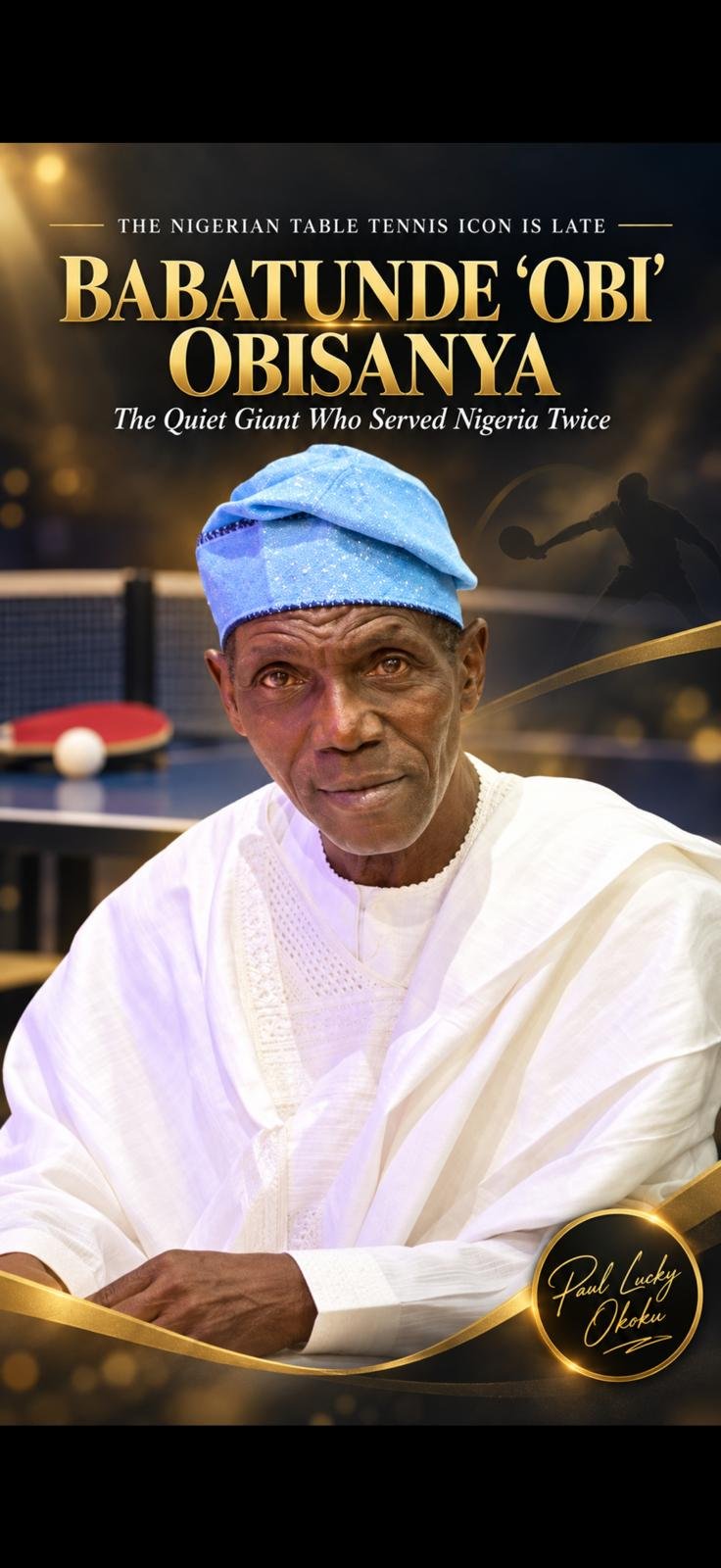
The Nigerian Table Tennis Icon Is Late: Babatunde ‘Obi’ Obisanya — The Quiet Giant Who Served Nigeria Twice

By Paul Lucky Okoku
Sometimes a name takes you back fifty years in an instant.
I was scrolling through social media when I began seeing messages about the passing of a former table tennis coach. Someone wrote words to the effect of, “I just lost my coach.”
Then I saw the name.
Babatunde Obisanya.
I stopped.
Wait a minute
Obi?
The same Obi I remembered from those Lagos days?
I had wondered from time to time what became of him. Suddenly, there he was again — not across a table with racket in hand, not beside young players at training, but in the farewell messages of people whose lives he had touched.
And the memories came flooding back.
Growing up in our neighbourhood in Lagos, sport was almost compulsory. You did not simply watch. You played.
Football was number one. Our community produced the likes of Godwin Odiye and several outstanding footballers. Table tennis was right there beside it because we had Sunday Eboh. Boxing was another major part of the sporting culture around us.
I played all three.
I loved all three.
Eventually, every young sportsman reaches a crossroads. Mine came when I had to decide which road I would follow seriously.
I chose football.
That decision eventually carried me far beyond the neighbourhood where everything began, but table tennis never disappeared from my life or my memory.
And that is one reason I remember Babatunde Obisanya so clearly.
We called him “Obi.”
For years, because everybody simply called him Obi, I actually thought he was Igbo. That was how natural the nickname had become to us. Nobody needed a long introduction.
Obi was Obi.
Our table-tennis world revolved around places such as Rowe Park in Yaba and the National Stadium sports complex. At Rowe Park, named after Brigadier Mobolaji Johnson, there was serious table tennis activity, and the swimming pool was nearby. We could play, watch tournaments and later go swimming.
These were not distant sports celebrities appearing only in newspapers.
We saw them.
We watched them practice.
We watched the rivalries.
We knew how good they were.
Sunday Eboh was one of our own, and when Sunday was playing, naturally we supported our area man. I remember occasions when Obi was involved in those major matches and, if Sunday was on the other side of the table, we knew where our loyalty rested.
We went to cheer Sunday.
That was neighbourhood pride.
But even when you were cheering against Obi, you could not fail to appreciate what you were watching.
The man could play.
Singles. Doubles. Technique. Control. Composure.
Long before many of the Nigerian table-tennis names familiar to later generations emerged, Babatunde Obisanya had already established himself among the country’s elite.
In 1968, he won the inaugural Asoju Oba Table Tennis Championship in Lagos, a victory that helped secure his place in Nigeria’s national team. Decades later, the International Table Tennis Federation recorded his own memories of training at the Alakoro Training Centre when that historic competition began.
He went on to represent Nigeria internationally during an important period in the development of the sport. Contemporary records place him among Nigeria’s leading players, and by the mid-1970s he was competing at a high international level.
An old Nigerian sports publication recalling Sunday Eboh’s rise records Eboh describing a national team that included Babatunde Obisanya as Nigeria’s No. 1 seed, alongside Kasali Lasisi and Lateef Sunmola.
That tells younger readers something about the stature Obi held in his playing days.
He belonged to a generation that helped establish Nigeria as a major table-tennis country in Africa.
But my memories of Obi did not stop with the player.
I also remember the coach.
I remember seeing him working with younger players, including Olawunmi Majekodunmi — “Majek,” as we called her. Almost everybody seemed to acquire a shortened name in those days. Majekodunmi became Majek.
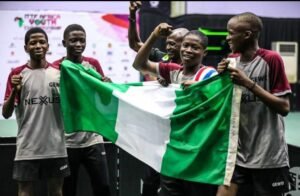
I remember Majek attending Maryland Comprehensive High School in Ikeja, and after school the young players would assemble for training, sometimes around Rowe Park and sometimes at the National Stadium, with Obi working with them.
Majek herself would grow into one of the outstanding female players of her generation. Records show that Olawunmi Majekodunmi became African women’s singles champion and one of Nigeria’s leading table-tennis stars of the 1970s and 1980s. Years later, Funke Oshonaike would identify Majekodunmi as the Nigerian player she particularly admired while growing up.
That is where Obi’s story becomes particularly meaningful to me.
𝐓𝐡𝐞 𝐩𝐥𝐚𝐲𝐞𝐫 𝐛𝐞𝐜𝐚𝐦𝐞 𝐭𝐡𝐞 𝐭𝐞𝐚𝐜𝐡𝐞𝐫.
He did not simply collect his medals and disappear from the sport.
He stayed.
He coached.
He developed players.
He passed knowledge from one generation to another.
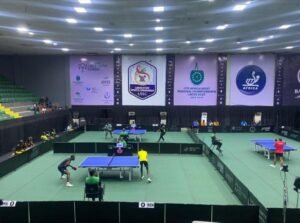
The historical record supports what many of us witnessed. The Guardian described him as a former Nigerian national table-tennis coach, while earlier reporting credited him with producing top players for the country. Even decades after his competitive career, he continued speaking publicly about grassroots development and the importance of exposing young Nigerians to different sports.
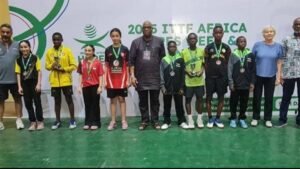
Remarkably, as recently as August 2026, Babatunde Obisanya was still giving back. As chairman of the Adegboyega Efunkoya Sports Foundation and a former national coach, he was involved with the National U-15 Table Tennis Championships at the National Stadium in Lagos, where young players were being trained and exposed to competitive table tennis.
Think about that journey.
From the young man training at Alakoro.
To national champion.
To Nigerian international.
To national coach.
To mentor.
To an elder still concerned about children learning the game.
That is what I mean when I say Babatunde “Obi” Obisanya served Nigeria twice — first with the racket, and then with the knowledge he passed to others.
For those of us who grew up in that remarkable Lagos sporting environment, his passing also closes another small window into our youth.
Those were days when football fields, boxing gyms and table-tennis halls produced dreams.
Before social media.
Before athletes built personal brands.
Before every achievement was recorded on a phone.
You knew who was good because you saw them perform.
And Obi was good.
Very good.
So when I saw his name again after all these years, attached to messages mourning his passing, I did not simply see the name of a former Nigerian table-tennis player.
I saw Rowe Park.
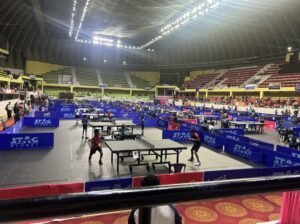
I saw the National Stadium.
I saw the young players gathering for practice.
I saw Majek.
I remembered Sunday Eboh.
I remembered those fierce matches, those neighborhood loyalties and those wonderful Lagos sporting days when we went from football to table tennis to boxing and somehow found time for all of them.
And I remembered the quiet man everyone simply called Obi.
𝐁𝐚𝐛𝐚𝐭𝐮𝐧𝐝𝐞 “𝐎𝐛𝐢” 𝐎𝐛𝐢𝐬𝐚𝐧𝐲𝐚 𝐝𝐢𝐝 𝐧𝐨𝐭 𝐦𝐞𝐫𝐞𝐥𝐲 𝐩𝐥𝐚𝐲 𝐭𝐚𝐛𝐥𝐞 𝐭𝐞𝐧𝐧𝐢𝐬. 𝐇𝐞 𝐡𝐞𝐥𝐩𝐞𝐝 𝐛𝐮𝐢𝐥𝐝 𝐚 𝐭𝐚𝐛𝐥𝐞-𝐭𝐞𝐧𝐧𝐢𝐬 𝐭𝐫𝐚𝐝𝐢𝐭𝐢𝐨𝐧 𝐭𝐡𝐚𝐭 𝐨𝐮𝐭𝐥𝐢𝐯𝐞𝐝 𝐡𝐢𝐬 𝐨𝐰𝐧 𝐩𝐥𝐚𝐲𝐢𝐧𝐠 𝐜𝐚𝐫𝐞𝐞𝐫.
His name deserves to be remembered.
His achievements deserve to be recorded.
And the generations he helped to develop remain part of his legacy.
Farewell, Obi.
Thank you for what you gave Nigerian sport.
Thank you for the memories.
May the soul of Babatunde “Obi” Obisanya rest in perfect peace.
Paul Lucky Okoku
FIFA Legend | CAF Silver Medalist | Former Nigerian Super Eagles & Flying Eagles International | Former Olympic Qualifying Team Member | Football Analyst | Founder, GTCF
For feedback, comments, corrections or documented contributions:
PaulOkokuMediaHub@gmail.com