
Analysis
Russia-Africa Summit: Nigeria’s $1.5bn Import Bill Raises Questions Over Moscow Partnership

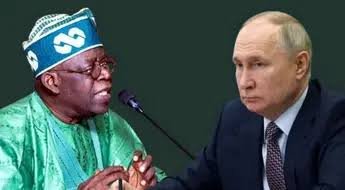
As African leaders prepare for the October 28–29 meeting in Moscow, Nigeria faces pressure to turn diplomatic ties into export growth, technology transfer and industrial investment.
Nigeria’s trade relationship with Russia presents a difficult question for African leaders preparing for the third Russia-Africa Summit: how can a partnership described as mutually beneficial deliver meaningful economic gains when trade flows heavily in one direction?
In 2023, Nigeria imported goods worth approximately $1.51 billion from Russia but exported just $10.02 million, according to figures based on United Nations Comtrade data published by Voice of Nigeria in 2025.
The figures expose the challenge confronting Nigeria as it seeks to strengthen economic ties with Moscow. While Russian wheat, fertilisers and other products find buyers in Nigeria, Nigerian businesses have yet to establish comparable access to the Russian market.
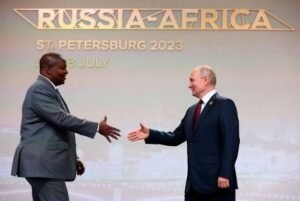
With the summit scheduled for Moscow from October 28 to 29, the immediate concern is whether renewed diplomatic engagement will help correct the imbalance or simply expand existing commercial relationships.
For Nigeria and the wider continent, the stakes extend beyond trade statistics. The outcome could influence access to industrial technology, energy investment, agricultural machinery, scientific cooperation and new markets for African products.
A Partnership With Unequal Trade Flows
Russia has increasingly presented Africa as an important partner in its international economic and diplomatic engagement. African governments, meanwhile, are seeking to diversify their economic relationships, attract investment and reduce dependence on traditional trading partners.
Yet the scale and composition of Russia-Africa trade raise questions about the benefits available to African economies.
Russian exports to African markets include wheat, fertilisers, petroleum products, metals and industrial inputs. African countries have opportunities to supply agricultural commodities, minerals and processed products, but converting that potential into competitive exports requires infrastructure, financing, reliable logistics and access to buyers.
Data from Russia’s Federal Customs Service put Russian exports to Africa at $24.3 billion in 2024, compared with imports from African countries of $3.5 billion.
The figures point to a significant imbalance in bilateral trade flows and underline the need for African governments to negotiate arrangements that expand their export capacity.
For Nigeria, the priority should be to identify products that can compete in Russia, address barriers facing exporters and establish commercial partnerships capable of generating sustained revenue.
Simply increasing imports from Russia would not, on its own, deliver the economic transformation Nigerian policymakers seek.
Lessons From Previous Summits
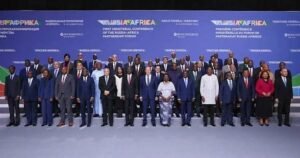
The Moscow meeting follows the inaugural Russia-Africa Summit in Sochi in 2019 and the second summit in St Petersburg in 2023.
Both meetings provided platforms for discussing trade, investment, agriculture, energy, education, infrastructure and security. The 2023 summit declaration also emphasised industrial development, value-added production and technology transfer.
However, the central challenge remains implementation.
Diplomatic declarations can establish broad areas of cooperation, but their economic value depends on whether governments and businesses follow through with funded projects, enforceable agreements and clear delivery timelines.
For African countries, the third summit should therefore be an opportunity to assess progress, identify unfulfilled commitments and establish measurable targets for future cooperation.
These targets could include increased African exports, investment in local manufacturing, research partnerships, technical training and employment opportunities.
Without transparent monitoring, the summit risks producing another set of ambitious commitments without clear evidence of their impact on ordinary citizens.
What Nigeria Can Gain From Russia
Despite the trade imbalance, Russia’s industrial and technological capabilities offer areas of potential cooperation with Nigeria.
Agriculture is one. Nigeria could pursue partnerships in agricultural machinery, irrigation, storage, fertiliser production and food processing. Such cooperation would be more valuable if it strengthened domestic manufacturing and reduced post-harvest losses rather than leaving the country dependent on imported equipment.
Energy is another potential area. Technical cooperation, engineering services, workforce development and investment in suitable energy infrastructure could support Nigeria’s efforts to improve industrial productivity.
Russia also has capabilities in aerospace engineering, information technology, scientific research and nuclear energy. Any Nigerian engagement in these sectors would require careful assessment of costs, financing, safety, regulatory requirements and long-term national interests.
The key issue is not whether Russia possesses relevant expertise, but whether proposed agreements would provide Nigeria with affordable technology, local skills and lasting productive capacity.
Technology transfer should consequently be written into project agreements through training requirements, research collaboration, maintenance arrangements and opportunities for local companies to participate.
Otherwise, partnerships may increase imports without building the domestic capabilities required for sustainable development.
Experts Call For Stronger Economic Diplomacy
Minister of State for Foreign Affairs, Ambassador Sola Enikanolaiye, has argued that trade and economic cooperation should occupy a central position in African diplomacy.
Speaking at a pan-African regional roundtable involving the African Union Commission, AUDA-NEPAD, the AfCFTA Secretariat, Afreximbank and regional economic communities, Enikanolaiye highlighted the opportunities that a more integrated African market could create for manufacturers, farmers, innovators and service providers.
His position reinforces the need for Nigeria to approach the Moscow summit with clearly defined commercial priorities rather than relying solely on broad diplomatic assurances.
Nigeria should identify products with export potential, engage Russian importers and negotiate practical arrangements covering standards, market access, logistics and payments.
Agricultural products, cocoa derivatives, processed foods, cashew nuts and other commodities could provide opportunities, provided Nigerian exporters can meet market requirements and maintain competitive prices and consistent supplies.
The government could also use the Nigeria-Russia Joint Commission to track trade commitments, resolve commercial bottlenecks and promote investment in productive sectors.
Secretary-General of the United World Congress of Diplomats, Ambassador Tunji Asaolu, has emphasised the importance of education, research, cultural exchanges and academic programmes in strengthening international partnerships.
Such initiatives could support Nigeria’s efforts to develop technical expertise in engineering, agriculture, energy and information technology.
Leader of the Trans-Africa Tourism and Unity Campaign, Ras Mubarak, has also advocated visa-free arrangements to promote integration, economic growth and cultural exchange.
For businesses, predictable travel arrangements and stronger institutional links could facilitate trade missions, investment discussions and professional exchanges.
AfCFTA Could Strengthen Africa’s Bargaining Power
Nigeria should not approach Russia-Africa relations solely through a bilateral lens. The African Continental Free Trade Area provides an opportunity to combine markets, strengthen regional value chains and increase the continent’s bargaining power.
African countries could explore joint ventures that link Nigerian manufacturers and agricultural processors with businesses elsewhere on the continent to supply larger markets.
Regional cooperation could also help African producers meet demand more consistently, share infrastructure costs and improve competitiveness.
For Russia, a more integrated African market could create opportunities for larger-scale investment and more predictable commercial partnerships.
For Africa, the challenge is to ensure that such arrangements support local production and value addition rather than simply providing a wider destination for imported goods.
This requires governments to coordinate their trade policies, strengthen regional transport networks and improve access to finance for exporters.
The Risks Nigeria Must Consider
Expanding relations with Russia also requires careful management of commercial and geopolitical risks.
Sanctions imposed on Russia by some Western countries have complicated certain international financial transactions, shipping arrangements and business relationships. Nigerian companies considering deals with Russian counterparts would need to assess applicable restrictions, payment channels, insurance arrangements and compliance obligations before committing funds.
Project financing, currency volatility, delivery risks and access to spare parts also require due diligence.
These concerns do not rule out cooperation. They make transparent contracts, reliable financing and careful risk assessment essential.
Nigeria should also ensure that major agreements undergo appropriate technical, financial and regulatory scrutiny and that the public can assess their expected costs and benefits.
From Promises To Measurable Results
The third Russia-Africa Summit offers an opportunity to strengthen economic cooperation at a time when African countries are seeking more diversified international partnerships.
But the value of the meeting will depend on whether its commitments address the continent’s practical development needs.
For Nigeria, success should be measured by growth in non-oil exports, investment in local industries, access to useful technology, improved technical skills and the creation of sustainable jobs.
The government should also insist on implementation schedules, identifiable funding sources and periodic assessments of projects agreed with Russian partners.
The trade figures provide a clear starting point. Nigeria’s economic relationship with Russia has considerable room to expand, but the direction of that expansion matters.
A partnership that increases imports without strengthening exports, local production and productive capacity would do little to address the underlying imbalance.
As African leaders gather in Moscow, Nigeria must therefore pursue a relationship built not merely on diplomatic goodwill, but on commercially viable agreements, mutual accountability and measurable economic returns.
Ultimately, the success of the summit will not be determined by the number of declarations signed or the strength of official statements. It will be determined by whether the partnership helps Nigerian businesses sell more, workers acquire new skills, industries become more productive and African economies retain greater value from their resources.