
Opinion
The Goal, The Pile-Up And Tarila’s Unforgettable Cry

𝐁𝐲 𝐏𝐚𝐮𝐥 𝐋𝐮𝐜𝐤𝐲 𝐎𝐤𝐨𝐤𝐮
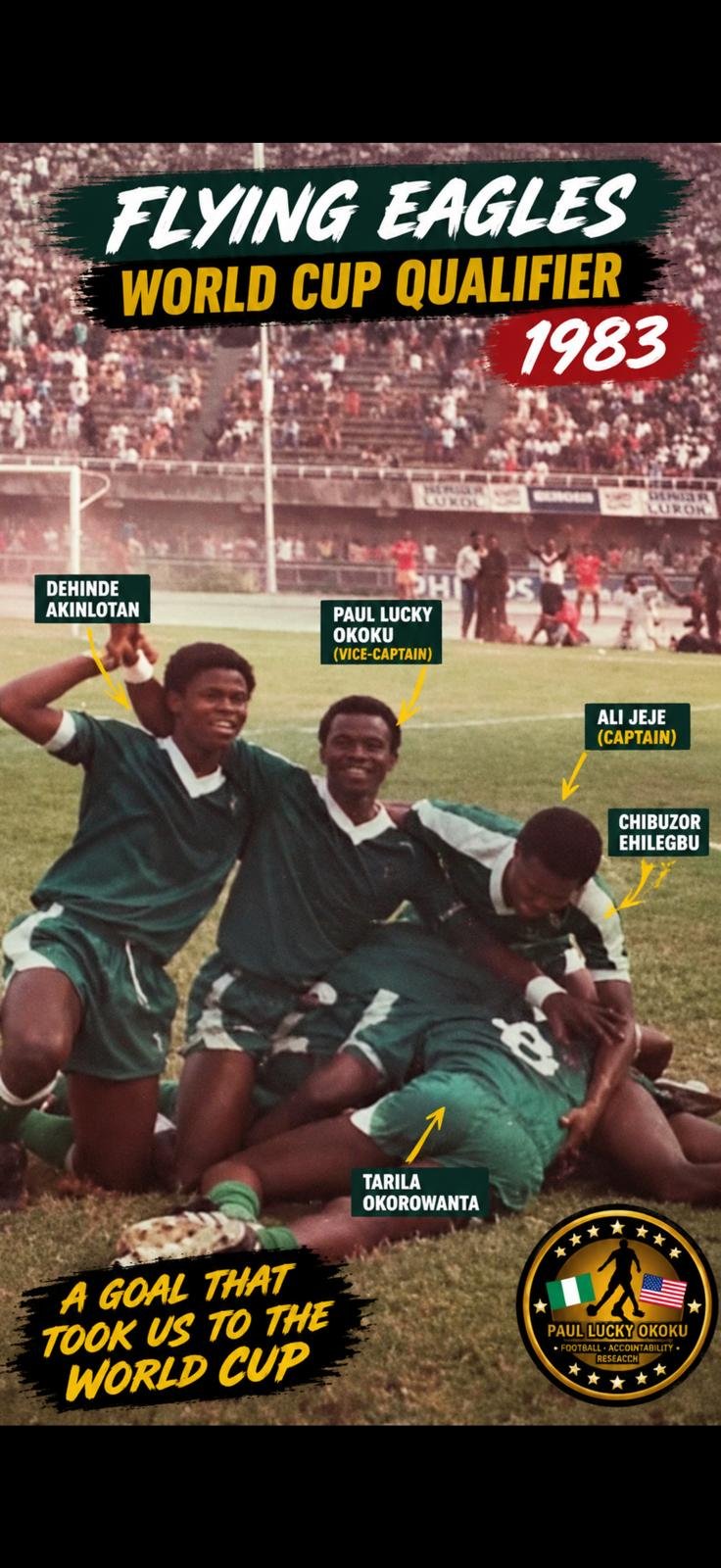
𝐀 𝐏𝐇𝐎𝐓𝐎𝐆𝐑𝐀𝐏𝐇 𝐅𝐑𝐎𝐌 𝐍𝐈𝐆𝐄𝐑𝐈𝐀’𝐒 𝐇𝐈𝐒𝐓𝐎𝐑𝐈𝐂 𝟏𝟗𝟖𝟑 𝐖𝐎𝐑𝐋𝐃 𝐂𝐔𝐏 𝐐𝐔𝐀𝐋𝐈𝐅𝐈𝐂𝐀𝐓𝐈𝐎𝐍
Look closely at this photograph.
Look at the players. Look at the crowd. Look at the sheer joy spilling across the stadium.
This was no ordinary goal celebration.
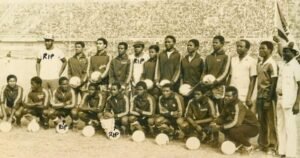
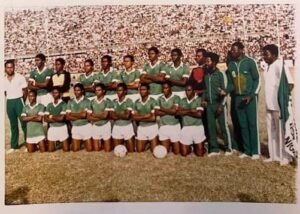
We were the 𝟏𝟗𝟖𝟑 𝐅𝐥𝐲𝐢𝐧𝐠 𝐄𝐚𝐠𝐥𝐞𝐬, chasing something Nigeria had never achieved: qualification for a FIFA World Cup tournament at any level.
And in that extraordinary moment, we could almost reach out and touch history.
There was Dehinde Akinlotan. There was our captain, Ali Jeje. There was Chibuzor Ehilegbu. And there was me, Paul Lucky Okoku, the vice-captain.
We had thrown ourselves into a jubilant pile of green jerseys, practically burying the man at the bottom.
That man was Tarila Okorowanta.
The crowd was roaring. Teammates were shouting. Somewhere beyond the stadium, families and football supporters were following the drama through their radios.
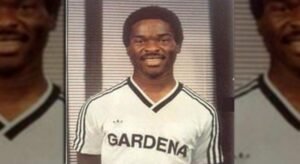
Imagine the voices of radio commentators carrying the excitement into homes, shops and neighbourhoods across Nigeria.
Imagine supporters gathered around radio sets, waiting for the next description of the action, their hopes rising with every word.
For those of us on the pitch, the noise was overwhelming.
But from somewhere beneath that mountain of celebrating footballers came a voice we knew all too well.
“Mek una comot! Una wan wound me?”
Get off me! Do you people want to injure me?
That was Tarila!
We were celebrating a goal that brought our World Cup dream closer, and the man underneath us was wondering whether his own teammates intended to finish him off before the match was over.
Even today, I can almost hear his voice.
And I cannot help laughing.
𝐄𝐑𝐍𝐄𝐒𝐓 𝐎𝐊𝐎𝐍𝐊𝐖𝐎: 𝐓𝐇𝐄 𝐕𝐎𝐈𝐂𝐄 𝐓𝐇𝐀𝐓 𝐂𝐀𝐑𝐑𝐈𝐄𝐃 𝐎𝐔𝐑 𝐃𝐑𝐄𝐀𝐌 𝐀𝐂𝐑𝐎𝐒𝐒 𝐍𝐈𝐆𝐄𝐑𝐈𝐀
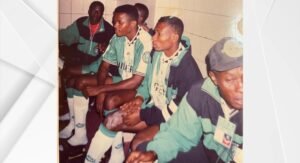
About 30 minutes before kickoff, deep inside the underground dressing-room facilities of the National Stadium, Lagos, Coach Christopher Udemezue was delivering his final instructions.
The atmosphere was serious. Every player understood the significance of the assignment ahead.
Then came a familiar visitor.
Ernest Okonkwo, the legendary Radio Nigeria football commentator, entered to obtain the names of our starting eleven and substitutes from Coach Udemezue.
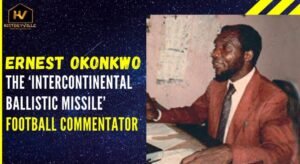
It was part of his preparation for the broadcast. He needed to know who would be representing Nigeria when the referee’s whistle announced the beginning of the match.
To us, it was a brief encounter before a historic assignment.
To the millions who would follow the match beyond the stadium, Okonkwo would become their eyes on the pitch.
Now imagine what happened when that decisive goal arrived.
Inside the stadium, thousands of supporters erupted. Those watching on television could see the players rushing toward Tarila, the green jerseys collapsing into one joyous heap.
But beyond the television screens, another Nigeria was experiencing the same moment through radio.
In neighbourhoods where television sets were scarce, people gathered around receivers, listening intently.
Inside shops, homes and roadside gathering places, ears were tuned to the commentary.
Passengers travelling in public transportation could follow the excitement through radios carried aboard their vehicles.
And somewhere in the middle of it all was Ernest Okonkwo, whose remarkable command of language could transform a football match into a living drama.
I can imagine his voice rising above the stadium’s roar, describing the breakthrough, the celebrations and the extraordinary scenes unfolding before him.
He would have had plenty to describe!
Ali Jeje. Dehinde Akinlotan. Chibuzor Ehilegbu. Paul Lucky Okoku.
All piling onto Tarila Okorowanta, while the man beneath us protested:
“Make una comot! Una wan wound me?”
The supporters could hear the excitement through the commentary. Those watching television could see the celebration. But only those close enough to Tarila could appreciate the comedy unfolding underneath that mountain of footballers.
That is what made the moment so unforgettable.
One goal united players, spectators, television viewers and radio listeners in a shared national experience.
And for those who depended on radio, Ernest Okonkwo was more than a commentator. He was the voice that brought the stadium into their homes.
The crowd supplied the thunder.
The players supplied the celebration.
Ernest Okonkwo gave the moment a voice.
𝐓𝐇𝐀𝐓 𝐖𝐀𝐒 𝐓𝐇𝐄 𝐓𝐀𝐑𝐈𝐋𝐀 𝐖𝐄 𝐊𝐍𝐄𝐖
What makes this photograph particularly memorable is that Tarila was not ordinarily a player who celebrated goals extravagantly.
He preferred to let his football do the talking.
And what a language he spoke with the ball at his feet.
Tarila was a powerful right winger, fearless in possession and capable of unsettling defenders through direct, determined attacking play.
If you were a left-back facing him, you had better prepare yourself.
You could retreat a few yards, hoping to contain him.
He would keep coming.
You could adjust your position, hoping to force him away from danger.
He would challenge you again.
For Tarila, a defender backing away was not necessarily a warning to slow down. It was an invitation to attack the space.
He possessed the confidence of a winger who believed that taking on his opponent was part of his responsibility.
And when he found his opening, he could produce the kind of goal that changed a match.
But on this occasion, his teammates had apparently decided that scoring was not enough punishment for the opposition.
We had to punish the goalscorer with our affection, too!
𝐎𝐍𝐄 𝐏𝐇𝐎𝐓𝐎𝐆𝐑𝐀𝐏𝐇, 𝐀 𝐓𝐇𝐎𝐔𝐒𝐀𝐍𝐃 𝐌𝐄𝐌𝐎𝐑𝐈𝐄𝐒
There is something photographs preserve that official match reports cannot.
A match report records the score.
A photograph captures the feeling.
It cannot reproduce the noise of the stadium or the voice of a teammate trapped beneath a pile of celebrating players. But for those who were there, one glance can bring everything rushing back.
I see our captain, Ali Jeje, sharing the excitement.
I see Dehinde Akinlotan and Chibuzor Ehilegbu, part of that unforgettable celebration.
I see myself, still a young footballer, unaware of how precious these memories would become more than four decades later.
And I see Tarila, somewhere underneath us, protesting in the middle of our happiness.
That is the beauty of football.
A moment of national significance can also become a moment of extraordinary human comedy.
We were young. We were ambitious. We believed in one another. And we were pursuing a dream much bigger than any individual player.
On January 8, 1983, Nigeria defeated Guinea 2–0 in Lagos, completing the qualification journey that took our country to the FIFA World Youth Championship in Mexico.
For the first time, Nigeria would appear at a FIFA World Cup tournament.
We did not know then how many generations would follow the path our team helped open.
We simply knew that we had something worth celebrating.
𝐓𝐇𝐄 𝐋𝐀𝐔𝐆𝐇𝐓𝐄𝐑 𝐁𝐄𝐇𝐈𝐍𝐃 𝐓𝐇𝐄 𝐇𝐈𝐒𝐓𝐎𝐑𝐘
I recently paid tribute to Tarila’s footballing qualities, so this photograph is not another attempt to recount his entire career.
It is about something equally valuable: the laughter, friendship and spontaneous joy that lived alongside the hard work.
Football history should remember the goals, the results and the trophies.
But it should also remember the voices.
Especially the voice of a right winger who had just helped create an unforgettable moment and suddenly found himself buried under his own teammates.
“Make una comot! Una wan wound me?”
Tarila, wherever our conversations take us today, that moment still makes me smile.
We were not trying to wound you.
We were simply too happy to let you go!
And that, my friends, is one of the beautiful memories behind Nigeria’s pioneering 𝟏𝟗𝟖𝟑 𝐅𝐥𝐲𝐢𝐧𝐠 𝐄𝐚𝐠𝐥𝐞𝐬.
The photograph has aged.
The laughter has not.
𝐏𝐚𝐮𝐥 𝐋𝐮𝐜𝐤𝐲 𝐎𝐤𝐨𝐤𝐮
FIFA Legend | Former Nigeria Flying Eagles Vice-Captain | Former Super Eagles International | AFCON Silver Medalist | Football Historian | Football Analyst | Investigative Football Writer | Journalist-at-Large | Founder & CEO, Greater Tomorrow Children’s Fund (GTCF).
𝐀𝐔𝐓𝐇𝐎𝐑’𝐒 𝐍𝐎𝐓𝐄
This account is based on my firsthand recollection of a goal celebration during Nigeria’s historic 1983 World Cup qualifying campaign. The dialogue and atmosphere are recalled from memory, while the qualification date and result form part of the tournament’s historical record.
𝐅𝐨𝐫 𝐟𝐞𝐞𝐝𝐛𝐚𝐜𝐤 𝐚𝐧𝐝 𝐜𝐨𝐦𝐦𝐞𝐧𝐭𝐬:
PaulOkokuMediaHub@gmail.com
𝐏𝐥𝐞𝐚𝐬𝐞 𝐟𝐞𝐞𝐥 𝐟𝐫𝐞𝐞 𝐭𝐨 𝐬𝐡𝐚𝐫𝐞 𝐭𝐡𝐢𝐬 𝐚𝐫𝐭𝐢𝐜𝐥𝐞 𝐭𝐨 𝐡𝐞𝐥𝐩 𝐩𝐫𝐞𝐬𝐞𝐫𝐯𝐞 𝐭𝐡𝐞 𝐦𝐞𝐦𝐨𝐫𝐢𝐞𝐬 𝐨𝐟 𝐍𝐢𝐠𝐞𝐫𝐢𝐚’𝐬 𝐟𝐨𝐨𝐭𝐛𝐚𝐥𝐥 𝐩𝐢𝐨𝐧𝐞𝐞𝐫𝐬. 𝐖𝐞 𝐚𝐫𝐞 𝐚𝐥𝐥 𝐢𝐧 𝐭𝐡𝐢𝐬 𝐭𝐨𝐠𝐞𝐭𝐡𝐞𝐫.