
Opinion
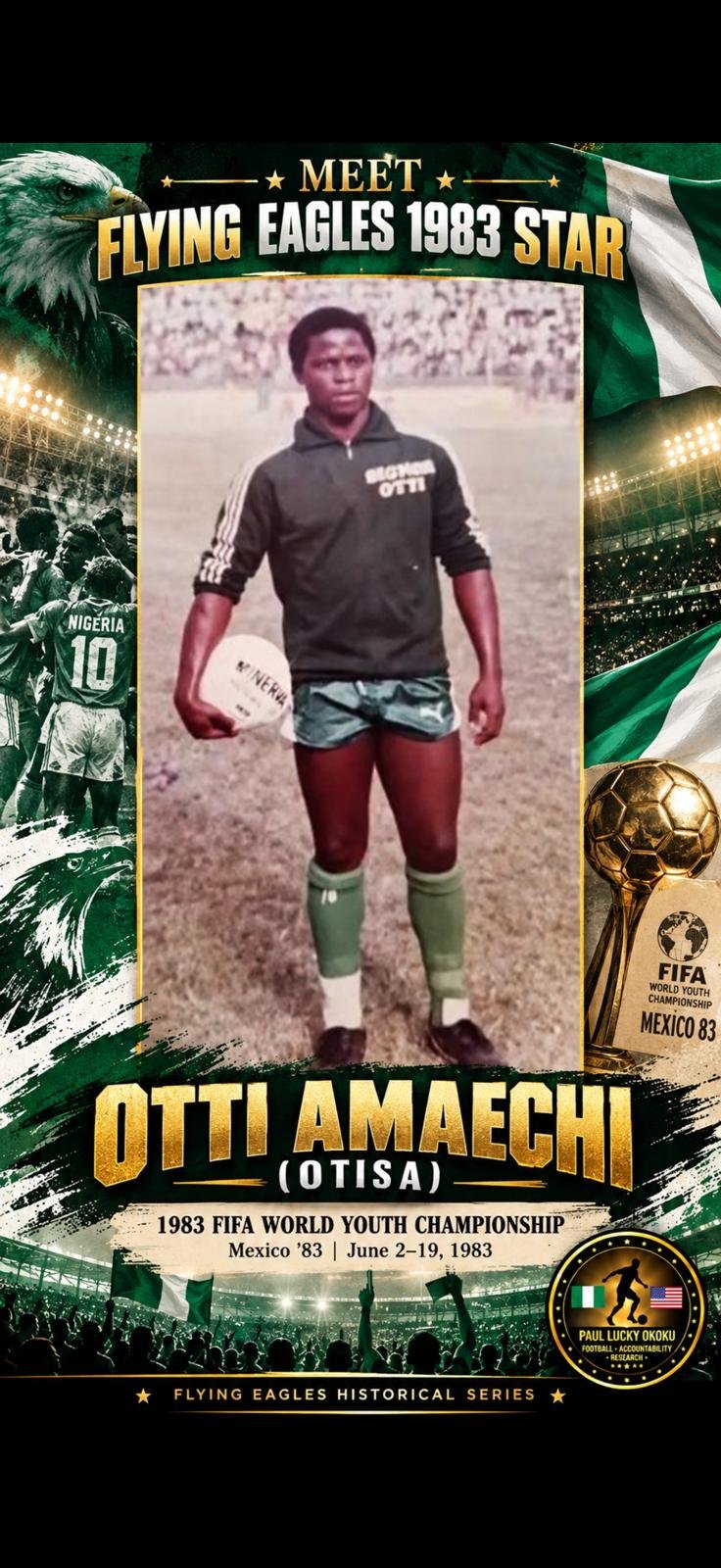
Meet The 1983 Flying Eagles: Part 7 — Meet Otti Amaechi (Otisa)

𝐁𝐲 𝐏𝐚𝐮𝐥 𝐋𝐮𝐜𝐤𝐲 𝐎𝐤𝐨𝐤𝐮
𝗧𝗛𝗘 𝗠𝗔𝗡 𝗪𝗛𝗢 𝗚𝗔𝗩𝗘 𝗧𝗛𝗘 𝗙𝗟𝗬𝗜𝗡𝗚 𝗘𝗔𝗚𝗟𝗘𝗦 𝗔 𝗙𝗜𝗚𝗛𝗧𝗜𝗡𝗚 𝗦𝗢𝗡𝗚 𝗧𝗛𝗔𝗧 𝗥𝗘𝗔𝗖𝗛𝗘𝗗 𝗧𝗛𝗘 𝗚𝗥𝗘𝗘𝗡 𝗘𝗔𝗚𝗟𝗘𝗦
Some footballers are remembered for the goals they scored, the tackles they made or the trophies they won.
Others leave behind something that cannot be measured in match statistics.
𝗢𝘁𝘁𝗶 𝗔𝗺𝗮𝗲𝗰𝗵𝗶, affectionately known to us as 𝗢𝘁𝗶𝘀𝗮, gave our historic 1983 Flying Eagles team something extraordinary: a fighting song that became our signature anthem and eventually found its way into the senior national team, the Green Eagles.
More than four decades later, I can still hear it.
𝗙𝗥𝗢𝗠 𝗔𝗡𝗔𝗠𝗕𝗥𝗔 𝗧𝗢 𝗡𝗜𝗚𝗘𝗥𝗜𝗔’𝗦 𝗛𝗜𝗦𝗧𝗢𝗥𝗜𝗖 𝗙𝗟𝗬𝗜𝗡𝗚 𝗘𝗔𝗚𝗟𝗘𝗦
I remember Otti coming into our national youth team environment from Anambra State, alongside Chibuzor Ehilegbu and Jeffrey Madueke.
We were young footballers from different backgrounds, united by an ambition greater than ourselves: to take Nigeria to its first FIFA World Youth Championship.

Otti attended Nike Grammar School in Enugu and developed into a capable defender.
Under our late coach, Christopher Udemezue, we trained, competed, endured difficult moments and ultimately qualified for the 1983 tournament in Mexico.
But Otti brought something beyond his footballing ability.
𝗔𝗕Ụ Ọ𝗚𝗨: 𝗧𝗛𝗘 𝗪𝗔𝗥 𝗦𝗢𝗡𝗚 𝗪𝗘 𝗦𝗔𝗩𝗘𝗗 𝗙𝗢𝗥 𝗧𝗛𝗘 𝗦𝗧𝗔𝗗𝗜𝗨𝗠
On our way to matches, we would sing different songs, entertaining ourselves and lifting our spirits. But one particular song was reserved for the moment our team bus approached the stadium.
𝗔𝗕Ụ Ọ𝗚𝗨 — an Igbo war song introduced by Otisa.
As we drew closer to the stadium, we knew what was coming.
Otisa would lead the call:
𝗡’ 𝗺𝗲𝗿𝗲 𝗼𝗹𝗲 𝗶𝘄𝗲!
And the rest of us would answer in a thunderous chorus.
That was when the atmosphere changed.
The excitement of the journey became the determination of young men preparing to represent their country.
It was our psychological preparation, our expression of unity and our declaration of readiness.
The song went:
𝗔𝗕Ụ Ọ𝗚𝗨 (𝗜𝗚𝗕𝗢 𝗪𝗔𝗥 𝗦𝗢𝗡𝗚)
N’ mere ole iwe!
N’ mere ole iwe!!
N’ mere ole, mere ole iwe!!!
N’mere ole gboo, ogu iwe!
Ogbogu nwokeocha iwe!
Ọkụkọ eji gba ajah iwe!
Anyị anaghị eri ya, iwe!
Nfoche odu iwe!
Nfoche, nfoche odu iwe!!
N’ mere ole iwe!
N’ mere ole iwe!!
N’ mere ole, mere ole iwe!!!
For players drawn from different ethnic and linguistic backgrounds, the words became a shared expression of courage and brotherhood.
Yet what makes this memory particularly special is that the song’s journey did not end with the Flying Eagles.
𝗥𝗔𝗕𝗔𝗧, 𝗔𝗨𝗚𝗨𝗦𝗧 𝟮𝟴, 𝟭𝟵𝟴𝟯: 𝗪𝗛𝗘𝗡 𝗜 𝗕𝗥𝗢𝗨𝗚𝗛𝗧 𝗢𝗧𝗜𝗦𝗔’𝗦 𝗦𝗢𝗡𝗚 𝗧𝗢 𝗧𝗛𝗘 𝗚𝗥𝗘𝗘𝗡 𝗘𝗔𝗚𝗟𝗘𝗦
Sunday, August 28, 1983.
A date forever engraved in my memory.
Nigeria faced Morocco in a decisive African Cup of Nations qualifying match. The first leg, played in Benin City on August 14, had ended goalless.

Three of us from the Flying Eagles—Chibuzor Ehilegbu, Isa Shofoluwe and I—were brought into the senior national team by Chief Adegboye Onigbinde for the return encounter.
We had not been part of the starting eleven in Benin City. Now we were preparing for one of the most important matches of our young football careers.
During our pre-match meal, the legendary Radio Nigeria commentator Ernest Okonkwo moved around the dining room, matching players’ faces with the team list provided by Chief Onigbinde.
When he encountered the three of us, he recognized our shared football background and called us:
𝗧𝗛𝗘 𝗨𝗗𝗘𝗠𝗘𝗭𝗨𝗘 𝗕𝗢𝗬𝗦.
It was a tribute to the coach who had prepared us for international football.
But another memory from that historic day has remained with me.
As we approached the stadium, I remembered the fighting song Otisa had taught us.
I decided to introduce it to my new Green Eagles teammates.
And so I began:
𝗡’ 𝗺𝗲𝗿𝗲 𝗼𝗹𝗲 𝗶𝘄𝗲!
Chibuzor and Isa immediately recognized it. They joined in the chorus.
Then the others followed.
There we were, preparing to face Morocco, and the sound of our old Flying Eagles fighting song was rising among the senior internationals.
For me, it was a bridge between two generations of Nigerian football.
The match ended goalless after extra time. Nigeria prevailed 4–3 on penalties and qualified for the 1984 Africa Cup of Nations in Côte d’Ivoire, where we eventually finished as silver medalists.
Forty-three years later, I still remember the significance of that occasion.
𝗛𝗘𝗡𝗥𝗬 𝗡𝗪𝗢𝗦𝗨 𝗔𝗡𝗗 𝗧𝗛𝗘 𝗦𝗢𝗡𝗚’𝗦 𝗡𝗘𝗪 𝗛𝗢𝗠𝗘
What began that day did not end with the Morocco encounter.
Once I started the song, 𝗛𝗲𝗻𝗿𝘆 𝗡𝘄𝗼𝘀𝘂 would take over, leading our teammates with the energy and enthusiasm that made the anthem our own.

The Green Eagles adopted it as our signature fighting song.
Just as we had done in the Flying Eagles, we would sing other songs during the journey. But as we approached the stadium, that familiar battle cry would emerge.
The voices were different. The team was different. The responsibility was greater.
But the spirit was the same.
And whenever I heard it, I remembered where it began.
𝗪𝗶𝘁𝗵 𝗢𝘁𝗶𝘀𝗮.
𝗧𝗛𝗘 𝗗𝗘𝗙𝗘𝗡𝗗𝗘𝗥 𝗪𝗛𝗢 𝗧𝗢𝗢𝗞 𝗛𝗜𝗦 𝗧𝗔𝗟𝗘𝗡𝗧 𝗔𝗖𝗥𝗢𝗦𝗦 𝗕𝗢𝗥𝗗𝗘𝗥𝗦
Otti’s football achievements extended well beyond Mexico 1983.
He won the 1983 FA Cup and 1984 Nigerian league championship with Rangers International, followed by another FA Cup with Abiola Babes in 1985.

His career subsequently took him to the Republic of Benin, El-Kanemi Warriors and professional football in Belgium, Germany and Switzerland.
After retirement, Otti remained involved in football development.
Based in Belgium, he became engaged in identifying opportunities for Nigerian players abroad and established OTTAN Football Club in Enugu.
His journey illustrates how football opened doors for members of our generation—sometimes far beyond anything we imagined as young boys representing Nigeria.
𝗧𝗛𝗘 𝗟𝗘𝗚𝗔𝗖𝗬 𝗢𝗙 𝗢𝗧𝗜𝗦𝗔
Whenever I reflect on our 1983 Flying Eagles family, I remember that every teammate contributed something unique.
Some brought leadership. Others brought laughter, courage or reassurance during difficult moments.
Otisa brought a song.
A song that accompanied us toward stadiums, united us before matches and eventually became part of the Green Eagles’ own traditions.
Our playing careers have ended. We have built lives on different continents. Some beloved teammates, including Henry Nwosu and Isa Shofoluwe, are no longer with us.
But memories have their own remarkable endurance.
I can still hear that chorus.
𝗜𝗪𝗘! 𝗜𝗪𝗘!
And whenever I do, I remember the young men we were, the country we represented and the brotherhood we built.
Otisa, your football achievements deserve recognition.
But so does the music you gave us.
𝗦𝗼𝗺𝗲 𝗽𝗹𝗮𝘆𝗲𝗿𝘀 𝗹𝗲𝗮𝘃𝗲 𝘁𝗵𝗲𝗶𝗿 𝗻𝗮𝗺𝗲𝘀 𝗼𝗻 𝘁𝗿𝗼𝗽𝗵𝗶𝗲𝘀.
𝗢𝘁𝗶𝘀𝗮 𝗹𝗲𝗳𝘁 𝗵𝗶𝘀 𝘃𝗼𝗶𝗰𝗲 𝗶𝗻 𝗼𝘂𝗿 𝗺𝗲𝗺𝗼𝗿𝗶𝗲𝘀.
𝗣𝗮𝘂𝗹 𝗟𝘂𝗰𝗸𝘆 𝗢𝗸𝗼𝗸𝘂
FIFA Legend | Former Nigeria Flying Eagles Vice-Captain | Former Super Eagles International | AFCON Silver Medalist | Football Historian | Football Analyst | Investigative Football Writer | Journalist-at-Large | Founder & CEO, Greater Tomorrow Children’s Fund (GTCF)
𝗙𝗼𝗿 𝗳𝗲𝗲𝗱𝗯𝗮𝗰𝗸 𝗮𝗻𝗱 𝗰𝗼𝗺𝗺𝗲𝗻𝘁𝘀:
PaulOkokuMediaHub@gmail.com
𝗣𝗹𝗲𝗮𝘀𝗲 𝗳𝗲𝗲𝗹 𝗳𝗿𝗲𝗲 𝘁𝗼 𝘀𝗵𝗮𝗿𝗲 𝘁𝗵𝗶𝘀 𝗮𝗿𝘁𝗶𝗰𝗹𝗲 𝘀𝗼 𝘁𝗵𝗮𝘁 𝘄𝗲 𝗰𝗮𝗻 𝗮𝗹𝗹 𝗹𝗲𝗮𝗿𝗻, 𝗮𝘀𝗸 𝘁𝗵𝗲 𝗿𝗶𝗴𝗵𝘁 𝗾𝘂𝗲𝘀𝘁𝗶𝗼𝗻𝘀 𝗮𝗻𝗱 𝗵𝗲𝗹𝗽 𝗽𝗿𝗼𝘁𝗲𝗰𝘁 𝘁𝗵𝗲 𝗳𝘂𝘁𝘂𝗿𝗲 𝗼𝗳 𝗡𝗶𝗴𝗲𝗿𝗶𝗮𝗻 𝗳𝗼𝗼𝘁𝗯𝗮𝗹𝗹.